Downed U.S. Fighter Jet in Iran: Analysts Say Tehran Under Pressure as U.S. Maintains Strategic Edge
The downing of a U.S. fighter jet over Iran marks a rare escalation, but analysts suggest Tehran is under growing pressure as Washington carefully coordinates its rescue and military operations.

Downed U.S. Fighter Jet in Iran: Analysts Say Tehran Under Pressure as U.S. Maintains Strategic Edge
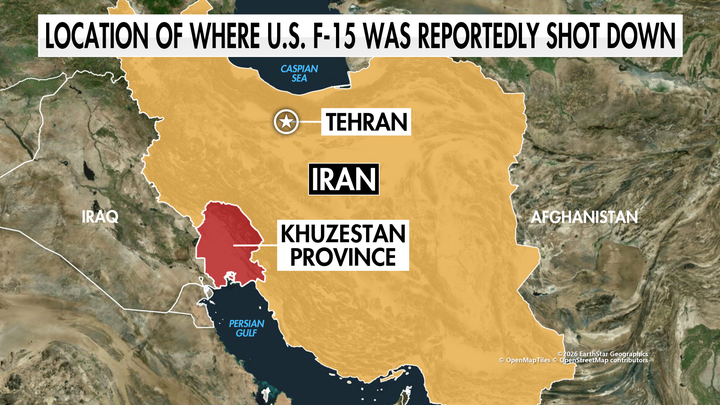
Tensions remain high following the downing of a U.S. F-15E fighter jet over Iran, but analysts suggest that despite the incident, the broader strategic advantage still lies with the United States while pressure continues to mount on Iran.
The crash occurred in Iran’s Khuzestan Province, where a significant presence of the Islamic Revolutionary Guard Corps (IRGC) and Basij forces has been observed. Experts say this increased deployment reflects Tehran’s concern over maintaining internal control, particularly in a region known for unrest and opposition among local Arab tribes.
According to counterterrorism expert Jim Hanson, the dynamics in Khuzestan are complex. While some local groups oppose the central government and could potentially assist the stranded U.S. airman, the heavy IRGC presence aimed at suppressing dissent complicates rescue efforts.
Hanson noted that the Iranian government has deployed additional forces in the area to prevent unrest, indicating a level of internal pressure. At the same time, this environment may create opportunities for the missing crew member to evade capture, especially if aided by local opposition groups.
Military analysts believe the downed airman is likely following survival training protocols by moving away from open terrain and seeking cover in more difficult, less accessible areas. While this strategy may make it harder for U.S. forces to locate him quickly, it significantly improves his chances of avoiding enemy detection.
Retired U.S. Air Force Brigadier General John Teichert stated that the lack of negative updates could be interpreted as a positive sign. According to him, the missing crew member has likely avoided capture and is maintaining a secure position while awaiting extraction.
Experts describe the ongoing rescue effort as a delicate “balancing act.” U.S. forces must determine how to deploy sufficient resources to recover the airman without exposing additional personnel to risk in a heavily contested environment.
Although Iran has claimed responsibility for shooting down the aircraft, analysts argue that the situation highlights Tehran’s broader challenges. The need for increased internal security, combined with ongoing military pressure, suggests that Iran is managing both external confrontation and internal vulnerabilities.
Overall, while the downing of the aircraft marks a serious development, experts believe it has not shifted the strategic balance of the conflict. Instead, it underscores the complexity of the situation, where the United States continues to operate with calculated restraint while maintaining pressure on Iran.