German Interior Minister Alexander Expresses Unconditional Support for Israeli Strike on Iran’s WMD Nuclear Sites
Labeling Iran’s nuclear program a threat to both Israel’s and Europe’s existence, German Interior Minister Alexander Dobrindt has voiced “unconditional support” for Israel’s recent military strikes. His comments came during a surprise state visit to Israel, making him the first senior German official to visit since the recent escalation in Iran-Israel tensions.

German Interior Minister Alexander Expresses Unconditional Support for Israeli Strike on Iran’s WMD Nuclear Sites
German Interior Minister Alexander Expresses Unconditional Support for Israeli Strike on Iran’s WMD Nuclear Sites
[Tel Aviv, June 29, 2025] — Labeling Iran’s nuclear program a threat to both Israel’s and Europe’s existence, German Interior Minister Alexander Dobrindt has voiced “unconditional support” for Israel’s recent military strikes. His comments came during a surprise state visit to Israel, making him the first senior German official to visit since the recent escalation in Iran-Israel tensions.
Praising the Israeli operation directly, Dobrindt said:
“Iran has been destabilizing this region for many years—if not decades. They continue to support terrorist organizations operating on Israel’s northern, southern, and eastern borders.”
He stated unequivocally that Iran’s nuclear program poses a “real and significant threat” not only to Israel’s existence but also to Europe’s security.
Dobrindt Clarifies Europe’s Position
The German minister emphasized,
“Israel, the United States, Germany, and other allied nations have sent a clear message: we will not allow Iran to obtain nuclear weapons—under any circumstances.”
Tehran has long insisted that its nuclear program is peaceful and civilian in nature. However, the West and Israel have consistently expressed deep suspicion, alleging Iran is secretly working toward developing nuclear weapons.
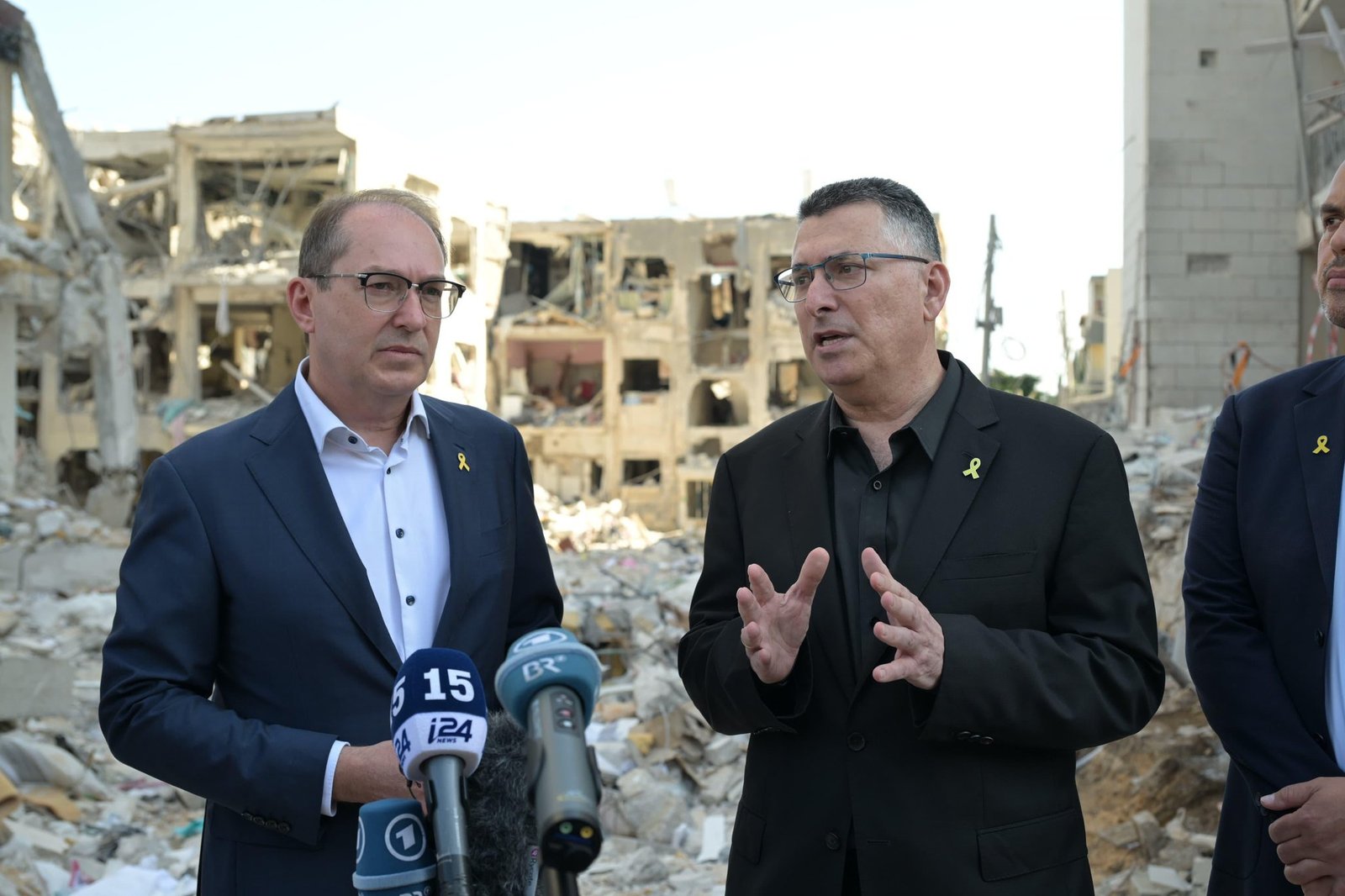
Visit to Holon Missile Strike Site
Dobrindt toured the site of a recent Iran-directed missile strike in the city of Holon alongside Israeli Foreign Minister Gideon Sa’ar. He described the attack as:
“A direct act of war against civilians. If we don’t resist now, Europe will eventually face similar threats.”
He warned that if Iran becomes nuclear-armed, the consequences would be catastrophic—not just for Israel, but for all of Europe.
Geopolitical Implications
Analysts say the German interior minister’s position signals a hardening stance within Europe—one that frames Iran not merely as a Middle Eastern problem, but as a global security threat.
If a key European power like Germany openly supports Israeli military action, this could significantly increase international pressure on Iran. It also implies that any covert pursuit of nuclear weapons by Tehran—despite public claims of peaceful intent—may be viewed as justifying Israeli preemptive strikes, potentially setting the stage for broader conflict in the Middle East.