12 Years of Failed Rebellion in Syria, 12 Days of Empire Building by Al-Qaeda, and the U.S. Stance
Syria's recent developments and the United States' policy position have become the focus of intense discussion. Particularly, U.S. President Joe Biden’s recent comment—“This is the best time to establish peace in Syria”—has raised new questions in Middle Eastern geopolitics.

12 Years of Failed Rebellion in Syria, 12 Days of Empire Building by Al-Qaeda, and the U.S. Stance
12 Years of Failed Rebellion in Syria, 12 Days of Empire Building by Al-Qaeda, and the U.S. Stance
Syria's recent developments and the United States' policy position have become the focus of intense discussion. Particularly, U.S. President Joe Biden’s recent comment—“This is the best time to establish peace in Syria”—has raised new questions in Middle Eastern geopolitics.
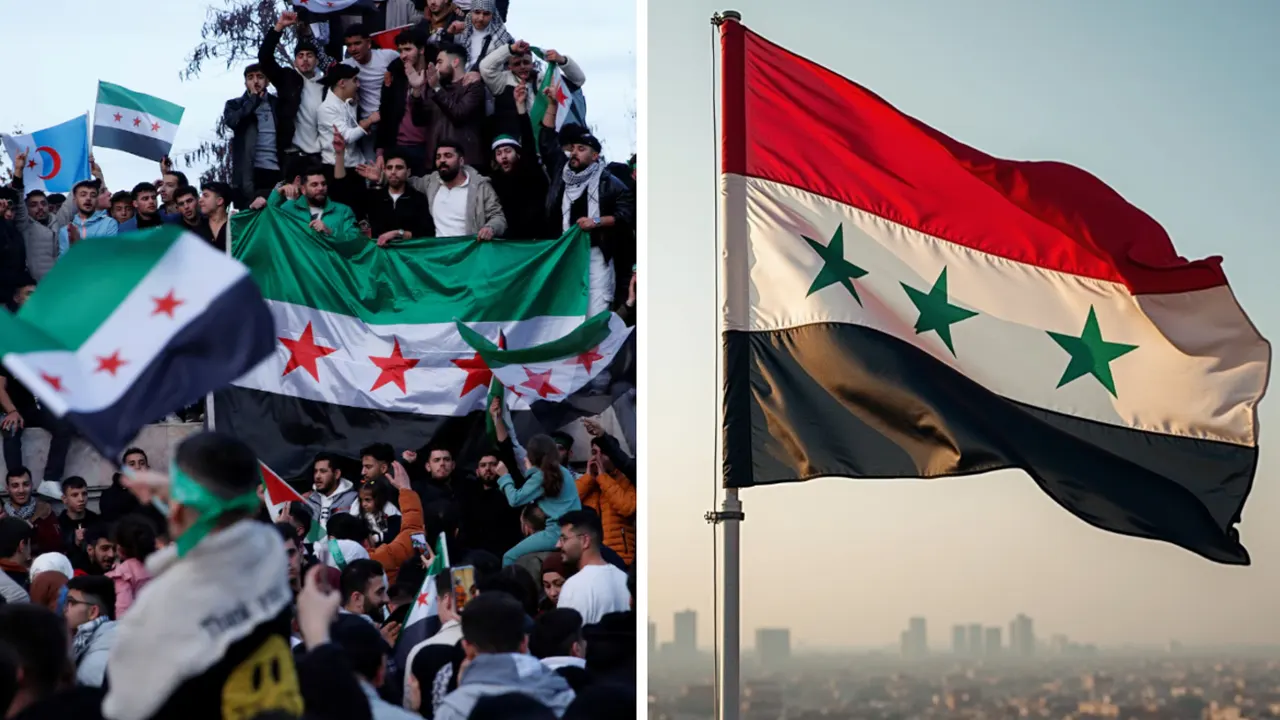
The Syrian rebellion began in 2011 as part of the Arab Spring wave. Since then, Bashar al-Assad has remained steadfast in power, employing various strategies to combat separatist movements. While many rebels initially claimed to support democracy, the movement eventually fell under the control of extremist militant groups.
During this prolonged armed conflict, various international powers, particularly the Obama administration, made efforts to remove Bashar al-Assad. Yet, over a decade later, Assad remains in power, and the opposition is fragmented and weakened. Among these rebel factions, the most powerful has been HTS (Hay’at Tahrir al-Sham), long recognized as al-Qaeda’s Syrian franchise.
HTS emerged from a significant faction of al-Qaeda and once seized control of key areas in Syria’s Idlib province. While the group is banned by the United Nations and most countries, the United States, though not directly supporting HTS, has shown a lenient attitude toward them.
Such an attitude toward militancy has raised questions not just in Syria but globally about U.S. foreign policy. On one hand, the U.S. declared al-Qaeda a terrorist organization and invaded Afghanistan in 2001; on the other hand, it is now seen as favoring dialogue with its franchise.
The Biden administration’s push for “peace” has been seen by many as an example of a double standard. While Bashar al-Assad has successfully resisted militant groups, the U.S. continues its efforts to isolate him internationally.
Biden’s recent remarks have been interpreted by some as part of U.S. foreign policy aimed at reducing its military presence in the Middle East while positioning groups like HTS favorably.
The Legacy of 9/11 and Criticism of U.S. Support
Many observers draw parallels between the 9/11 attacks on the Twin Towers by al-Qaeda in 2001 and the U.S.’s current attitude toward HTS. While al-Qaeda was branded the “world’s chief enemy,” its franchise is now seen as a functional force.
HTS recently took control of a significant part of Syria within just 12 days of fighting, whereas the democratic rebellion that lasted 12 years failed. This has added a new dimension to Syria’s political reality.
Analysts believe that the rise of HTS and the U.S.’s tacit support could mark a new chapter of militancy in the Middle East, while also calling into question America’s position on global counterterrorism.