ICE says it used “minimum force.” Civil rights experts say the arrest may cross constitutional lines
A Minneapolis mother, Becky Ringstrom, was arrested after peacefully observing federal immigration officers, sparking renewed questions about law enforcement tactics and civil liberties.

ICE says it used “minimum force.” Civil rights experts say the arrest may cross constitutional lines
Minneapolis Woman Arrested for Following ICE Agents Sparks Debate on Law Enforcement and Civil Rights
Minneapolis, MN — Becky Ringstrom, a 42-year-old mother of seven, was dramatically arrested in a Minneapolis suburb on January 29 after following federal immigration officers in her gray Kia SUV, raising questions about civil liberties and law enforcement tactics.
According to eyewitness video verified by Reuters, Ringstrom was boxed in by multiple unmarked federal vehicles. At least six masked agents jumped out, and one appeared to threaten her windshield with a metal object. Ringstrom later described being terrified, recalling the recent death of a U.S. citizen protester at the hands of immigration officers.
“I know what I’m doing is not wrong,” Ringstrom said in an interview with Reuters after her arrest.
Federal Charges and Legal Context
Ringstrom was transported to the Bishop Henry Whipple Federal Building in Minneapolis, where she received a citation under Title 18, Section 111 of the U.S. Code. The law criminalizes any individual who “forcibly assaults, resists, opposes, impedes, intimidates, or interferes” with federal officers performing official duties. Violations can be charged as either misdemeanors or felonies, with felony sentences reaching up to 20 years when deadly or dangerous weapons are involved, or if injuries are caused.
A Reuters review of federal court records found that the Trump administration has prosecuted at least 655 people nationwide under this law since city-focused immigration crackdowns began last summer—more than double the prosecutions during the same period in 2024-2025.
Department of Homeland Security spokesperson Tricia McLaughlin stated that federal officers “used the minimum amount of force necessary to protect themselves, the public, and federal property,” while ICE maintains that Ringstrom “stalked law enforcement and attempted to obstruct their sworn duties.”
Civil Rights Concerns
Legal experts question whether following ICE agents at a distance constitutes obstruction. Seth Stoughton, policing professor at the University of South Carolina School of Law, noted:
“Without any physical contact, just following an agent in a car, it's not clear that this is resistance or impeding, and it seems like a stretch to classify it as ‘forcible.’”
Deborah Fleischaker, a former ICE official under President Biden, called such arrests “inappropriate and unconstitutional,” emphasizing that “observing ICE activities is not a crime and should not be treated as such.”
A federal judge in Minneapolis previously ruled that following ICE vehicles at an appropriate distance did not justify a stop or arrest, although this order was paused by an appeals court.
Escalating Tactics and Public Fear
Multiple videos in January and early February show ICE officers drawing weapons while approaching vehicles allegedly following them. In one instance south of Minneapolis, officers swerved and stopped abruptly before approaching a trailing car. DHS officials claimed the drivers were obstructing law enforcement, though Reuters could not independently verify these claims.
Some Minnesota residents have reported feeling intimidated. Video from January 22 showed an ICE officer leading a woman who had been following his vehicle back to her home, suggesting he knew her identity and address. Observers describe these tactics as part of a broader effort to monitor and potentially intimidate local activists.
Broader Context
Under the Trump administration, federal immigration authorities have increasingly cited the law against individuals interfering with officers’ work. ICE officials reportedly maintain an internal database tracking names, photos, actions, locations, and vehicle details of protesters, though DHS states it does not maintain a database of domestic terrorists.
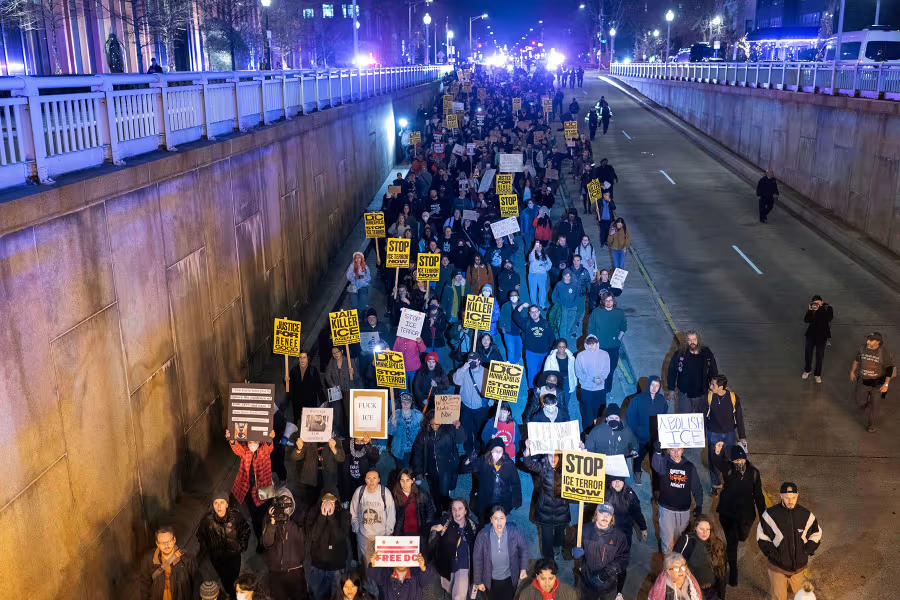
While ICE emphasizes officer safety and the legality of warnings, civil liberties advocates stress that peaceful observation and documentation of government activity are protected First Amendment rights.
Next Steps
Ringstrom has not yet received a court date; her citation notes the court appearance as “TBD.” The case highlights ongoing tensions between law enforcement authority, public oversight, and civil liberties—especially concerning immigration enforcement in U.S. cities.