

US Army’s Plan to Blow Up Dangerous Chemicals in Iowa Sparks Major Public Concern
The US Army’s plan to destroy nearly 10,000 pounds of unstable lead azide at an Iowa ammunition plant has sparked a major legal and environmental controversy. Residents fear toxic lead particles could spread through nearby communities, while environmental groups challenge the operation over public safety and transparency.

Reporter · CSB News USA
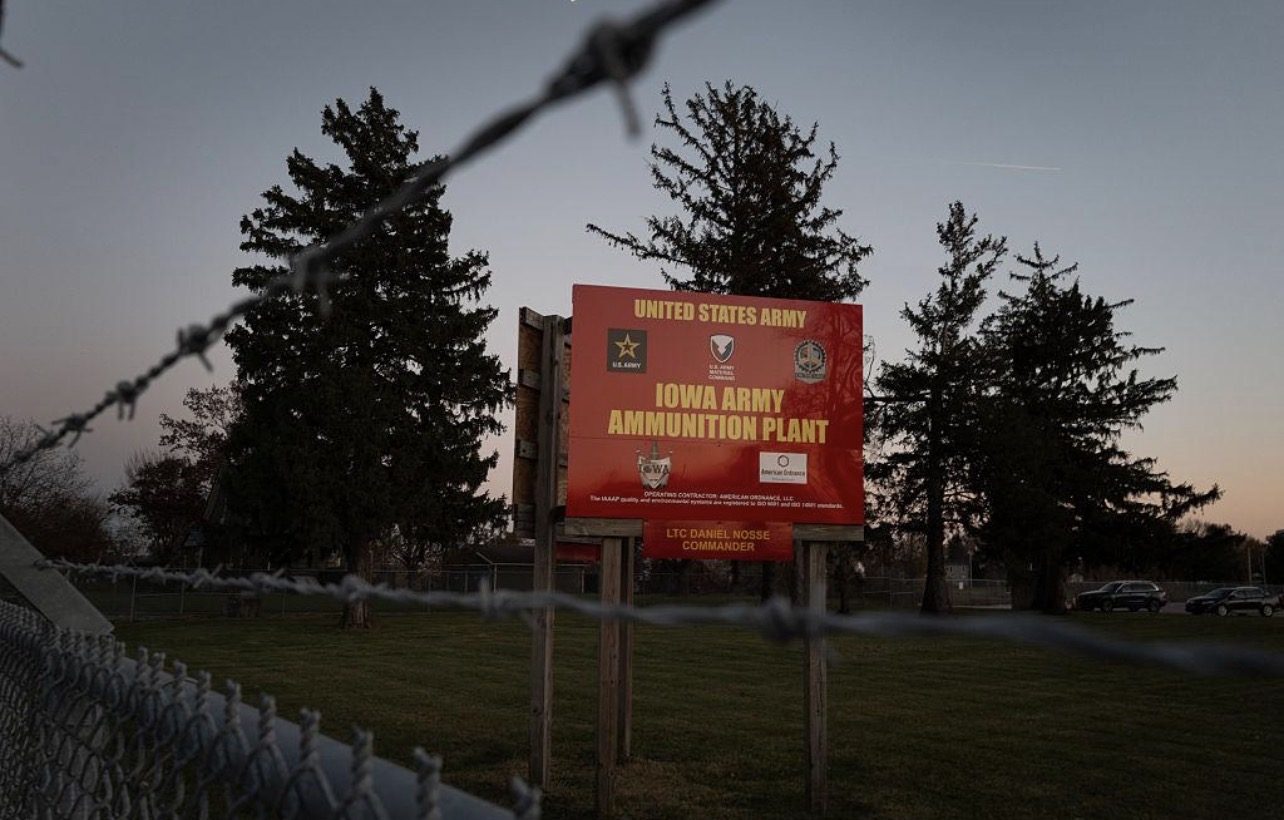
The United States Army’s controversial plan to detonate nearly 10,000 pounds of unstable explosive material at a military ammunition facility in Iowa has triggered a major legal dispute, public health concerns and growing opposition from environmental organizations.
The planned operation involves destroying 68 barrels of degraded lead azide at the Iowa Army Ammunition Plant in Middletown, a small community in southeastern Iowa. The Army initially scheduled the controlled explosions for November 20, but repeated postponements, legal challenges and public protests have complicated the operation.
The Army most recently announced that the detonation would take place on Wednesday, November 25, 2026. Officials said the revised schedule would provide more favorable weather conditions and allow additional time to establish safety measures.
However, the controversy intensified after a federal appeals court temporarily halted the environmental permit that had authorized the operation. Despite that decision, the Justice Department argued that the military could rely on separate emergency provisions under federal law to address what officials described as an immediate explosives hazard.
The situation changed again on November 23, when the Eighth U.S. Circuit Court of Appeals declined to block the operation. The court determined that environmental groups had not demonstrated that they were likely to succeed in their legal challenge. It also recognized the danger posed by the deteriorating explosives and the possibility of an uncontrolled explosion.
President Donald Trump subsequently announced that he had instructed the military to hold off until the court approved the operation and Iowa’s incoming governor, Rob Sand, agreed to it. The court has since cleared the way, but the governor-elect’s position remains an important political consideration.
The dispute centers on approximately 9,700 pounds of degraded lead azide stored in 68 barrels at the Iowa Army Ammunition Plant. The material contains an estimated 6,900 pounds of lead.
Lead azide is an explosive chemical commonly used in military ammunition and detonators. It is particularly sensitive to heat, friction and physical impact. According to Army officials, the material has deteriorated and undergone a process known as recrystallization, creating a potentially dangerous situation.
The problem was discovered in March 2026 during inspections at the military facility. Since then, specialists have been examining the material and evaluating possible methods of disposal.
Military officials argue that moving the chemicals could create an even greater danger because disturbing the unstable material could trigger an accidental explosion. They also warn that falling temperatures could further increase the risk of an uncontrolled detonation.
The Army maintains that destroying the material in a controlled operation is the safest available option. Officials say the military can select favorable weather conditions, establish protective barriers and monitor the surrounding environment during the operation.
Environmental organizations, however, strongly disagree with the government’s approach.
The Iowa Environmental Council and the Iowa chapter of the Sierra Club challenged the Environmental Protection Agency’s emergency permit in federal court. Their concerns include insufficient public notification, inadequate consideration of alternative disposal methods and the potential release of toxic material into nearby communities.
Earthjustice, which is representing environmental interests in the legal dispute, has also questioned whether the government adequately considered the consequences for residents, property owners, farmers and the surrounding environment.
The organizations argue that the public deserves detailed information about the expected pollution levels, the direction of the airborne material and the protective measures that will be implemented.
One of the biggest concerns is the possibility that the explosions could release lead-containing dust into the atmosphere.
According to government advisories, the controlled detonation is expected to produce an airborne plume containing lead particles. Depending on weather conditions, wind direction and other environmental factors, the particles could travel beyond the military installation before settling on the ground.
Communities near Middletown are particularly concerned because residential properties, farms and other buildings are located relatively close to the ammunition plant.
Middletown has fewer than 400 residents, but the potential impact extends beyond the small community. Thousands of people living in surrounding areas could face concerns about airborne particles and contamination of outdoor surfaces.
Officials have also warned that the effects could extend into neighboring Illinois. State agencies there have been monitoring developments and requesting more information from federal authorities.
Illinois Governor JB Pritzker has pressed federal officials for greater transparency and clearer information about potential environmental and public health consequences.
Public health experts have emphasized that lead exposure is particularly dangerous for young children and pregnant women. Lead can affect the brain, nervous system and other organs. In children, exposure may contribute to developmental problems, learning difficulties and behavioral challenges.
There is no identified safe level of lead exposure for children. Lead particles can also remain in soil, household dust and other environmental surfaces, creating potential exposure risks even after an airborne plume has passed.
The concern is not limited to breathing contaminated air. Lead-containing dust could settle on vehicles, outdoor furniture, playground equipment, windowsills, gardens and agricultural land.
Residents have therefore been advised to take precautions if their communities fall within the potentially affected areas.
Official guidance has included staying indoors during the operation, keeping windows and doors closed, and setting heating and cooling systems to recirculate indoor air when possible. People have also been advised to avoid unnecessary travel through affected areas.
After authorities determine that the airborne exposure period has ended, residents may need to clean potentially contaminated surfaces carefully, particularly places frequently touched by children.
Farmers face additional challenges because livestock, animal feed, agricultural equipment and open fields could potentially be exposed to deposited particles.
Iowa agricultural officials have recommended that farmers in potentially affected areas move livestock, feed and equipment indoors or to alternative locations when practical. However, agricultural representatives have pointed out that moving large numbers of animals and securing farm operations at short notice can be difficult.
Another major concern involves the level of public communication surrounding the operation.
Environmental advocates and some local officials say many residents did not receive enough advance information about the potential risks. They have questioned why broader communities were not informed earlier and why more detailed environmental assessments were not made publicly available.
The Army has defended its planning process, saying it has worked with the Environmental Protection Agency, technical specialists and local authorities to determine the safest available disposal method.
The EPA issued an emergency permit in November authorizing the treatment of the hazardous material through intentional detonation at the military facility. The permit included safety requirements intended to limit the spread of lead particles.
The federal appeals court’s November 23 decision represented a significant development in the legal dispute. The judges acknowledged the risks associated with the operation but concluded that the danger of an uncontrolled explosion also had to be considered.
The ruling means the environmental groups did not obtain the court intervention they were seeking to stop the permitted operation. Nevertheless, Trump’s separate instruction to the military introduced another condition involving approval from Iowa’s incoming governor.
Rob Sand, a Democrat who won the Iowa gubernatorial election, has questioned the administration’s handling of the situation. He has called for greater transparency and said residents deserve to understand how the ammunition plant reached this point and why the government considers the proposed approach necessary.
The controversy has also attracted attention beyond Iowa because it raises broader questions about how the federal government handles aging military explosives and hazardous materials near populated communities.
For residents, the immediate concern is whether the planned operation can be conducted without exposing families, workers, children, animals and agricultural land to dangerous contamination.
The Army has said its objective is to eliminate the threat posed by the unstable explosives before colder weather increases the possibility of an accidental blast. Environmental organizations continue to emphasize that public safety must include protection against pollution resulting from the disposal process itself.
As November 25 approaches, the situation remains politically and environmentally sensitive. The appeals court has cleared the legal obstacle involving the emergency permit, but Trump’s instruction concerning the governor-elect adds another dimension to the decision.
The central question is no longer simply whether the Army can legally proceed under its emergency permit. It is whether the federal and state authorities can reach agreement on the operation and demonstrate that the surrounding communities will be adequately protected.
Related News

New York Crime Shock: 62-Year-Old Woman Brutally Killed Inside Manhattan Apartment

Trump Seeks ‘Fair’ Trade Deal With Canada, but Key Issues Remain Unresolved

ICE Faces Scrutiny After Paying $68 Million for Georgia Warehouse Worth Far Less

Comments 0
Log in or create a free account to join the conversation. You can comment anonymously.
No comments yet. Be the first.