

Sanchez Steps Up Campaign as Spain Heads for Snap Election on November 29
Spanish Prime Minister Pedro Sanchez is stepping up efforts to secure support for left-wing parties ahead of the November 29 snap election. With right-wing parties expected to make gains, Sanchez has accused Madrid's regional government of reviving practices reminiscent of the Franco-era repression.

CSB News USA
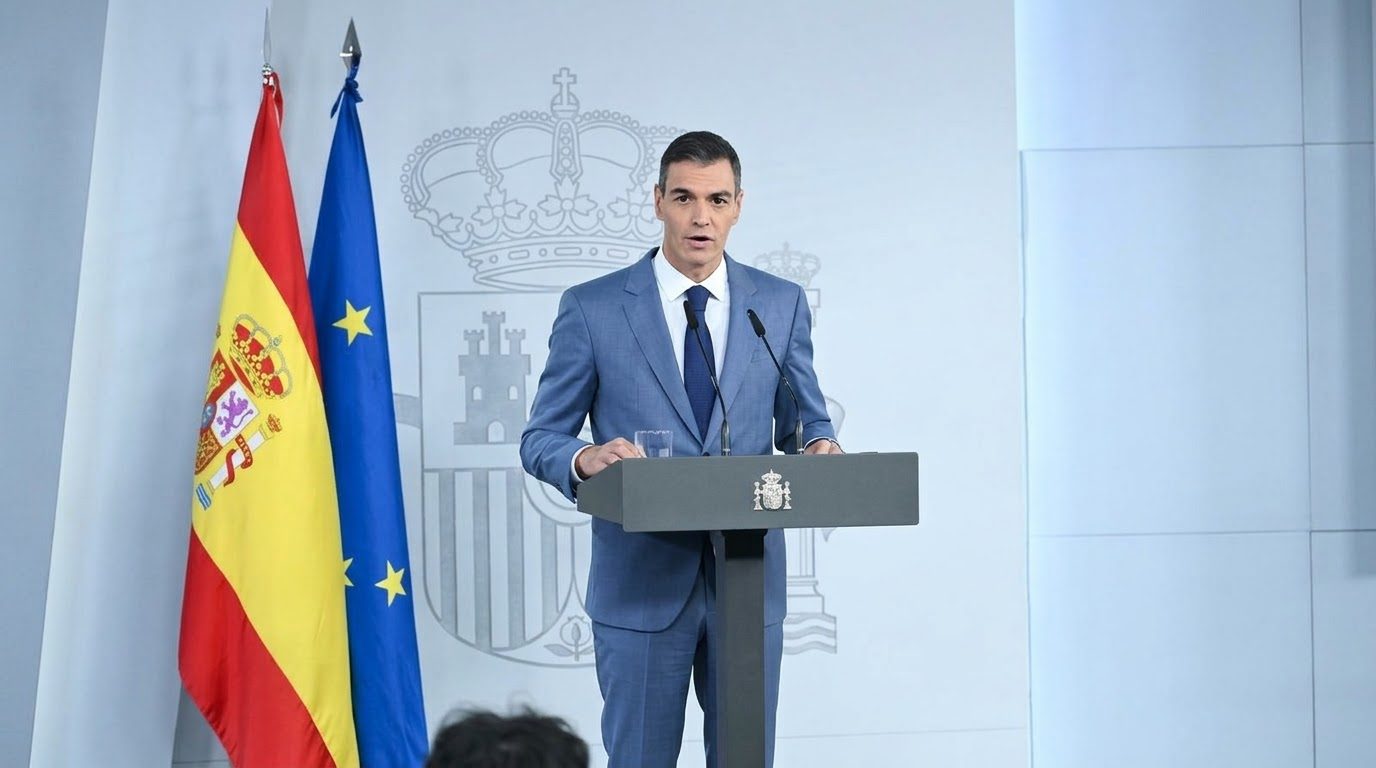
On November 22, Sanchez posted a comparison on social media platform X between a form used by the Community of Madrid and one associated with the regime of former dictator Francisco Franco, who ruled Spain from 1939 to 1975.
“The one on the left is a reporting form used by Franco's regime to persecute and censor freedom of thought,” Sanchez wrote. He alleged that the form on the right, introduced by the Community of Madrid, was intended to serve a similar purpose in the 21st century.
“It’s not fake. It’s not an exaggeration. It’s repression returning to our lives,” he added.
Sanchez also announced that the Spanish government would formally demand that the Community of Madrid withdraw instructions that he said violated one of the most important rights of teachers.
A day earlier, on November 21, Sanchez urged supporters of his Spanish Socialist Workers' Party (PSOE) to turn out in large numbers, calling for 75 percent voter participation and 176 parliamentary seats.
“We need a stronger government if we want to get there sooner and go further. I'm asking you for 75% turnout and 176 seats. YES WE CAN! We're going to make it happen,” he wrote.
According to Al Jazeera, Sanchez called the snap election about a month ago after parliament rejected housing relief measures proposed by his minority government.
In a televised address, he said Spain needed renewed public support and called for a stronger progressive majority in parliament to overcome vested interests, introduce further social reforms and continue transforming the country.
Housing has emerged as one of the most sensitive issues in the election campaign. Nationwide protests have taken place in recent weeks following the televised eviction of an 87-year-old woman in Madrid.
Data from real estate website Idealista, cited by Al Jazeera, show that average rents in Spain have nearly doubled over the past decade, while asking prices for homes have increased by around 90 percent.
Sanchez acknowledged that his government had made mistakes and failed to fulfil some previous campaign promises. He also admitted that part of the public that had previously supported his government was now dissatisfied.
Immigration is expected to be another major issue in the election. Sanchez has been among Europe's strongest supporters of immigration, highlighting its benefits for society and the economy. His government has granted legal status to nearly one million undocumented migrants.
In contrast, the far-right Vox party is calling for significantly tighter immigration controls.
The movement of migrants from Ceuta, Spain's North African enclave, to the Spanish mainland has also attracted international attention, with US President Donald Trump commenting on the issue in a social media post.
The November 29 election is expected to be a crucial test of Sanchez's political standing and the strength of Spain's left-wing parties.
Reporter
CSB News USA
Related News
Trump Calls Falling Oil Prices a ‘Giant Hoax’ After Midterm Elections

Finland Imposes Air and Sea Restrictions Twice Following Drone Attack on Russian Cargo Ship

Most Flights at Brussels Airport Expected to Be Canceled Monday Amid National Strike

Comments 0
Log in or create a free account to join the conversation. You can comment anonymously.
No comments yet. Be the first.