

White House Changes Cybersecurity Chief, Kirsten Davies Set to Lead Team Temporarily
Sean Cairncross is leaving his role as US National Cyber Director, with Defense Department technology chief Kirsten Davies expected to take over temporarily. The leadership change comes amid political uncertainty and growing concerns over America’s cybersecurity and critical infrastructure.

CSB News USA
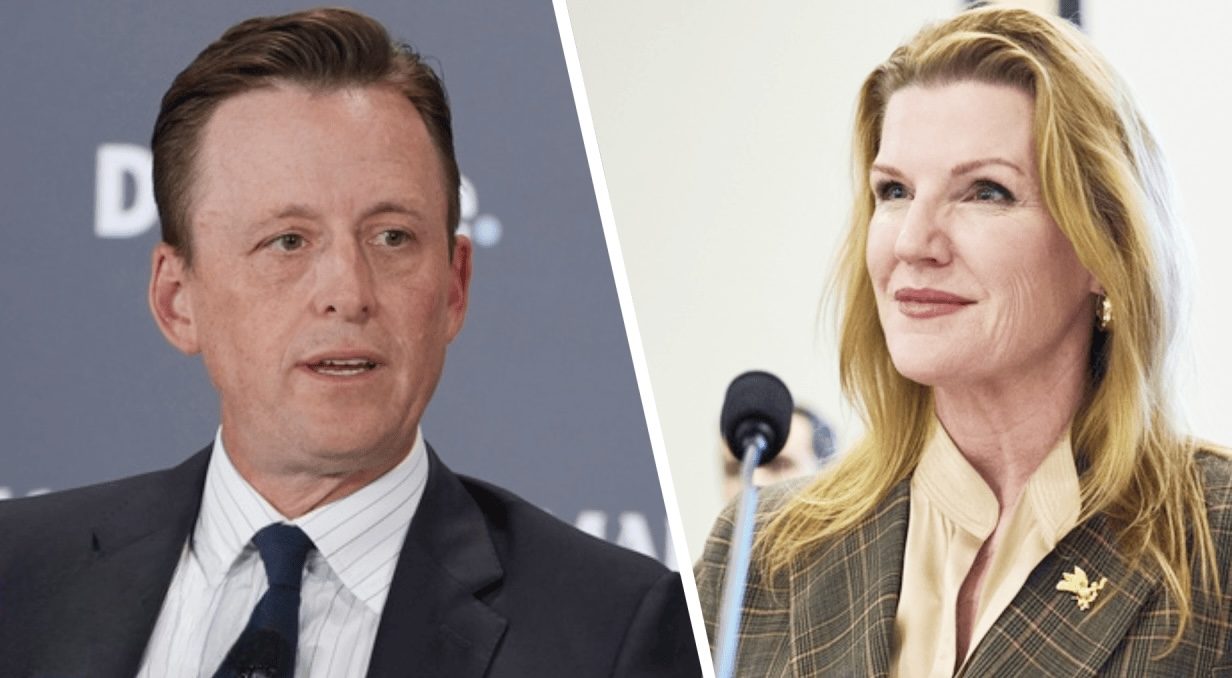
The announcement came on Thursday, November 19, 2026, as the administration faces growing scrutiny over a series of technology disruptions affecting important services across the United States.
The leadership change comes just weeks after Republicans suffered major losses in the November midterm elections, with Democrats expected to take control of both chambers of Congress in January. However, available reports do not establish that the election results were the direct cause of Cairncross’s departure.
According to CBS News, a White House official confirmed that Cairncross would be leaving his position. Multiple sources told the network that he had been fired. CBS also reported that White House Chief of Staff Stephen Miller had questioned whether Cairncross possessed the necessary expertise for the role.
Axios, which first reported the departure, presented a different account. Citing sources familiar with the matter, the publication reported that Cairncross did not want to serve another two years and that his departure was amicable. The report also said the administration wanted to move quickly to secure Senate confirmation for a successor before Democrats take control of the Senate in January.
The conflicting accounts mean the precise circumstances surrounding Cairncross’s departure remain disputed. The White House has not publicly provided a detailed explanation resolving those differences.
Kirsten A. Davies is set to assume the responsibilities of the National Cyber Director on an interim basis. She currently serves as the chief information officer of the Department of Defense and has extensive experience in cybersecurity, information technology and corporate technology management.
According to her official Defense Department biography, Davies previously held senior cybersecurity and technology positions at major international companies, including Unilever, The Estée Lauder Companies, Barclays Africa Group, Hewlett Packard Enterprise and Siemens.
Her responsibilities at the Defense Department have included overseeing information technology strategy, cybersecurity planning, information management and the protection of critical digital infrastructure. Her professional background is expected to bring substantial technical and management experience to the White House cybersecurity office.
The position of National Cyber Director carries considerable responsibility. The Office of the National Cyber Director coordinates cybersecurity policy and strategy across the federal government. It also advises the president on protecting government networks, critical infrastructure and national digital systems.
The office works on issues involving cyber threats, foreign adversaries, emerging technologies and cooperation between government agencies and private-sector technology companies.
Cairncross had led the office since August 2025, after receiving Senate confirmation. Before joining the administration, he held several positions connected to Republican politics and national security. He previously served in the Republican National Committee and worked as an adviser during Trump’s first administration.
During his tenure, Cairncross was involved in discussions about artificial intelligence, cybersecurity policy and the protection of critical infrastructure. The administration also advanced its national cybersecurity strategy during his time in office.
His departure comes during a particularly sensitive period for American technology security. In recent days, several major technology disruptions have affected services connected to air travel, banking and national security systems.
The incidents have raised concerns about the reliability and resilience of the country’s digital infrastructure. They have also increased pressure on federal agencies to explain how they are responding to disruptions affecting essential services.
However, officials have cautioned against treating the separate incidents as evidence of a coordinated cyberattack. According to Reuters, senior US officials said the disruptions were separate events and were not linked to cyberattacks. Intelligence officials also indicated that there was no evidence of a coordinated, state-sponsored operation behind the incidents.
The distinction is important because technical outages can result from maintenance problems, software changes, infrastructure failures or other operational issues. Without supporting evidence, attributing such disruptions to foreign hackers or hostile governments would be misleading.
The leadership transition also carries political significance. Republicans lost their majorities in both the House of Representatives and the Senate in the November midterm elections. Democrats are expected to assume control of Congress in January, potentially making Senate confirmation of senior administration nominees more complicated.
The National Cyber Director position requires Senate confirmation for a permanent appointment. Davies’s expected interim role will allow the office to continue operating while the administration considers its longer-term leadership arrangements.
The transition also raises questions about the direction of the administration’s cybersecurity priorities. Artificial intelligence is becoming increasingly important in national security, with advanced systems creating opportunities for cyber defense while also presenting new risks.
Government agencies must prepare for threats involving data theft, ransomware, attacks on critical infrastructure and the misuse of emerging technologies. Protecting electricity networks, financial systems, transportation infrastructure and government communications remains a major national security priority.
Davies’s experience in managing cybersecurity operations at large international companies could be relevant as the administration seeks to strengthen cooperation between government institutions and the private sector.
Cairncross expressed pride in his work during his time in the administration. In a statement reported by Axios, he highlighted efforts to strengthen American cybersecurity, protect critical infrastructure, confront foreign threats and advance US leadership in artificial intelligence.
For now, the immediate priority will be maintaining continuity in the federal government’s cybersecurity operations while the leadership transition takes place.
The change represents a significant development within Trump’s national security team. Whether Davies will introduce substantial policy changes or continue the existing strategy remains to be seen.
As the United States faces increasingly complex digital security challenges, the effectiveness of the new leadership will be closely watched by lawmakers, technology companies and national security experts.
Reporter
CSB News USA
Related News

Trump’s 751 Stock Trades Revealed, Nvidia and SpaceX Investments Draw Fresh Attention
Ted Cruz Declares Democratic Civil War After Explosive Clash With Republican Senator John Cornyn

Colorado Judge Says ICE Made a Mockery of Court Orders After Re-Arresting Released Immigrant
Comments 0
Log in or create a free account to join the conversation. You can comment anonymously.
No comments yet. Be the first.