
US Sanctions Hezbollah-Linked Charity and Financial Network in Lebanon
The United States has imposed fresh sanctions on a Lebanese charity accused of secretly supporting Hezbollah under the cover of humanitarian work. Washington has also targeted three individuals and two gold-trading companies over alleged financial links to the group and Iran. The move intensifies pressure on Hezbollah's funding networks.
Reporter · CSB News USA
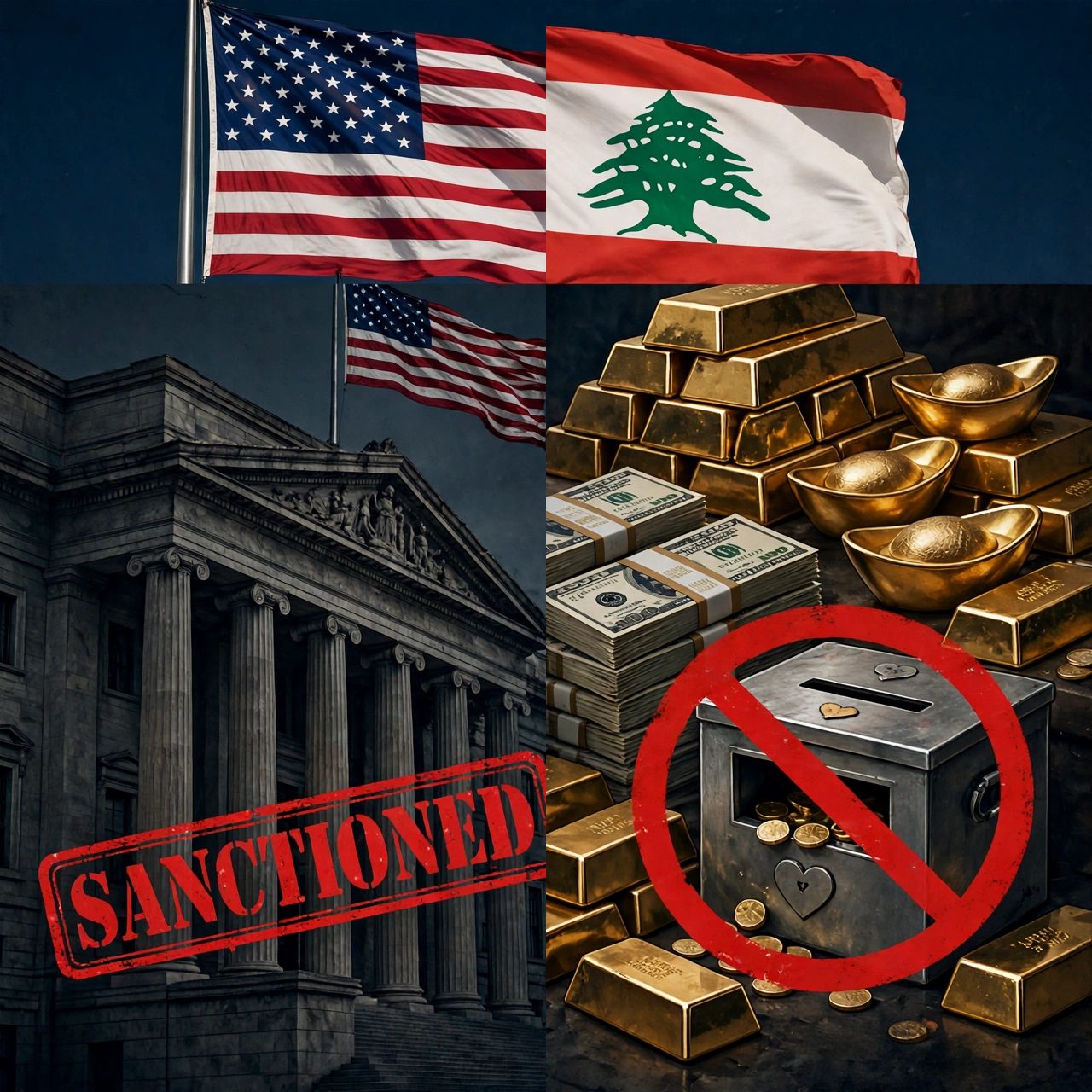
The United States has announced a new round of sanctions against a Lebanese charity and several individuals and companies accused of supporting Hezbollah’s financial and operational activities. The move marks another significant step in Washington’s efforts to weaken the financial networks of the Iran-backed Lebanese organisation.
On Wednesday, November 18, 2026, the US Department of the Treasury announced that its Office of Foreign Assets Control (OFAC) had designated the Wa Ta’awanu Association, a Lebanon-based charitable organisation, over its alleged connections to Hezbollah.
According to the Treasury Department, the organisation presents itself as a humanitarian charity providing emergency assistance to people in southern Lebanon. However, American officials allege that it has also been used to support Hezbollah’s activities while operating under the appearance of legitimate humanitarian work.
The name Wa Ta’awanu comes from the Arabic expression meaning “and cooperate”. The words are also associated with the opening of a widely recognised Quranic verse. The organisation’s charitable identity has become central to the allegations made by Washington.
The Treasury Department claims that the association has channelled money collected from outside donors towards Hezbollah’s activities. It further alleges that the organisation has provided cover for the group’s operations in areas where the Lebanese government and military are attempting to strengthen state authority.
The US government has described the organisation as a Hezbollah-affiliated charity that uses humanitarian services as a cover for activities supporting the group.
The sanctions also target the association’s founder, Afif Abdel Rida Chouman. According to the Treasury Department, Chouman leads the organisation and coordinates its activities under Hezbollah’s direction.
The US State Department has made additional allegations about the organisation’s activities. In its November 18 statement, Washington accused the association of claiming to provide emergency relief while allegedly helping move Hezbollah operatives, store weapons and channel outside donor funds towards the group’s activities.
These accusations have not been independently established in the public reporting surrounding the announcement. The sanctions represent the US government’s official position, rather than a judicial finding that every allegation has been proven.
The latest action does not stop with the charitable organisation. Washington has also targeted a financial network involving two Lebanese brothers, two gold-trading companies and alleged cross-border money transfers connected to Hezbollah and Iran.
The two individuals named in the announcement are Hassan Khechen and Ibrahim Khechen. The Treasury Department alleges that the brothers helped transfer substantial amounts of money from Iran’s Islamic Revolutionary Guard Corps-Quds Force (IRGC-QF) to Lebanon on behalf of Hezbollah.
American officials say the network used gold trading, cash couriers and financial transactions across several countries to move money while making it more difficult for authorities to identify the origin and destination of the funds.
One of the companies targeted is Gold Global Company, a Lebanon-based business owned by Hassan Khechen. According to the Treasury Department, the company was used to transfer money from several transit countries into Lebanon for Hezbollah.
The second company is Sankari Gold Kuyumculuk Ticaret Limited Sirketi, which operates in Türkiye and is also controlled by Hassan Khechen, according to US officials.
The Treasury Department alleges that Sankari Gold assisted in moving gold bullion and cash from Africa through the financial network. It also says that the network relied on couriers to transport cash across international borders.
The US government has linked Ibrahim Khechen to the same alleged smuggling operation. Treasury officials referred to a related courier who was arrested at Beirut airport in February 2025 while carrying approximately $2.5 million in hand luggage. The department cited the incident as part of its explanation of the network’s activities.
In total, the November 18 announcement covers three individuals and three organisations. The individuals are Afif Abdel Rida Chouman, Hassan Khechen and Ibrahim Khechen. The organisations are Wa Ta’awanu Association, Gold Global Company and Sankari Gold.
Treasury Secretary Scott Bessent said the measures were intended to prevent Iran from extending its influence in Lebanon through armed groups and financial networks.
He said Washington would continue disrupting Iran’s efforts to influence the region and finance its allied organisations.
The announcement was made under Executive Order 13224, an American counterterrorism authority that allows the government to impose financial restrictions on individuals and organisations accused of providing material support to designated terrorist groups.
Under the sanctions, any property and financial interests belonging to the designated individuals and organisations that are located in the United States or controlled by US persons must be blocked and reported to the relevant authorities.
American citizens and businesses are generally prohibited from conducting transactions involving the sanctioned parties unless an applicable authorisation or exemption exists.
The restrictions can also affect companies that are not directly named in the announcement. Under the US Treasury’s 50 Percent Rule, businesses owned, directly or indirectly, 50 percent or more by one or more blocked persons are generally treated as blocked entities.
Foreign financial institutions and businesses may also face sanctions exposure if they knowingly facilitate certain significant transactions involving designated parties.
This means the consequences could extend beyond the individuals and companies named in the announcement, particularly where international banking, money transfers and gold trading are involved.
Hezbollah has been a major political and military force in Lebanon for decades. The organisation has close ties with Iran and maintains an extensive network of political, social and military activities. The United States designated Hezbollah as a Foreign Terrorist Organization in 1997. It was also designated under separate American counterterrorism sanctions in 2001.
Washington has repeatedly accused Hezbollah of using financial institutions, commercial businesses, charitable organisations and international networks to raise and move money.
The latest sanctions are part of a broader American strategy to restrict the group’s access to international financial resources. Rather than targeting only its military operations, the US administration is increasingly focusing on the financial structures that it believes help Hezbollah maintain its influence.
The timing of the announcement is also significant for Lebanon. The country has faced years of political instability, economic difficulties and security tensions involving Hezbollah and Israel.
The Lebanese government has faced growing international pressure to strengthen the authority of the national state and ensure that weapons and security decisions remain under government control.
According to the US Treasury, the Wa Ta’awanu Association’s alleged activities are particularly concerning because they could undermine efforts by the Lebanese government and military to establish greater control over areas in southern Lebanon.
American officials have referred to a framework involving the United States, Lebanon and Israel that was announced on June 26, 2026. Under that framework, Lebanese armed forces moved into areas previously held by Israeli forces in July to secure those locations and prevent Hezbollah fighters and weapons from returning.
The Treasury Department claims that the charity’s activities have complicated these efforts by providing support and cover for Hezbollah’s operations in the affected areas.
However, the situation creates an important distinction between organisations accused of supporting armed groups and legitimate humanitarian organisations providing assistance to civilians.
Southern Lebanon has experienced repeated conflict and displacement. Many families in the region depend on charitable organisations and international humanitarian assistance for food, medical services, shelter and other essential needs.
Consequently, sanctions against a charity can raise concerns about the wider humanitarian environment, particularly if financial institutions become more cautious about processing donations or working with organisations operating in the region.
The US government maintains that its actions are directed at organisations and individuals allegedly supporting Hezbollah, not ordinary Lebanese citizens who need humanitarian assistance.
Nevertheless, the practical impact of financial restrictions will depend on how banks, donors and humanitarian organisations respond to the new measures.
The announcement also comes amid increased American pressure on Iran and its regional financial networks. The US administration has been attempting to restrict Tehran’s ability to provide financial and material assistance to organisations it considers threats to regional security.
The Treasury’s latest announcement specifically identifies the IRGC’s Quds Force as a source of funds allegedly transferred through the network involving the Khechen brothers.
The Quds Force is the external operations arm of Iran’s Islamic Revolutionary Guard Corps. It has long been associated with Iran’s relationships with armed groups and allied organisations across the Middle East.
American officials believe that restricting the movement of money through gold trading and cash couriers could make it harder for Hezbollah to access financial resources.
Gold is particularly relevant because it can be traded internationally and converted into cash through commercial networks. Cash couriers can also move money across borders without relying entirely on conventional banking channels.
By targeting both the alleged charity network and the gold-trading businesses, Washington is attempting to address different parts of what it describes as Hezbollah’s wider financial infrastructure.
The latest announcement also demonstrates that American sanctions can affect organisations operating outside the United States. Even when a company is based in Lebanon or Türkiye, its international banking relationships and business transactions may be affected by restrictions involving US persons and financial institutions.
Reuters reported that no immediate response was available from the newly sanctioned individuals or organisations when the announcement was made. Their position and any possible legal challenge to the allegations remain unclear.
For Lebanon, the announcement adds another layer of pressure to an already complicated political and economic situation. The government must balance international demands to strengthen state authority with the country’s urgent need for economic recovery, stability and humanitarian assistance.
The sanctions may also increase scrutiny of charities, money changers and precious-metal trading companies operating in the region. Financial institutions may introduce additional checks to ensure that donations and commercial transactions do not involve sanctioned individuals or organisations.
For ordinary people, the most important question will be whether the restrictions remain focused on the alleged financial networks or create additional difficulties for legitimate humanitarian work.
The US Treasury has made clear that it intends to continue targeting financial channels that it believes support Hezbollah and Iran’s regional influence. The November 18 measures therefore represent more than a single action against a Lebanese charity. They are part of a wider campaign aimed at disrupting the group’s alleged financial support system.
The effectiveness of the campaign will ultimately depend on whether Washington can restrict those networks without making it harder for ordinary Lebanese families and independent humanitarian organisations to receive essential assistance.
Related News
Trump, Xi and Putin Meet in Shenzhen Ahead of Historic Talks on Global Issues
Deutsche Bank Faces Fresh Scrutiny Over Leaked Files Linking Russian Oligarchs and Epstein

Finland Records 50,819 Criminal Convictions in 2025 as Theft-Related Offences Rise Significantly
Comments 0
Log in or create a free account to join the conversation. You can comment anonymously.
No comments yet. Be the first.