

Baraka Group & PIDG Invest $45M in Chattogram Solar Project
Bangladesh’s clean energy transition is set for a major boost as local conglomerate Baraka Group and international impact investor The Private Infrastructure Development Group (PIDG) have partnered to invest $45 million in a 45-megawatt solar power plant in Fatikchhari, Chattogram. Formally launched in Dhaka through their new joint venture, Baraka InfraCo Solar Power Limited (BISPL), the two-year project aims to strengthen national energy security, cut carbon emissions, and pave the way for further foreign investment in the country’s renewable power sector.

Bangladesh Correspondent · CSB News USA
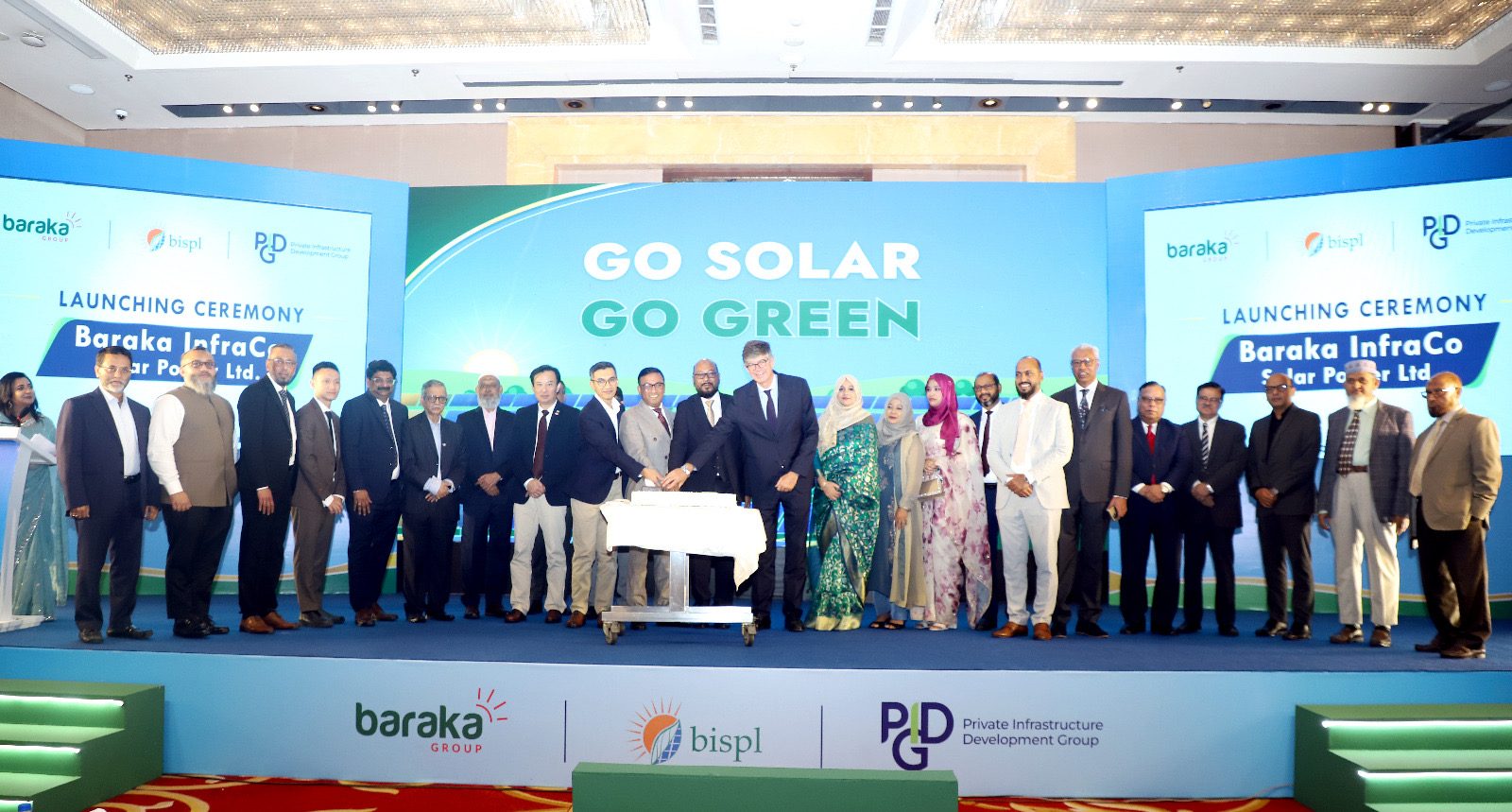
Bangladesh’s renewable energy sector is set to receive a significant boost as local conglomerate Baraka Group and international impact investor The Private Infrastructure Development Group (PIDG) have partnered to develop a 45-megawatt (MW) solar power plant in Fatikchhari, Chattogram, involving an estimated USD 45 million in foreign investment.
The project will be implemented through a joint venture company, Baraka InfraCo Solar Power Limited (BISPL), which was awarded the responsibility of developing and constructing the solar power plant through a transparent and competitive open tender process. The project is expected to be completed within two years, while the power purchase agreement with the government will remain effective for 20 years.
The joint venture company was formally launched at a ceremony in Dhaka on Thursday (November 19), attended by government policymakers, senior officials of regulatory agencies and representatives of the two organisations.
Humaiun Kobir, State Minister for Foreign Affairs, attended the event as the chief guest, while Chowdhury Ashik Mahmud Bin Harun, chairman of the Bangladesh Investment Development Authority (BIDA), was among the special guests.
Humaiun Kobir said, the 45 MW solar power project in Fatikchari is a meaningful contribution to this national vision. With an investment of approximately US$45 million, it demonstrates the potential of international partnerships and private-sector participation. It will also contribute to cleaner electricity, reduced fuel dependency and greater energy diversification.
He also said, I warmly welcome Baraka Group, PIDG and all the partners involved in this initiative. Your confidence in Bangladesh is highly appreciated. We hope this project will inspire further investment in our renewable energy sector.
The investment is expected to support the government's efforts to strengthen energy security, reduce dependence on conventional fuels and cut carbon emissions. Industry stakeholders believe the project will also help attract further foreign and private investment into Bangladesh's renewable energy sector by demonstrating the commercial viability of large-scale solar power generation.
Speaking at the inauguration, Faisal Ahmed Chowdhury, chairman of Baraka Group and Baraka InfraCo Solar Power Limited, thanked PIDG for partnering with the local conglomerate to implement the project.
He said the initiative would bring substantial foreign investment into Bangladesh and contribute positively to the national economy.
"We believe that in the coming days, PIDG will further expand its investments in Bangladesh's power and renewable energy sector," he said, expressing optimism about implementing more environmentally friendly projects in line with the government's Vision 2030.
Gilles Vaes, chief investment and project development officer (CIPDO) at PIDG, said the organisation was pleased to partner with an experienced local developer to help expand Bangladesh's renewable energy capacity.
"At PIDG, we work to mobilise private investment into sustainable infrastructure that supports climate action, economic growth and improves lives," he said.
Through BISPL, he added, PIDG would combine its international experience in project development, investment and sector expertise with Baraka Group's local market knowledge, operational capabilities and track record.
Other PIDG representatives attending the event included Dennis Foo, head of business development, Asia, for InfraCo, and Foo Juan Gin, business development manager at InfraCo. Managing director of Baraka InfraCo Solar Power Limited Fahim Ahmed Chowdhury and its director Nayem Ahmed Chowdhury also were present at the event.
Baraka Group has been operating in Bangladesh's power sector since 2009 and currently supplies around 265MW of electricity to the national grid. Besides power generation, the group has business interests in ready-made garments, healthcare, securities and education.
Meanwhile, the Fatikchhari project builds on PIDG's existing investment and development activities in Bangladesh, particularly in renewable energy and agriculture.
One of its notable contributions is the 20MWac Technaf Solartech power plant, the country's first utility-scale solar power project. PIDG supported the project through a loan guarantee in 2020, helping attract both domestic and international lenders.
In 2025, the project's commercial success enabled a local bank, supported by the World Bank's Infrastructure Development Company Limited's Investment Promotion and Financing Facility (IPFF), to take over its financing. This allowed the guaranteed loan to be redeemed ten years ahead of schedule.
The project has since emerged as a potential model for other renewable energy developers and demonstrated the viability of local-currency financing for solar power investments.
Beyond Bangladesh, PIDG operates across Africa and South and Southeast Asia, supporting infrastructure development in energy, water, waste management, electric mobility, agriculture and affordable housing, among other sectors. Its six owner governments are the United Kingdom, the Netherlands, Switzerland, Australia, Sweden and Canada.
Industry stakeholders believe the partnership could open new opportunities for foreign investment in Bangladesh's clean energy sector, combining Baraka Group's 15 years of experience in the domestic power industry with PIDG's 25 years of global expertise in infrastructure development and investment.
Related News

Fire at Muhammad Yunus’s Ancestral Home in Chattogram, Family Safe
A mother, a journalist, a professional, and now a PhD graduate. An inspiring journey of determination
Emine Erdoğan Meets Zubaida Rahman at COP31 to Strengthen Global Climate Cooperation
Comments 0
Log in or create a free account to join the conversation. You can comment anonymously.
No comments yet. Be the first.