

Ted Cruz Declares Democratic Civil War After Explosive Clash With Republican Senator John Cornyn
Ted Cruz criticized Democratic divisions after a heated Senate confrontation with fellow Republican John Cornyn over President Trump’s judicial nomination.

CSB News USA
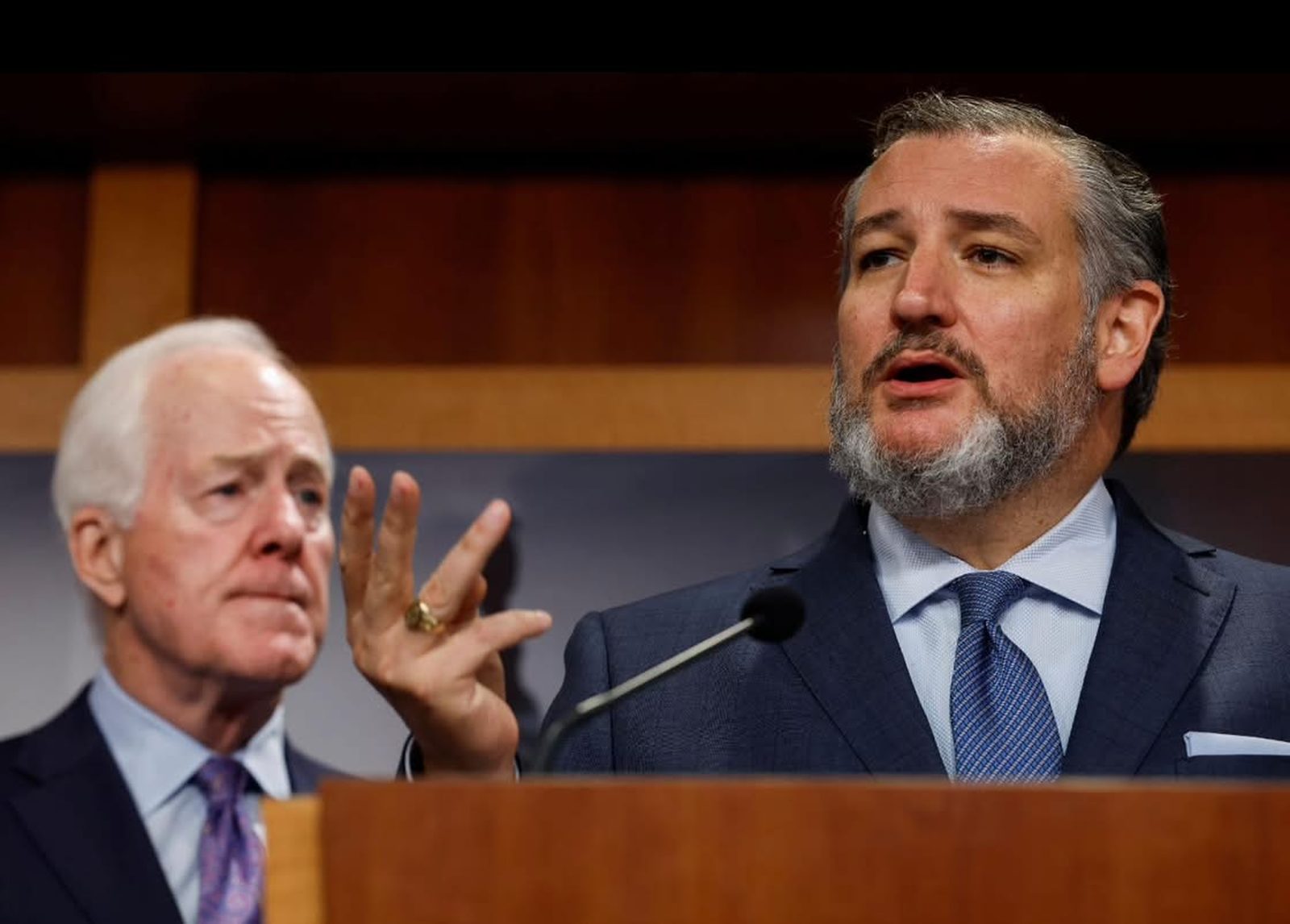
Texas Republican Senator Ted Cruz has accused Democrats of being engaged in a political “civil war” over the future direction of their party, following a heated confrontation with fellow Republican Senator John Cornyn on the Senate floor.
Cruz made the remarks in a post on X while promoting an episode of his podcast, Verdict. His comments focused on disagreements among Senate Democrats over party leadership, political strategy and the growing influence of progressive lawmakers.
“Democrats are in a CIVIL WAR right now,” Cruz wrote. He argued that progressive Democrats believe their party has not adopted sufficiently aggressive political positions and are pushing its leadership further to the left.
According to Newsweek’s November 19 report, Cruz also discussed the dispute during his podcast. He suggested that the leadership challenge facing Senate Democratic leader Chuck Schumer could strengthen progressive influence regardless of its eventual outcome.
The comments came amid a significant political transition following the November 3 midterm elections. Democrats are preparing to assume control of the Senate in January, creating uncertainty about the future leadership structure and the direction of the party’s legislative agenda.
One of the central questions concerns whether Schumer will continue leading Senate Democrats or face a challenge from Maryland Senator Chris Van Hollen.
Cruz presented the leadership disagreement as evidence of growing divisions within the Democratic Party. However, his description of the situation as a civil war represents his political interpretation rather than an established organizational breakdown.
The Texas senator’s remarks attracted additional attention because he had been involved in a separate public dispute with Cornyn just days earlier.
On Tuesday, November 17, the two Republican senators reportedly exchanged angry words on the Senate floor over President Donald Trump’s nomination of T. Elliot Gaiser to a federal judgeship in the Northern District of Texas.
The disagreement centered on Cornyn’s decision to withhold a procedural document known as a blue slip, effectively preventing Gaiser’s nomination from advancing to a Senate Judiciary Committee hearing.
According to reports from Reuters, the Associated Press and CBS News, Cornyn opposed Gaiser’s nomination because he believed the candidate lacked sufficient connections to Texas, did not have trial-court experience and had not undergone the level of consultation and vetting he considered necessary for a lifetime judicial appointment.
Gaiser is a senior Justice Department official who heads the department’s Office of Legal Counsel. He previously served as Ohio’s solicitor general and worked as a law clerk for Supreme Court Justice Samuel Alito.
President Trump nominated him for a vacancy on the U.S. District Court for the Northern District of Texas, which includes the Dallas area.
Cornyn argued that the White House had not adequately consulted him before selecting Gaiser. He also questioned why an individual from outside Texas had been chosen for the position when other qualified candidates with stronger professional connections to the state were available.
The senator has supported Fort Worth attorney Steve Fahey as an alternative candidate. Fahey previously worked in the U.S. Attorney’s Office for the Northern District of Texas and has substantial experience in federal legal proceedings.
Cornyn maintained that the Senate should exercise its constitutional responsibility to review judicial nominations rather than simply approve candidates selected by the administration.
The blue-slip procedure is a longstanding Senate Judiciary Committee tradition intended to give home-state senators an opportunity to express their views on federal judicial nominees.
Under the committee’s current practice, both home-state senators generally need to return positive blue slips for a district court nominee to proceed to a confirmation hearing.
By withholding his blue slip, Cornyn effectively blocked Gaiser’s nomination from moving forward through the committee process.Cruz, however, strongly supported the nomination and criticized the delay.
He argued that Gaiser had already undergone extensive background checks as part of his current Justice Department position. Selecting another candidate at this stage, Cruz warned, could make it difficult to complete the necessary investigation and confirmation procedures before Democrats take control of the Senate in January.
Cruz also warned that leaving the judicial vacancy unfilled could give Democrats greater influence over the eventual selection of a replacement.
The dispute became particularly tense on Tuesday when Cornyn confronted Cruz on the Senate floor.
According to The Washington Sun, which reported accounts from journalists observing the exchange, Cornyn raised his voice and told Cruz, “I don’t find you credible. I’m mad at you!”
The confrontation reportedly continued for several moments before Cornyn walked away.
The Washington Sun also reported that Cornyn expressed frustration about someone having ended his political career. However, journalists could not establish conclusively whether he was referring to Cruz, Trump or another figure involved in the political dispute.
Neither senator immediately provided a detailed public account of the entire confrontation.
The disagreement also reflects broader tensions within the Texas Republican Party.
Cornyn, who has served in the Senate since 2002, lost the Republican primary for his reelection campaign to Texas Attorney General Ken Paxton in May 2026. Paxton subsequently lost the general election to Democratic candidate James Talarico.
As a result, Cornyn is approaching the end of his Senate career but retains his authority as a senator during the remaining legislative session.
Cruz, meanwhile, has maintained a prominent position within the Republican Party and has frequently supported Trump’s political priorities.
The dispute over Gaiser’s nomination also comes as the Trump administration seeks to confirm additional conservative judges before the incoming Democratic-controlled Senate begins its term in January.
Reuters reported that other Republican senators have also raised objections to certain judicial nominations during the final weeks of the current congressional session.
These disagreements demonstrate that judicial appointments can create divisions within the president’s own party, particularly when senators believe their states’ interests or established consultation procedures have not been respected.
Meanwhile, Cruz has used his public comments to focus attention on divisions among Democrats rather than the disagreement with Cornyn.
The two developments remain separate political disputes. The confrontation between the Texas senators centered on judicial qualifications and Senate procedures, while Cruz’s civil-war remarks concerned Democratic leadership and the party’s political direction.
The developments highlight the complicated political environment facing Congress as control of the Senate prepares to change hands.
Whether Cornyn’s opposition will ultimately lead the administration to withdraw Gaiser’s nomination or consider another candidate remains an important question. At the same time, Democratic leaders face decisions about their leadership structure and priorities ahead of the next congressional session.
For now, Cruz’s comments and the public disagreement with Cornyn have placed both Texas Republicans and Democratic leadership tensions at the center of Washington’s political conversation.
Reporter
CSB News USA
Related News

Colorado Judge Says ICE Made a Mockery of Court Orders After Re-Arresting Released Immigrant

Homeland Security Secretary Faces Tough Questions Over Immigration-Related Deaths

US Treasury Secretary Scott Bessent Moves to Military Base After Iran-Linked Threats

Comments 0
Log in or create a free account to join the conversation. You can comment anonymously.
No comments yet. Be the first.