

Trump’s Judicial Agenda Faces Republican Revolt as Senators Challenge His Controversial Nominees
President Donald Trump is facing growing opposition from Republican senators over his judicial nominees. Disagreements over appointments, Senate authority and confirmation procedures have forced the White House to reconsider candidates, exposing divisions within the Republican Party ahead of Democrats taking control.

International Broadcast Journalist · CSB News USA
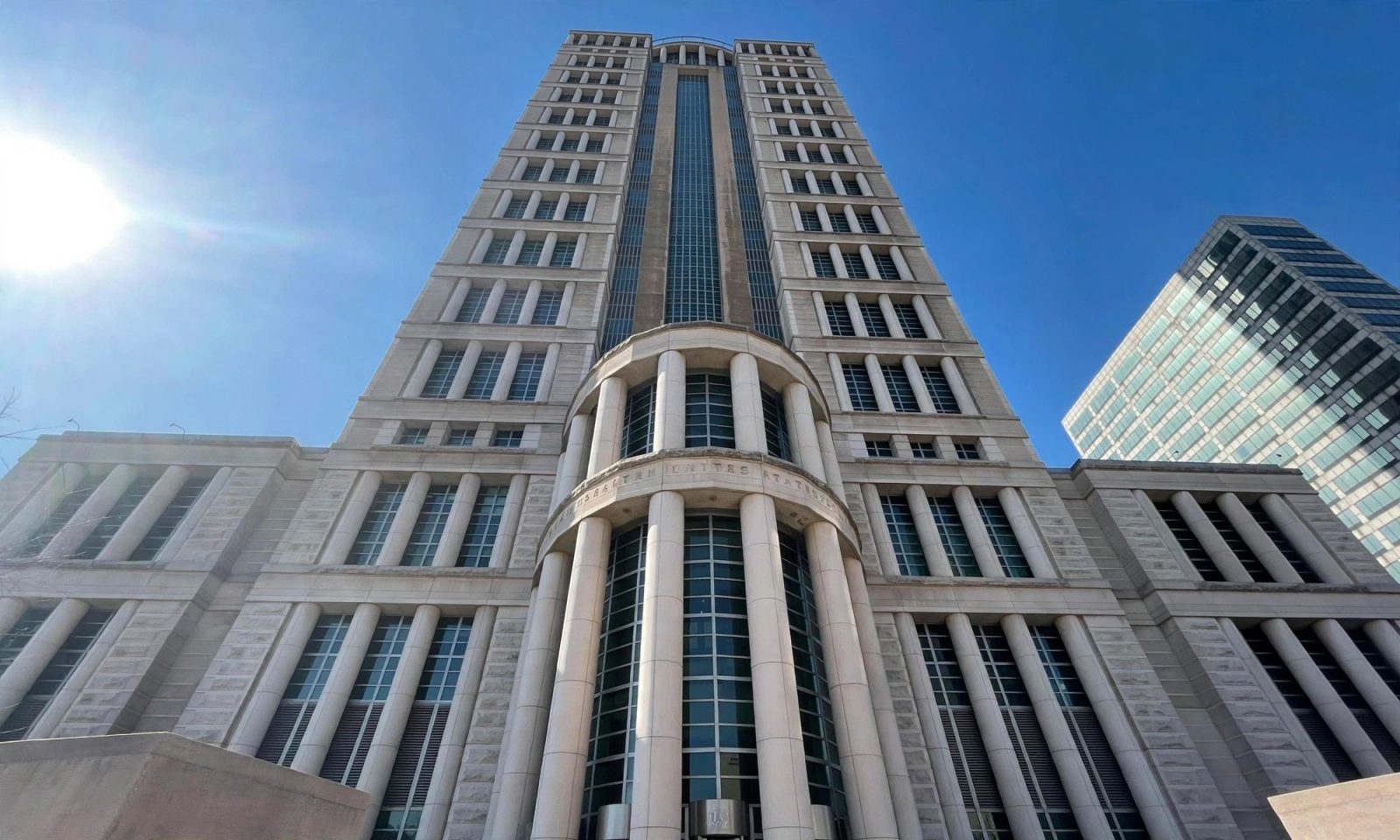
President Donald Trump is facing growing resistance from members of his own Republican Party over his efforts to reshape the federal judiciary, as several Republican senators challenge judicial nominees and demand greater involvement in the selection process. The disagreements have created unexpected obstacles for the White House at a critical moment, with Democrats preparing to take control of the Senate in January.
The most significant setback came on November 10, when the White House withdrew Trump’s nomination of Arkansas-based U.S. District Judge Lee Rudofsky to the U.S. Court of Appeals for the Eighth Circuit. The administration subsequently nominated Arkansas Supreme Court Justice J. Cody Hiland for the same position, following opposition from Republican senators representing Arkansas.
According to Reuters, Arkansas Senators John Boozman and Tom Cotton had not supported Rudofsky’s nomination and preferred Hiland for the influential appeals court position. Their opposition became a significant political obstacle for the White House as Republican leaders attempted to secure judicial confirmations before losing their Senate majority.
Rudofsky was appointed by Trump to the federal district court in Little Rock in 2019. He was nominated for the appeals court position in August 2026. However, his prospects weakened after Republican Senators John Cornyn of Texas and Thom Tillis of North Carolina indicated that they would oppose his nomination in the Senate Judiciary Committee.
Both Cornyn and Tillis are members of the committee and have used their positions to raise concerns about judicial candidates on behalf of other Republican senators. Their opposition demonstrated that disagreements within the Republican Party could prevent even presidential nominees from advancing through the confirmation process.
Following the withdrawal, Trump nominated Hiland, who has served on the Arkansas Supreme Court since 2023. Hiland previously served as a federal prosecutor and was also chairman of the Arkansas Republican Party. He had reportedly been considered for the appeals court vacancy before the White House initially selected Rudofsky.
The controversy has highlighted the importance of home-state senators in the federal judicial appointment process. Although the Constitution does not require presidents to obtain approval from a nominee’s home-state senators before selecting appeals court judges, their support is often politically important.
Under the U.S. Constitution, the president has the authority to nominate federal judges, but the Senate must provide advice and consent before appointments become final. Nominees generally undergo background checks, committee hearings and a confirmation vote in the full Senate.
Republican senators opposing certain nominees argue that the White House should respect this constitutional responsibility and consult lawmakers more closely before announcing judicial selections.
Senator Tillis has emphasized that the Senate should not be treated as an institution that automatically approves presidential decisions. He has argued that lawmakers must have a meaningful opportunity to evaluate candidates and raise concerns about their qualifications and selection procedures.
The disagreement is not limited to Arkansas. Texas has also become a source of tension between the White House and Republican lawmakers.
Senator John Cornyn has expressed reservations about the nomination of Elliot Gaiser, a senior Justice Department official selected for a federal judgeship in the Dallas area. Cornyn questioned the decision to advance Gaiser’s nomination without following the customary bipartisan evaluation process used in Texas.
He also raised concerns about Gaiser’s previous involvement in legal efforts challenging the results of the 2020 presidential election. Gaiser previously worked as a lawyer for Trump’s reelection campaign and advised on election-related legal challenges.
Cornyn has argued that other potential candidates have undergone more extensive evaluations and should receive serious consideration. His position has added another complication to the administration’s efforts to fill federal judicial vacancies.
Oklahoma has also experienced a similar dispute involving judicial nominee Zachary West, who works in the Oklahoma Attorney General’s Office.
Republican Senator Alan Armstrong initially supported West’s nomination but later withdrew his backing, raising concerns about the selection process and the qualifications of other potential candidates. Armstrong argued that the administration had failed to adequately consider recommendations from Oklahoma officials.
His opposition, supported by Senator Tillis, prompted the Senate Judiciary Committee to postpone a scheduled vote on West’s nomination. The development created another obstacle for the White House’s effort to advance judicial appointments before the end of the Republican-controlled Senate.
However, the Oklahoma dispute could change after Armstrong leaves the Senate. Newly elected Senator Kevin Hern is scheduled to replace him on November 30, although his position on West’s nomination has not been established.
The disagreements come as Republicans face a major political transition following the November 3 midterm elections. Democrats won control of both chambers of Congress and are expected to take control of the Senate in January. Reports indicate that Democrats will hold at least 54 Senate seats, giving them substantial influence over the confirmation of Trump’s remaining nominees.
Republican leaders are therefore attempting to move as many judicial nominations as possible through the confirmation process before the new Democratic majority takes office.
The urgency reflects the long-term significance of federal judicial appointments. Unlike elected political officials, federal judges generally serve lifetime appointments during good behavior. Their decisions can influence American law, constitutional interpretation and public policy for decades.
The Eighth Circuit Court of Appeals is particularly important because it handles federal appeals from Arkansas, Iowa, Minnesota, Missouri, Nebraska, North Dakota and South Dakota. If Trump secures another appointment to the court, 10 of its 11 active judges will have been appointed by Republican presidents, including six by Trump himself, according to Reuters.
Figures cited by the Associated Press from the Senate Judiciary Committee show that 24 of Trump’s judicial nominations were awaiting confirmation as of November 11. During his second presidential term, the Senate had confirmed 57 of his judicial nominees, including 10 appeals court judges, 46 district court judges and one judge for the Court of International Trade.
Senate Judiciary Committee Chairman Chuck Grassley has supported efforts to accelerate the confirmation process. However, the objections raised by Republican colleagues have complicated his efforts to move nominations forward.
The situation reveals an important division within the Republican Party. While Trump and his administration want to secure a lasting conservative influence on the federal judiciary, some Republican senators insist that their constitutional responsibilities and traditional influence over judicial selections must be respected.
The White House now faces the challenge of balancing presidential priorities with the demands of lawmakers from its own party. The withdrawal of Rudofsky’s nomination demonstrates that Republican support cannot always be guaranteed, even when the president’s party controls the Senate.
With Democrats preparing to assume control in January, the remaining weeks of Republican leadership could prove crucial for Trump’s judicial agenda. The outcome of the ongoing disputes may determine how many additional federal judges the president can successfully appoint before the political balance in Washington changes.
Related News
White House Warns Democrats as They Prepare Investigations Into Trump Administration

US Army Intelligence Analyst Jailed for 7 Years Over $42,000 Military Secrets Deal With China

Kennedy Family Takes Legal Action Against Trump to Block 250-Foot Triumphal Arch
Comments 0
Log in or create a free account to join the conversation. You can comment anonymously.
No comments yet. Be the first.