

Abdul El-Sayed Offers Trump a Chance to Put His Name on Universal Healthcare Plan
Michigan Senator-elect Abdul El-Sayed has offered President Donald Trump an unusual political deal: put Trump's name on a universal healthcare plan if he agrees to support it. The proposal, known as Medicare for All, aims to guarantee healthcare coverage for every American without premiums, copays or deductibles.

Reporter · CSB News USA
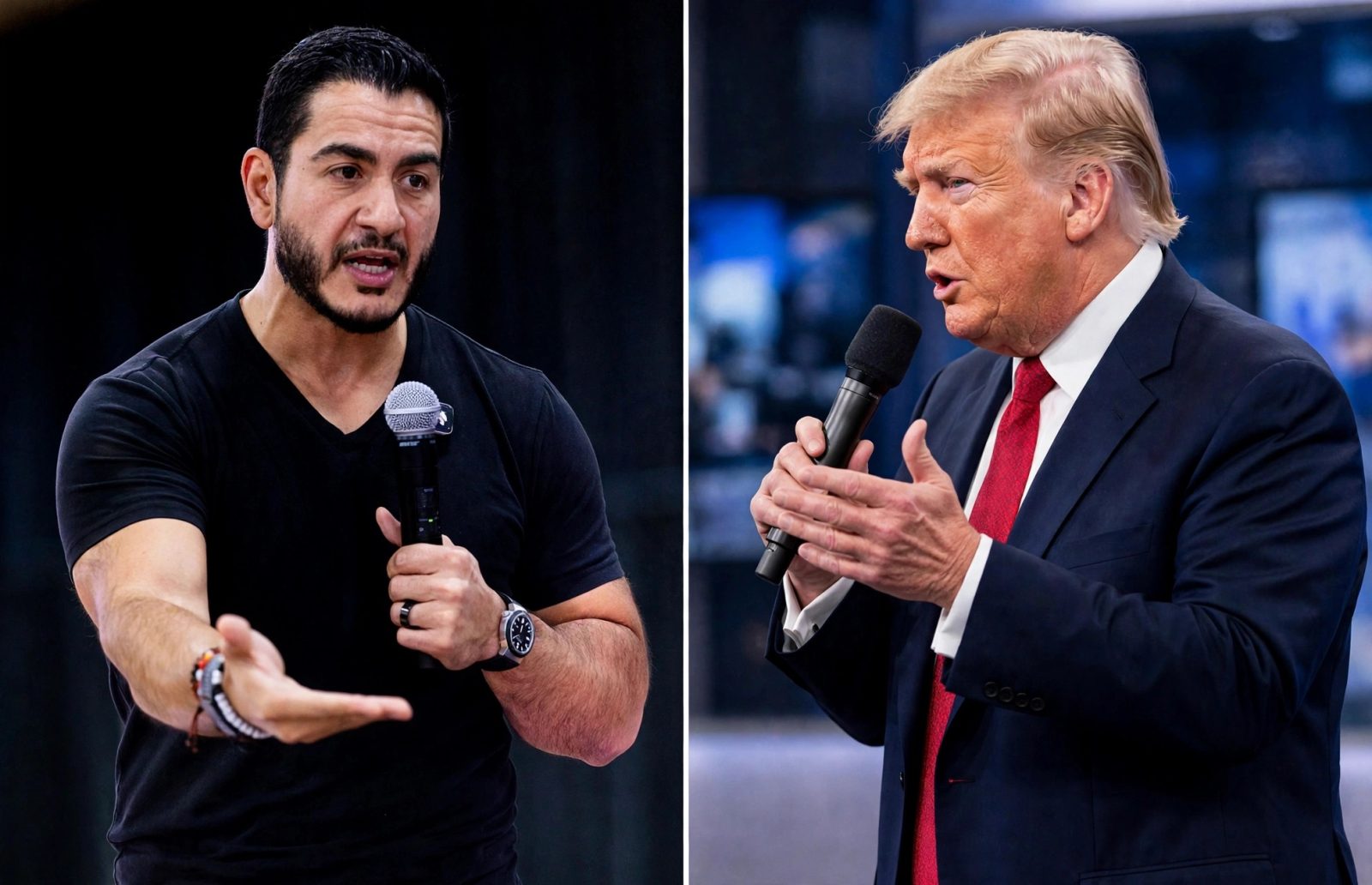
Michigan Democratic Senator-elect Abdul El-Sayed has made an unusual offer to President Donald Trump in an effort to advance one of the biggest healthcare policy proposals in American politics. El-Sayed says Trump can put his own name on a nationwide government-backed healthcare program if he is willing to support legislation guaranteeing medical coverage for every American.
The proposal is attracting attention because it involves two politicians with sharply different political positions. El-Sayed is a progressive Democrat who has made universal healthcare a central part of his political career, while Trump has repeatedly criticized the Affordable Care Act and previously attempted to dismantle significant parts of the law.
Speaking Tuesday, November 10, on CNN's The Source with anchor Kaitlan Collins, El-Sayed directly addressed the president through the television camera.
“Donald, if you're watching, we can put your name on it,” he said.
He continued by suggesting that Trump could finally fulfill what he described as an unmet American promise: guaranteeing healthcare for everyone.
“I know you like to put your name on stuff. You can finally meet the unmet promise in America to guarantee everybody health care. So it's on the table if you want to do it,” El-Sayed said.
The Michigan Democrat was referring to the Medicare for All proposal, a government-funded healthcare system that aims to provide comprehensive medical coverage regardless of a person's employment, income or existing insurance arrangements.
During the CNN interview, Collins questioned whether El-Sayed was genuinely willing to name such an important Democratic policy initiative after a Republican president. The senator-elect made clear that he was serious.
He explained that the name of the program was less important to him than ensuring Americans could receive medical treatment without facing overwhelming bills.
El-Sayed said he would be willing to support calling the program Trumpcare for All if that was what it took to secure the president's cooperation.
He described his preferred healthcare system as providing coverage from the beginning of life to its end, without monthly premiums, copayments or deductibles.
Under his vision, Americans would have the security of knowing they could visit a doctor, receive treatment or access necessary medical services without worrying about whether they could afford the bill.
The senator-elect argued that the United States should guarantee healthcare as a basic national commitment rather than allowing access to treatment to depend heavily on employment or financial circumstances.
His proposal reflects a long-standing debate in American politics over whether healthcare should remain primarily dependent on private insurance or move toward a system in which the federal government guarantees coverage for the entire population.
El-Sayed has made this issue one of the defining priorities of his political career. Before entering national politics, he worked in public health and served as Detroit's health director. His professional experience has shaped his arguments about healthcare inequality, access to treatment and the financial difficulties faced by American families.
He has also campaigned against medical debt, which remains a significant financial problem for many households. Even people with health insurance can face substantial expenses because of deductibles, copayments, uncovered treatments and other insurance-related costs.
The senator-elect believes a universal system could reduce these financial pressures by ensuring that medical treatment does not depend on a patient's ability to pay at the time of service.
El-Sayed made a similar offer during an earlier interview with journalist Mehdi Hasan, suggesting that he would accept the name Trumpcare for All if it helped secure the president's signature on a universal healthcare bill.
His latest comments on CNN brought that proposal directly into the national political conversation.
The timing is also significant. El-Sayed won Michigan's 2026 Senate election, defeating Republican candidate Mike Rogers in a closely watched contest. His victory followed a competitive Democratic primary and an election campaign in which healthcare, economic concerns and political identity were major issues.
According to ABC News, El-Sayed has presented his political agenda around three central priorities: getting money out of politics, putting more money in people's pockets and passing Medicare for All. He has also indicated that he is willing to work with Trump when cooperation could produce meaningful results for the American public.
His election is historic for another reason. El-Sayed is set to become the first Muslim elected to the United States Senate. His victory has attracted national attention, particularly because his campaign faced attacks targeting his religious identity and political positions.
The healthcare proposal, however, presents a different kind of challenge. It requires cooperation between lawmakers who have fundamentally different views about the government's role in healthcare.
Trump has a complicated political history with American healthcare policy. During his first presidential administration, Republicans attempted to repeal major portions of the Affordable Care Act, commonly known as Obamacare. The effort failed in the Senate in July 2017 after Republican senators, including the late John McCain, opposed the legislation.
The Affordable Care Act remains one of the most significant healthcare laws in modern American history. It expanded insurance coverage through marketplaces, subsidies and Medicaid expansion, while establishing protections for people with pre-existing medical conditions.
Trump has repeatedly criticized the law and expressed interest in replacing it with a different healthcare system. However, his previous efforts did not produce a comprehensive replacement that eliminated the existing system.
This history makes El-Sayed's offer particularly unusual. Rather than demanding that Trump publicly embrace a Democratic policy platform under its traditional name, the senator-elect is suggesting that the president could receive political recognition for supporting it.
The offer appears designed to appeal to Trump's interest in attaching his name to major projects, institutions and government initiatives.
El-Sayed's argument is straightforward: if Trump wants to be associated with a historic healthcare achievement, he should consider supporting a program that guarantees medical coverage to everyone.
Nevertheless, the proposal is not a finalized agreement between the two politicians. There has been no announcement that Trump has accepted the offer, endorsed Medicare for All or agreed to introduce legislation based on El-Sayed's plan.
The financial implications of such a system would also be substantial.
A nationwide government-funded healthcare program would require major changes to how medical services are financed in the United States. The government would need to determine how hospitals, doctors, pharmacies and other healthcare providers would receive payments.
It would also need to establish a funding mechanism capable of covering the medical needs of hundreds of millions of people.
Under a Medicare for All approach, some existing private insurance arrangements could be replaced or significantly reduced, depending on the final legislation. Government healthcare spending would increase, while individuals could see changes in the way they pay for medical services.
Supporters argue that a universal system could reduce administrative costs, improve access to preventive care and protect families from medical bankruptcy.
Opponents, however, question whether the federal government could finance such an extensive program without imposing significant new taxes. They also raise concerns about the transition from private insurance, potential changes in provider payments and whether the system could maintain sufficient medical capacity.
These disagreements have prevented Medicare for All from becoming federal law, despite years of debate and support among progressive lawmakers.
El-Sayed's proposal would therefore face a difficult path even if Trump expressed interest. Both chambers of Congress would have to consider the legislation, and the measure would need sufficient votes to pass. The president would then need to sign it into law, unless Congress could override a veto.
The incoming senator has suggested that Democrats should use their recent election success to pursue major policy changes rather than limit themselves to smaller legislative adjustments.
In his view, guaranteeing healthcare could become an issue on which politicians from opposing parties find common ground if they focus on the practical needs of American families.
The central question is whether Trump's administration would be willing to negotiate with a progressive Democrat over a government-funded healthcare system that would represent a major departure from the current American insurance structure.
For now, El-Sayed has publicly placed the offer on the table. He has indicated that he is willing to compromise on the program's branding if doing so helps deliver universal healthcare.
His message to Trump is that political credit and the name attached to a policy should matter less than whether Americans receive the medical care they need.
Whether the president accepts that invitation remains uncertain. But the unusual proposal has already created a new political conversation about healthcare, bipartisan cooperation and the future of America's medical insurance system.
For millions of Americans struggling with rising insurance premiums, medical bills and the cost of treatment, the larger issue is not what the program would be called. It is whether the federal government can eventually guarantee affordable healthcare without leaving families financially vulnerable.
El-Sayed says he is prepared to give Trump the naming rights. What he wants in return is a healthcare system that covers everyone.
Related News

Kennedy Family Seeks to Join Lawsuit Against Trump’s 250-Foot Memorial Arch
Iran Urges US to Accept Its Demands to End War as Diplomatic Efforts Intensify

Germany Set to Make History as Ilse Aigner Emerges as First Female Presidential Candidate
Comments 0
Log in or create a free account to join the conversation. You can comment anonymously.
No comments yet. Be the first.