Trump in a Dilemma Over Saudi Arabia’s Request for Military Assistance
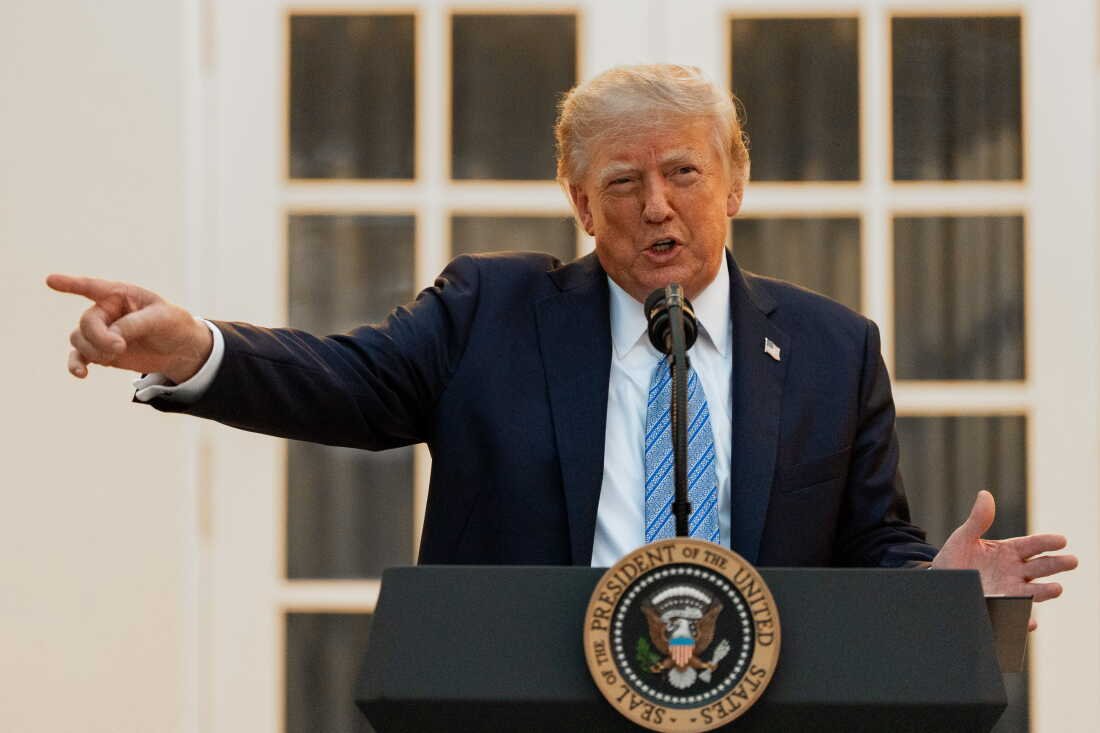
At the request of Saudi Arabia, President Donald Trump had been wavering over whether the United States would join joint strikes against the Houthis in Yemen. Finally, on Sunday, he decided not to join Saudi Arabia, for now, in joint attacks against the Houthis

Trump in a Dilemma Over Saudi Arabia’s Request for Military Assistance
At the request of Saudi Arabia, President Donald Trump had been wavering over whether the United States would join joint strikes against the Houthis in Yemen. Finally, on Sunday, he decided not to join Saudi Arabia, for now, in joint attacks against the Houthis. At the same time, however, he needs Saudi Arabia’s cooperation in the ongoing war against Iran.
If Trump approves U.S. military strikes against the Iran-backed Houthis in Yemen in response to Saudi Arabia’s request, it could open another front in the ongoing war with Iran. The war started by Trump has already failed to end and is instead expanding, with its effects also being felt in the global economy.
Taking advantage of the instability in the Middle East, the Houthis became involved in conflict with Saudi Arabia again this summer. Crown Prince Mohammed bin Salman, Saudi Arabia’s de facto ruler and an important ally in the war against Iran, called Trump on Thursday and again requested U.S. intervention to prevent the Houthis’ rapid advance, U.S. administration officials said.
The previous day, during a meeting with his advisers, Trump had not been in favor of strikes against the Houthis. But after speaking with the Saudi crown prince, he changed his position and instructed the Pentagon to prepare for airstrikes against the Houthis.
However, by midday Sunday, Trump had changed his position again. According to administration officials, there would be no U.S. airstrikes against the Houthis for now. The officials provided the information on condition of anonymity because they were not authorized to speak publicly about military plans.
The White House press office did not officially comment on Trump’s decision-making process. However, a senior administration official said, “The United States has a defense agreement with Saudi Arabia and we will always defend our allies.”
Most members of Trump’s inner circle have expressed deep doubts about or opposed direct U.S. involvement in Saudi Arabia’s war against the Houthis. According to a senior administration official, they are concerned about launching a new operation in Yemen while the U.S. military is already under pressure from the ongoing war with Iran.
By the time the decision to withdraw or at least delay the U.S. attack was made, military commanders had already identified targets for the strikes. Bombs were being loaded onto the U.S. warplanes selected for the missions, and preparations for the beginning of the attack had almost been completed, according to two people briefed on the operation.
In a telephone interview with Fox News on Sunday morning, Trump said he was “in deciding mode” about what to do in the broader war with Iran. Regarding the Houthis, he said the United States was maintaining regular communication with them and that the Houthis had so far agreed not to fight U.S. forces.
This situation has put Trump in a complicated position. Although Trump’s claim that the Houthis have so far refrained from attacking U.S. ships is correct, they have attacked Saudi Arabia. As a result, the United States is facing a difficult decision over how to assist Saudi Arabia.
Some U.S. military officials believe that the United States needs Saudi Arabia’s cooperation in the war against Iran. At the same time, Saudi officials have shown that they are prepared to use whatever influence they have if they do not receive U.S. cooperation.
One example of this came in May, when Saudi Arabia effectively blocked the Trump administration’s plan to use the U.S. military to provide protection to commercial oil tankers in the Strait of Hormuz. Saudi Arabia did not allow the United States to use its airspace or military bases for such an operation.
If the United States joins Saudi Arabia’s war against the Houthis, it could be part of an effort to support a new ground offensive by Yemen’s government forces, officials said. However, there are questions about the effectiveness of these forces against the Houthis. In recent weeks, government forces have retreated in the face of major clashes with the Houthis.
The conflict between the Houthis and Yemen’s internationally recognized government has continued since 2014. Saudi Arabia supports that government. Violence declined after a cease-fire took effect in 2022. But this summer, the Houthis became active again in the wider Middle Eastern war and took a position against Saudi Arabia. They declared a blockade on Saudi shipping in the Red Sea and attacked Saudi vessels.
Amid the fighting, the Houthis captured several important areas near the Bab al-Mandab Strait. This important maritime gateway in the Red Sea is crucial to global trade and energy transportation. Global energy markets are already unstable because of the ongoing U.S.-Israeli war against Iran. If new instability emerges around Bab al-Mandab, the situation could become even more complicated.
Current and former U.S. diplomats and military commanders who served in the Middle East have expressed doubts about the effectiveness of a limited U.S. bombing campaign against the Houthis. In their view, there is no guarantee that such attacks would force the Houthis to enter negotiations or abandon their hard-line position.
They have also expressed doubts about whether supporting Yemen’s weak and divided forces would produce the desired results. In recent weeks, these forces have quickly collapsed in the face of major clashes with the Houthis.
Gregory Johnsen, a nonresident fellow at the Arab Gulf States Institute in Washington, described the anti-Houthi forces in Yemen as a weak coalition made up of various groups. According to him, the objectives of these Yemeni groups are, in many cases, completely different from one another. As a result, they spend more time fighting among themselves than fighting the Houthis.
In the spring of 2025, the United States carried out airstrikes against the Houthis for more than 50 days to restore freedom of navigation in the Red Sea and stop Houthi attacks on commercial and U.S. naval vessels.
During that campaign, U.S. Central Command struck more than 1,000 targets. These included radar systems, air-defense systems, ballistic missile sites, drone launch facilities and a drone production center near Sanaa, the capital of Yemen.
The Houthis also launched counterattacks and shot down several U.S. drones. They continued attacks against U.S. Navy vessels in the Red Sea. One of the targets was a U.S. aircraft carrier.
In the first month of the campaign alone, the United States used weapons and ammunition worth about $1 billion. During that period, two F/A-18 Super Hornet fighter jets involved in the campaign against the Houthis accidentally fell into the sea from the U.S. Navy’s flagship aircraft carrier. Each aircraft was worth about $67 million.
Less than two months after the campaign began, Trump abruptly announced a cease-fire with the Houthis. He said that the United States would honor the Houthis’ commitment that they would no longer attack ships.
After that, the Houthis stopped attacking U.S. ships. However, a U.S. official warned that if the United States resumed its air campaign, the Houthis would probably restart attacks on U.S. ships.
The official also warned that the Strait of Hormuz remains unstable after the war with Iran began. If a new conflict with the Houthis starts in the meantime, the transportation of oil and gas through Bab al-Mandab could face further disruption.
Since last year’s cease-fire, the Houthis have rebuilt a large part of their military capabilities. The report also mentions that they are using artificial intelligence to develop and design new types of missiles.
According to current and former U.S. officials, even if the United States provides military assistance to Saudi Arabia, defeating the Houthis will be difficult.
Source: The Newyork Times