Trump Seeks to End Ukraine War While Considering Business Deals With Russia
President Donald Trump’s administration is considering offering Russia economic and business incentives as part of its efforts to persuade President Vladimir Putin to end the war in Ukraine, even as the U.S. Congress moves to impose tougher sanctions on Moscow

Trump Seeks to End Ukraine War While Considering Business Deals With Russia
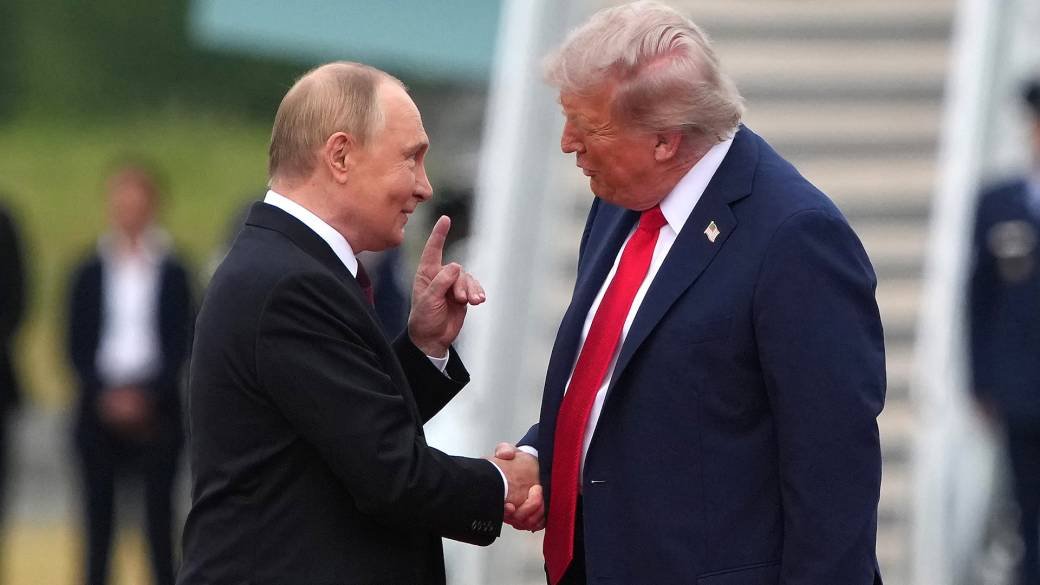
President Donald Trump’s administration is considering offering Russia economic and business incentives as part of its efforts to persuade President Vladimir Putin to end the war in Ukraine, even as the U.S. Congress moves to impose tougher sanctions on Moscow.
According to a report published by The New York Times, the White House is considering signing some business agreements with Russia before the war ends. Two people familiar with the negotiations told the newspaper that such agreements could be used to demonstrate that Washington is serious about resetting relations with Moscow.
The approach would mark a shift from Trump’s position last year that business deals with Russia would not proceed “until we get the war settled.” The change comes as negotiations have stalled over Russia’s territorial demands and Ukraine’s refusal to withdraw from parts of the Donbas region.
Earlier this month, Trump’s special envoy Steve Witkoff and his son-in-law Jared Kushner met Putin in Moscow. According to people familiar with the discussions and a U.S. official cited by The New York Times, Putin expressed confidence that Russian forces could eventually capture the entire Donbas and that Russia was preparing attacks on Ukraine’s electricity infrastructure ahead of winter.
Kushner reportedly challenged Putin’s assessment, pointing out that the Russian leader had made similar claims a year earlier and questioning whether the same situation would continue for another year.
At the same time, Congress has taken a more pressure-oriented approach. The House of Representatives passed a major sanctions bill this week targeting Russia’s energy sector by a vote of 262-159. The legislation would allow the president to impose tariffs of up to 100 percent on countries that purchase significant amounts of Russian oil or gas. It would also authorize sanctions against Russian officials, businesspeople and financial institutions.
Trump has indicated that he intends to sign the legislation.
The bill’s supporters argue that increased economic pressure could strengthen Washington’s leverage in negotiations with Putin. Representative Michael McCaul, a Republican from Texas and one of the legislation’s leading supporters, said the measure would weaken Russia’s war machine and pressure Putin to return to negotiations.
However, The New York Times reported that the Trump administration is simultaneously placing greater emphasis on economic incentives. A U.S. official said the administration wants to create incentives for members of Russia’s political and business elite to support an end to the war.
According to the report, possible business arrangements could include areas such as rare earth minerals, aluminum, Arctic joint ventures and the involvement of U.S. companies in the sale of Russian natural gas to Europe. The specific agreements under consideration, however, remain unclear.
Kremlin foreign-policy adviser Yuri Ushakov said after the Sept. 5 meeting that economic issues and potential major Russian-American projects offering mutual benefits had been discussed in detail.
The central obstacle remains territory. Putin has demanded that Ukraine withdraw from the remaining Ukrainian-controlled areas of the Donbas, while Kyiv has rejected that demand.
Kushner recently said the Trump administration, acting as a mediator, was trying to develop a “creative solution” that would allow both sides to move forward. Ukrainian officials have said that trilateral peace talks involving the United States, Ukraine and Russia could resume in October.
The talks could also consider limited cease-fire arrangements, including a possible halt to attacks on shipping in the Black Sea or strikes against energy infrastructure.
The New York Times report suggests that Washington is pursuing two parallel approaches toward Moscow: increasing economic pressure through sanctions while also exploring business incentives that could encourage Russia to consider a negotiated settlement.
Source: The Newyork Times