US, European Powers Move to Refer Iran’s Nuclear Case to UN Security Council
The United States, Britain, France and Germany have drafted a resolution that could refer Iran to the United Nations Security Council for failing to comply with its nuclear nonproliferation obligations, diplomats said

US, European Powers Move to Refer Iran’s Nuclear Case to UN Security Council
The United States, Britain, France and Germany have drafted a resolution that could refer Iran to the United Nations Security Council for failing to comply with its nuclear nonproliferation obligations, diplomats said.
Under the Nuclear Non-Proliferation Treaty (NPT), Iran is legally required to declare all nuclear materials and activities and allow inspectors from the International Atomic Energy Agency (IAEA) to verify that none of those materials are being diverted from peaceful purposes.
The diplomatic initiative has been under consideration since June 2025, when the IAEA Board of Governors formally found Iran in noncompliance with its nuclear obligations for the first time in two decades. The decision came just one day before the United States and Israel launched attacks on Iranian nuclear facilities.
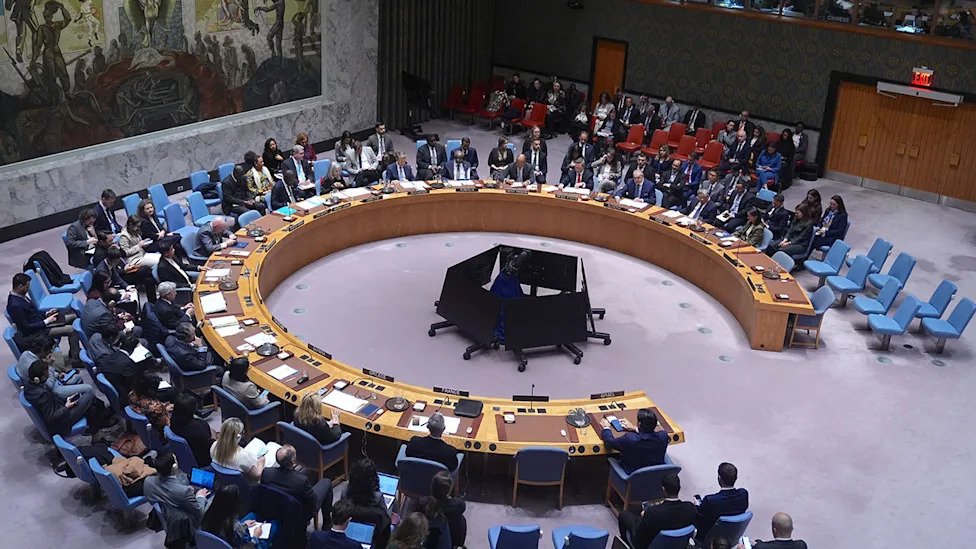
Referring Iran to the U.N. Security Council would shift the issue to a higher international authority capable of imposing further legally binding measures, including sanctions and asset freezes.
However, the prospects for new punitive U.N. measures against Iran remain limited because Russia and China, both close allies of Tehran, hold veto power as permanent members of the Security Council.
The draft resolution, seen by The Associated Press and previously reported by Reuters, asks IAEA Director General Rafael Grossi to transmit the resolution and previously adopted resolutions to all IAEA member states, the Security Council and the U.N. General Assembly.
At the same time, the draft emphasizes support for a diplomatic solution to the challenges surrounding Iran’s nuclear program. It calls for an agreement addressing international concerns over Iran’s nuclear activities while contributing to regional peace and stability.
The draft also urges all relevant parties to engage constructively in diplomacy, indicating that despite the pressure on Tehran, Western powers continue to leave the door open for a negotiated settlement.
Source: AP, Reuters.