Where Iran’s Young People Gather, the Government Sees a Threat to Its Authority
Police have closed dozens of cafes in recent weeks, often citing Iran’s mandatory hijab law. Experts say the crackdown is part of a broader effort to control public spaces and curb changing social norms

Where Iran’s Young People Gather, the Government Sees a Threat to Its Authority
Police have closed dozens of cafes in recent weeks, often citing Iran’s mandatory hijab law. Experts say the crackdown is part of a broader effort to control public spaces and curb changing social norms.
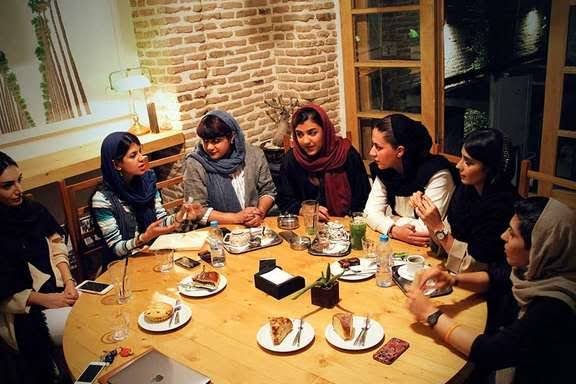
Despite war, political unrest and rampant inflation that have put many young Iranians’ aspirations out of reach, one affordable form of normality has remained: meeting friends at cafes.
Across Iran, young people gather in coffee shops and spill onto sidewalks, talking, smoking cigarettes, flirting and enjoying one of the few inexpensive forms of entertainment still available to them.
These mixed-gender gatherings, where women may appear without head coverings and some customers discreetly consume alcohol, have become a visible form of counterculture even though such behavior is prohibited in Iran.
Authorities have taken notice.
In recent weeks, police have shut down dozens of cafes across the country, frequently citing violations of Iran’s mandatory hijab regulations. Restaurants, boutiques and other businesses have also been targeted, according to statements from officials, although some establishments have subsequently reopened.
Experts say the crackdown reflects the government’s broader effort to control public spaces and prevent gatherings that could challenge its authority.
Following nationwide protests in January over Iran’s deteriorating economy, which were suppressed with lethal force, the government has sought to impose tighter control over public gatherings.
At the same time, as the United States’ war with Iran continues without a clear resolution, the government has organized pro-government nighttime rallies designed to demonstrate public support for the regime and discourage opponents from taking to the streets.
Cafes Become a Focus of Government Attention
Cafe owners, employees and customers in Tehran told The New York Times that authorities appeared particularly focused on cafes located close to one another.
Because many cafes occupy small spaces, customers frequently gather outside on sidewalks, creating spontaneous groups that authorities appear to view with suspicion.
“It seems that a campaign has begun to control postwar Iran, a society that is unhappy and under strain,” said Amir, a 45-year-old cafe owner in Tehran. His cafe was not closed during the latest crackdown but had been shut previously.
Amir said cafe owners often tell themselves that the closures are temporary.
“They come and shut us down, but we rise again,” he said.
Several people interviewed for the report requested that they be identified only by their first names because of fears of retaliation by the Iranian authorities.
Mona, a 36-year-old artist in Tehran, said cafes were being closed because of the crowds that gather outside in the afternoons.
Authorities, she said, appeared to interpret the gatherings as possible protests, when in reality they were simply young men and women spending time together.
Hijab Law Cited as a Major Reason
Iran’s Foreign Ministry did not respond to a request for comment.
Officials have offered several explanations for the closures, including routine regulatory violations and failure to comply with mandatory hijab regulations.
Other reasons cited include “social and moral misconduct,” failure to observe Islamic values and “norm-breaking.”
Many cafes do, in fact, operate in ways that challenge the social rules promoted by the government.
Three Tehran residents, including a cafe owner, said some cafes in central Tehran were known for serving beer. Alcohol consumption is illegal in Iran and can be punished by flogging.
Haleh Mir Miri, a Canadian-based author and researcher who has written about Iran’s coffee-shop culture, said cafes provide young Iranians with an escape from family and social restrictions while also representing a rejection of the government’s ideology.
“Through cafe culture, people could imagine and invent other ways of living and becoming,” she said.
For a government accustomed to regulating and homogenizing people’s lives, she added, that can be inherently threatening.
Iran’s Social Norms Have Changed Dramatically
Even if the closures are intended to disrupt cafe culture, the government has struggled to reverse the profound social changes that have taken place in Iran over the past four years.
In 2022, under the government of then-President Ebrahim Raisi, authorities launched a harsh crackdown on women accused of violating compulsory hijab rules.
The campaign included violent arrests. Mahsa Amini, a 22-year-old woman detained by Iran’s morality police, died in custody.
Her death triggered nationwide protests known as the “Woman, Life, Freedom” movement, which shook Iran for months and became a turning point for many women in the country.
Since then, it has become increasingly common to see Iranian women in public with their hair uncovered and, in some cases, wearing tight or revealing clothing.
Pressure on Businesses Instead of Mass Arrests
The current government under President Masoud Pezeshkian has largely refrained from widespread arrests of individual women solely for failing to wear the hijab.
Officials have acknowledged that fully enforcing the law could trigger another wave of unrest.
Instead, the government has increasingly pressured businesses to enforce hijab regulations themselves and has closed establishments that fail to comply.
“The government periodically wants to remind people that the hijab still matters,” said Omid Shams, a human rights lawyer in London.
He said the government continues to face pressure from religious authorities and hard-line conservative factions.
Closures Threaten Young Workers
For cafe owners and employees, the closures can have serious economic consequences even if the government’s campaign ultimately fails to reverse broader social changes.
Young people lose jobs and income, businesses continue to face rent and other expenses while they are closed, and coffee roasters and other suppliers also suffer.
“Young people used to feel that, at the very least, if they couldn’t find a job anywhere else, they could always go work at a cafe,” said Reza, a Tehran barista.
“Now, even that option is disappearing.”
For many young Iranians, the crackdown represents more than the loss of a place to drink coffee.
Mona said every report of another cafe being closed leaves her feeling increasingly hopeless. Despite profound changes in Iranian society, she said, the authorities appear determined to continue trying to control how people live and interact.
The result, she said, is a growing sense that Iran may never return to what young people consider a normal life:
“You think, ‘Oh, so this is never going to get better. It’s never going to become normal.’”
Source : The New York Times