Iranian Families Struggle to Afford Basic Necessities as Economic Crisis Deepens
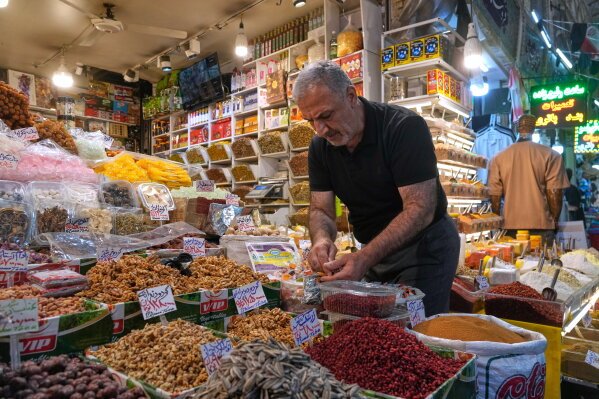
Grocery stores in Tehran remain well-stocked, but many Iranian families are struggling to afford basic necessities. Unemployment is rising sharply, while those who have jobs are working longer hours for money that is worth roughly half as much as it was a year ago. As a result, food, medicine and other essential goods are becoming increasingly unaffordable. Heavily subsidized gasoline remains a notable exception

Iranian Families Struggle to Afford Basic Necessities as Economic Crisis Deepens
Grocery stores in Tehran remain well-stocked, but many Iranian families are struggling to afford basic necessities. Unemployment is rising sharply, while those who have jobs are working longer hours for money that is worth roughly half as much as it was a year ago. As a result, food, medicine and other essential goods are becoming increasingly unaffordable. Heavily subsidized gasoline remains a notable exception.
Ahmad Karimi, a 52-year-old taxi driver and father of two, said, “We have virtually given up on many things.” He is working 15-hour days to support his family. He said they have cut back on fruit and protein, given up leisure activities and are even working on weekends.
Nearly six months into the war with the United States and Israel, Iran’s economy is facing severe pressure. U.S. sanctions and a naval blockade have made it extremely difficult for Iran to export oil, its most valuable export commodity.
The economic pressure is having its greatest impact on ordinary people. Falling incomes combined with rising prices are forcing many families to make difficult choices about food and other essential purchases.
The sanctions and restrictions on oil exports are also putting significant pressure on Iran’s foreign-currency earnings. As a result, the government, businesses and ordinary citizens are all facing growing economic difficulties.
At the same time, rising unemployment and declining real incomes are further weakening people’s purchasing power. Many workers are unable to maintain their previous standard of living even after working longer hours.
According to AP, Iran’s current economic crisis is no longer limited to government statistics or oil-export figures. Its effects are being felt directly by ordinary families, affecting their ability to afford food, medicine and other necessities of everyday life.