Blood on the Ballot: PoJK's Election Fools No One but Islamabad
There is a particular kind of silence that falls over Srinagar's tea stalls and Jammu's newspaper stands when news trickles in from across the Line of Control. It happened again this week, as the second phase of polling for what Pakistan calls the "Azad Jammu and Kashmir Legislative Assembly" unfolded in Muzaffarabad division on August 2, with a third phase still to come on August 10

Blood on the Ballot: PoJK's Election Fools No One but Islamabad
There is a particular kind of silence that falls over Srinagar's tea stalls and Jammu's newspaper stands when news trickles in from across the Line of Control. It happened again this week, as the second phase of polling for what Pakistan calls the "Azad Jammu and Kashmir Legislative Assembly" unfolded in Muzaffarabad division on August 2, with a third phase still to come on August 10. For ordinary Indians who have grown up hearing the phrase "Pakistan-occupied Kashmir" in geography textbooks and news bulletins, this election is not a foreign curiosity. It is a reminder of an unresolved dispute that has shaped the subcontinent's politics for nearly eight decades.
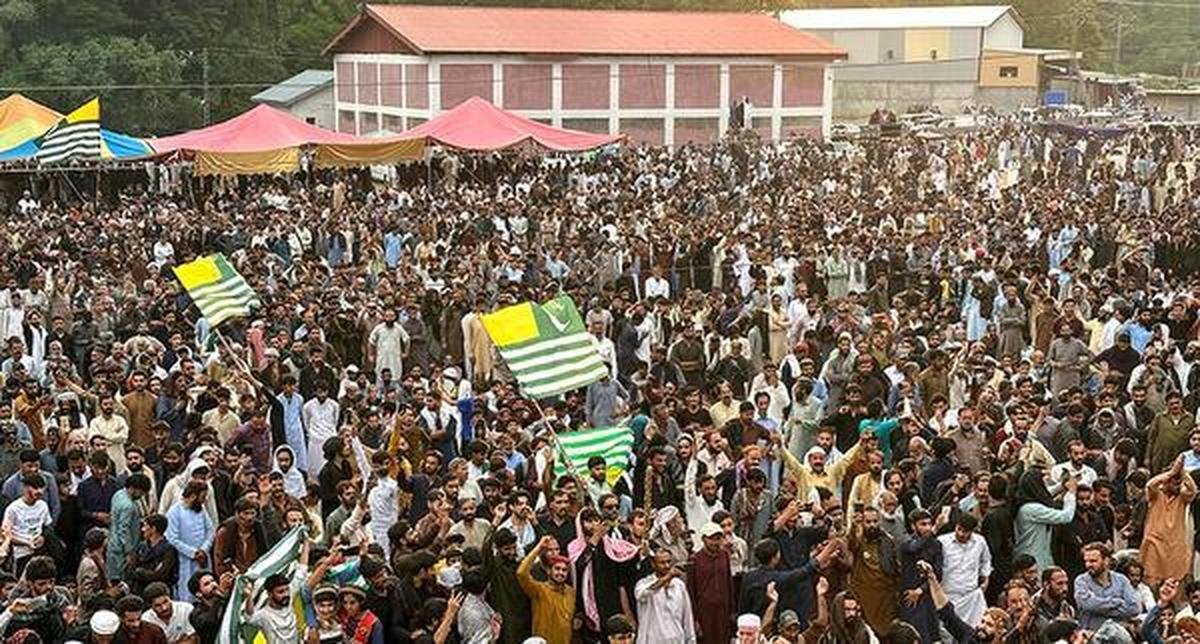
The numbers alone tell part of the story. Thirty-three constituencies in Azad Kashmir and twelve reserved for refugees from Jammu and Kashmir settled in Pakistan will decide who sits in the assembly at Muzaffarabad. But the campaign has unfolded against a difficult backdrop. Since early June, when protests erupted in Rawalakot over rising electricity tariffs and flour prices, and after the Jammu Kashmir Joint Awami Action Committee was banned under anti-terrorism laws, the region has seen months of unrest. Security forces have opened fire on demonstrators on more than one occasion. The JAAC claims that over sixty people have died between June and late July, a figure Pakistani authorities dispute and have not independently verified either way. Voting in the first phase on July 27 went ahead under heavy security and a boycott call from the very committee that has been organising the protests. The second phase, on Sunday, saw logistical failures, allegations of rigging traded between the PPP and the ruling PML-N, and rain that forced at least one constituency to postpone polling to August 4.
India's official position has not shifted in decades: the entire erstwhile state of Jammu and Kashmir, including the territories currently administered by Pakistan, is considered by New Delhi to be an integral part of India. The Ministry of External Affairs described the exercise as a "cosmetic electoral exercise," arguing it is designed to camouflage what it calls Pakistan's illegal occupation and to obscure human rights violations in the region. Spokesperson Randhir Jaiswal linked the ongoing protests to what he described as economic exploitation and denial of fundamental rights under Islamabad's administration. These are formal diplomatic positions, restated at a moment when unrest on the ground happens to be unusually visible, and they should be read as such: a government making its long-held case, not a neutral account of events.
What is harder to dispute is the texture of what has been happening in Rawalakot, Kotli, Mirpur and Muzaffarabad since June. By most accounts, including local and international reporting, the protests began over specific, local grievances: electricity bills, flour prices, and a sense among residents that decisions affecting their daily lives are made far away in Islamabad with little local input. When that grievance escalated into a banned movement and, in places, violent confrontation with security forces, it raised uncomfortable questions about how much genuine autonomy "Azad" Kashmir actually exercises, and about the space available there for peaceful dissent. Pakistani authorities maintain that the security response has been necessary and proportionate to threats of public disorder; protesters and their sympathisers describe it very differently. Both accounts deserve to be reported, even where they cannot be fully reconciled.
Jammu and Kashmir under Indian administration has had its own difficult passages, including the security restrictions that followed the 2019 reorganisation of the state. But since then, the territory has seen assembly elections in which mainstream regional parties, some of them sharply critical of New Delhi, contested and won seats without needing to call a boycott or operate under a ban. Voter turnout in the 2024 assembly polls came in at nearly 64 percent, observed by domestic and international media without the kind of blanket communication shutdowns or contested casualty counts now surrounding the PoJK vote. That is a meaningful difference, not a cosmetic one: it points to institutions in Indian-administered Kashmir that, however imperfect, have room to absorb dissent through the ballot rather than the boycott. The election in PoJK, by contrast, is taking place amid boycott calls, a banned civil society organisation, disputed casualty figures, and allegations of irregularities between mainstream Pakistani parties. That is a strained context for any electoral exercise to claim broad legitimacy, and it is Pakistan's, not New Delhi's, credibility that is on the line.
The people affected by the unrest in PoJK, those protesting and those caught in the crossfire of the crackdown, are shopkeepers, students and daily wage labourers responding to immediate economic pressures, not necessarily actors in the larger territorial dispute between India and Pakistan. Their grievances are, in the first instance, about governance and cost of living. It is possible, and probably necessary, to take those grievances seriously on their own terms rather than only as evidence in an argument about sovereignty.
Does an election conducted under these conditions, security crackdowns, a banned opposition-aligned movement, and contested death tolls, meet a reasonable threshold of democratic legitimacy? Pakistan's government says yes, pointing to voter turnout and the polls proceeding largely on schedule. Protesters and India's government say no, for related but distinct reasons. What is not in dispute is that the underlying territorial question that gives PoJK its name and its ambiguous status remains unresolved, and that the people living through this election, whatever verdict history eventually renders on it, are dealing with very immediate and very real hardship right now.
An election is not judged only by whether polling booths open on schedule. Its real test is whether the people casting ballots believe the outcome will change anything about how they are governed. Elections exist, in theory, to give grievances a peaceful route through representation rather than confrontation. Measured against that standard, the vote unfolding in Pakistan-occupied Kashmir has already told much of its own story, one written less in the eventual seat count than in the boycott calls, the banned committee, and the streets that had to be secured rather than persuaded.
As the final phase approaches on August 10, the results will be tallied, seats will be allotted, and a new assembly will be sworn in at Muzaffarabad. But an assembly seated under these conditions inherits the same trust deficit that produced the unrest in the first place. Elections are meant to resolve grievances by giving them a legitimate outlet, not to arrive as the closing act of a security operation. For anyone watching the region closely, the more useful posture is not to rush toward a verdict on the larger dispute over sovereignty but to track a narrower, harder question: whether the people of Pakistan-occupied Kashmir emerge from this election more confident in their institutions, or less. On the evidence so far, that confidence looks harder to find than the vote count itself.
The author is a geopolitical analyst based in Canada and holds a PhD in International Relations from the Centre for the Study of the Americas at Jawaharlal Nehru University.