NDA Strengthens Grip in Rajya Sabha Amid Protests, Making FCRA Amendment Bill Easier to Pass
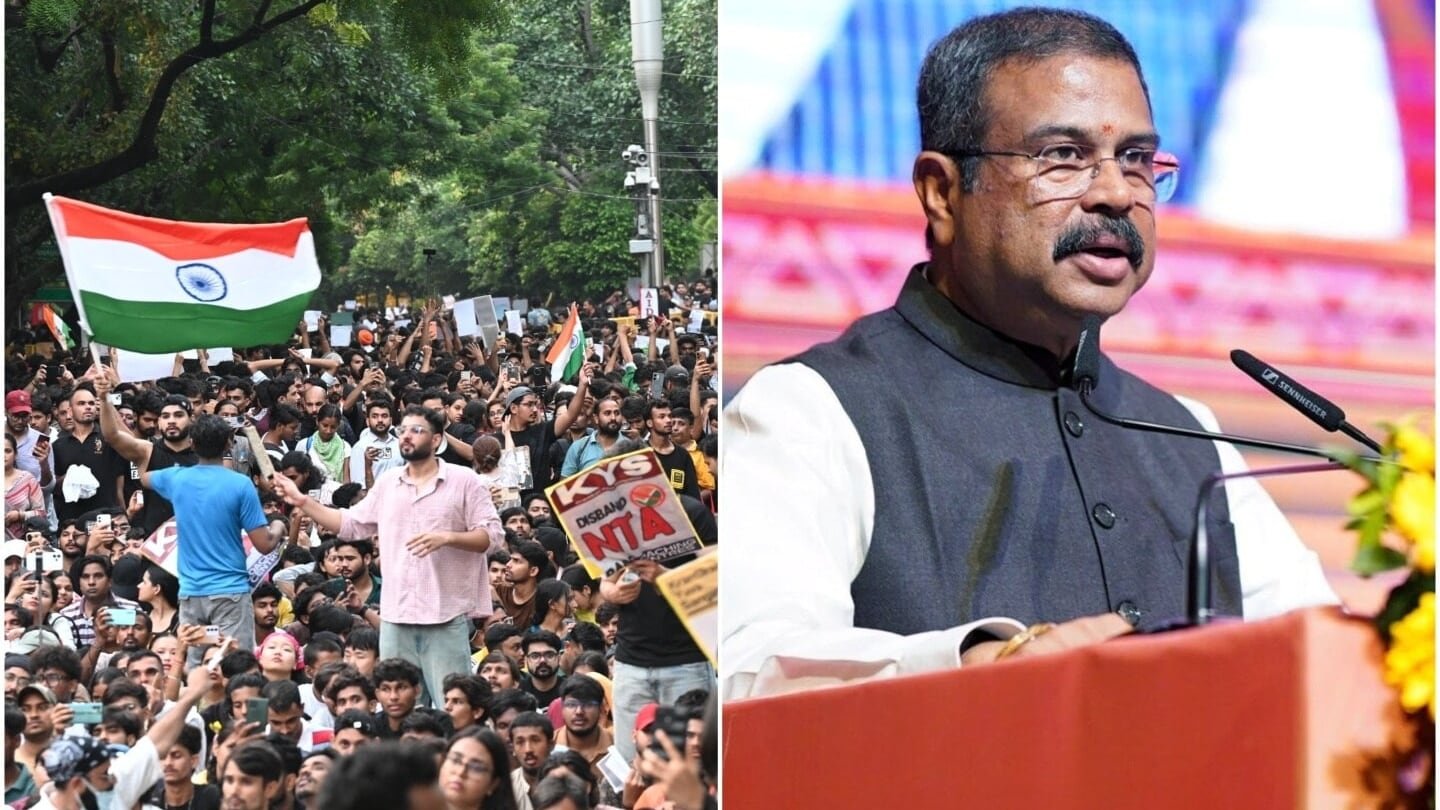
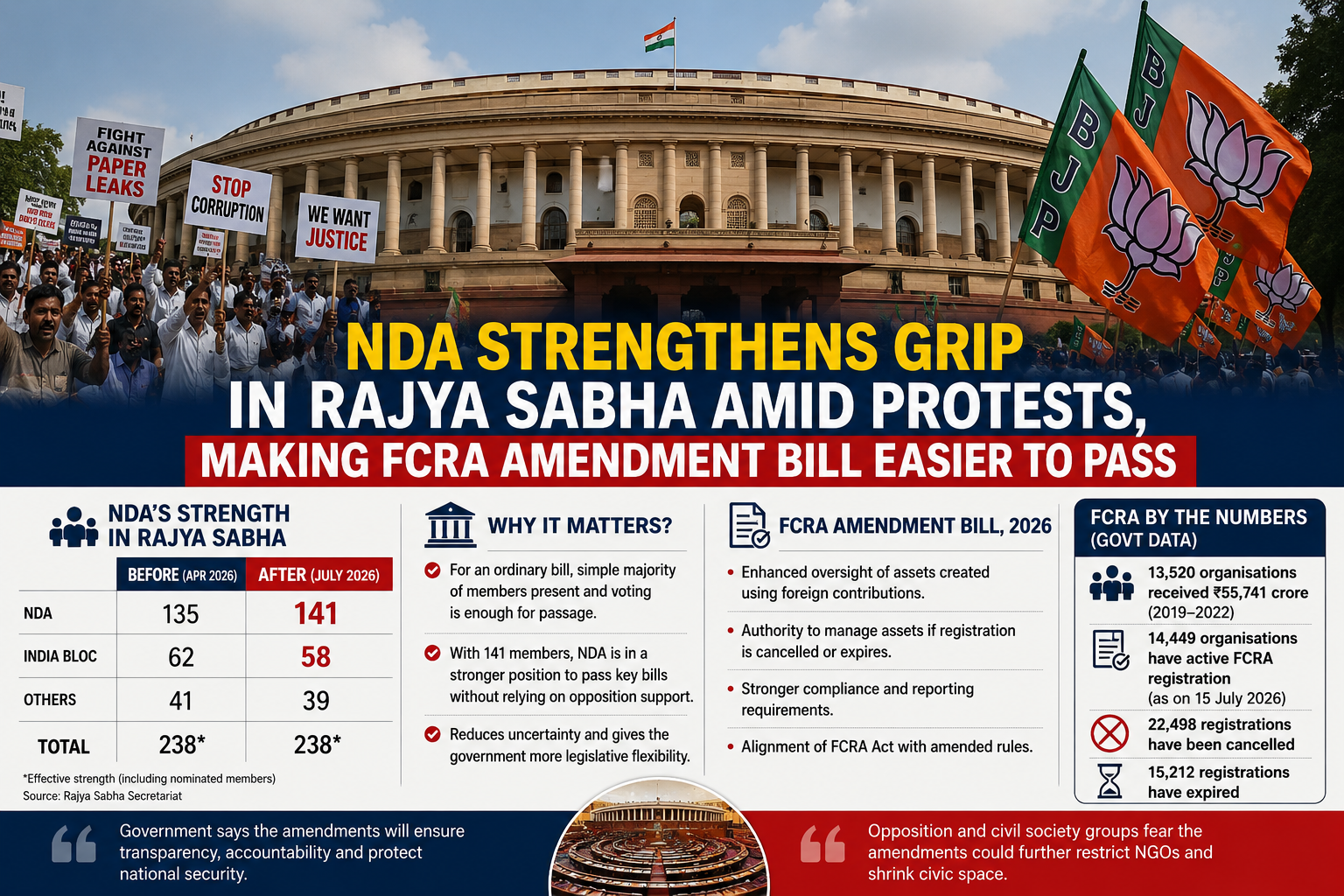
As political tensions continue over nationwide protests, the ruling National Democratic Alliance (NDA) has significantly strengthened its position in the Rajya Sabha, improving the government's ability to push key legislation through Parliament. The latest shift in the composition of the Upper House has increased the NDA's tally from 135 to 141 seats, while the opposition INDIA bloc has declined from 62 to 58 seats, giving the government a stronger legislative advantage

NDA Strengthens Grip in Rajya Sabha Amid Protests, Making FCRA Amendment Bill Easier to Pass
As political tensions continue over nationwide protests, the ruling National Democratic Alliance (NDA) has significantly strengthened its position in the Rajya Sabha, improving the government's ability to push key legislation through Parliament. The latest shift in the composition of the Upper House has increased the NDA's tally from 135 to 141 seats, while the opposition INDIA bloc has declined from 62 to 58 seats, giving the government a stronger legislative advantage.
The development comes as the Narendra Modi-led government prepares to introduce the Foreign Contribution (Regulation) Amendment Bill, 2026 (FCRA Amendment Bill) during the ongoing Monsoon Session. The revised numbers in the Rajya Sabha mean the government is far less dependent on opposition support to secure passage of ordinary legislation.
A More Comfortable Majority
The Rajya Sabha currently has an effective strength below its full sanctioned membership due to vacant seats. For an ordinary bill, only a simple majority of members present and voting is required for passage. With the NDA's strength rising to 141 members, the ruling alliance is now in a significantly stronger position to clear key legislative proposals without relying extensively on support from opposition parties or regional groups.
Political observers say this numerical advantage reduces uncertainty during crucial votes and gives the government greater flexibility in managing legislative business.
Why the FCRA Amendment Bill Matters
The proposed Foreign Contribution (Regulation) Amendment Bill, 2026 is among the government's most significant legislative priorities this session.
According to the government, the amendments are intended to strengthen transparency, accountability and oversight of foreign-funded organisations operating in India. Key proposals include:
Enhanced government oversight of assets created using foreign contributions.
Appointment of a designated authority to manage assets if an organisation's FCRA registration is cancelled or expires.
Stronger compliance and reporting requirements for organisations receiving foreign funds.
Alignment of the parent Act with recently amended FCRA Rules.
The government argues that these measures are necessary to prevent misuse of foreign funds and to safeguard national security while ensuring greater financial transparency.
The Numbers Behind FCRA
Official data from the Ministry of Home Affairs illustrates the scale of foreign funding regulated under the Act:
Between 2019 and 2022, 13,520 organisations received approximately ₹55,741 crore in foreign contributions.
As of 15 July 2026, 14,449 organisations held active FCRA registrations.
22,498 registrations have been cancelled over the years.
Another 15,212 registrations have expired.
These figures underscore the government's argument that stronger regulatory oversight is required for thousands of organisations receiving overseas funding.
Opposition Raises Concerns
Opposition parties, civil society organisations and several human rights groups have criticised the proposed amendments, arguing that they could further restrict the functioning of non-governmental organisations and shrink civic space in India.
Critics contend that the expanded regulatory framework may increase administrative control over NGOs working in areas such as human rights, education, public policy and social welfare. They have urged the government to ensure that national security concerns do not come at the expense of legitimate civil society activities.
The government, however, maintains that the proposed amendments are designed solely to improve transparency, strengthen accountability and ensure that foreign contributions are used in accordance with Indian law.
Legislative Outlook
Although the NDA still lacks the two-thirds majority required for constitutional amendments, its strengthened position in the Rajya Sabha substantially improves its prospects for passing ordinary legislation, including the proposed FCRA Amendment Bill.
With the ruling alliance enjoying greater numerical strength in the Upper House, the government enters the remainder of the Monsoon Session with increased confidence that one of its most consequential legislative initiatives will face fewer parliamentary hurdles than in previous sessions.