Dharmendra Pradhan Resigns as India's Education Minister Amid Massive NEET Paper Leak Protests
India's Union Education Minister Dharmendra Pradhan resigned on Saturday amid nationwide protests over the NEET-UG 2026 paper leak and examination irregularities. He submitted his resignation to Prime Minister Narendra Modi, saying that the decision was made in the interest of students, national unity, and the country's future

Dharmendra Pradhan Resigns as India's Education Minister Amid Massive NEET Paper Leak Protests
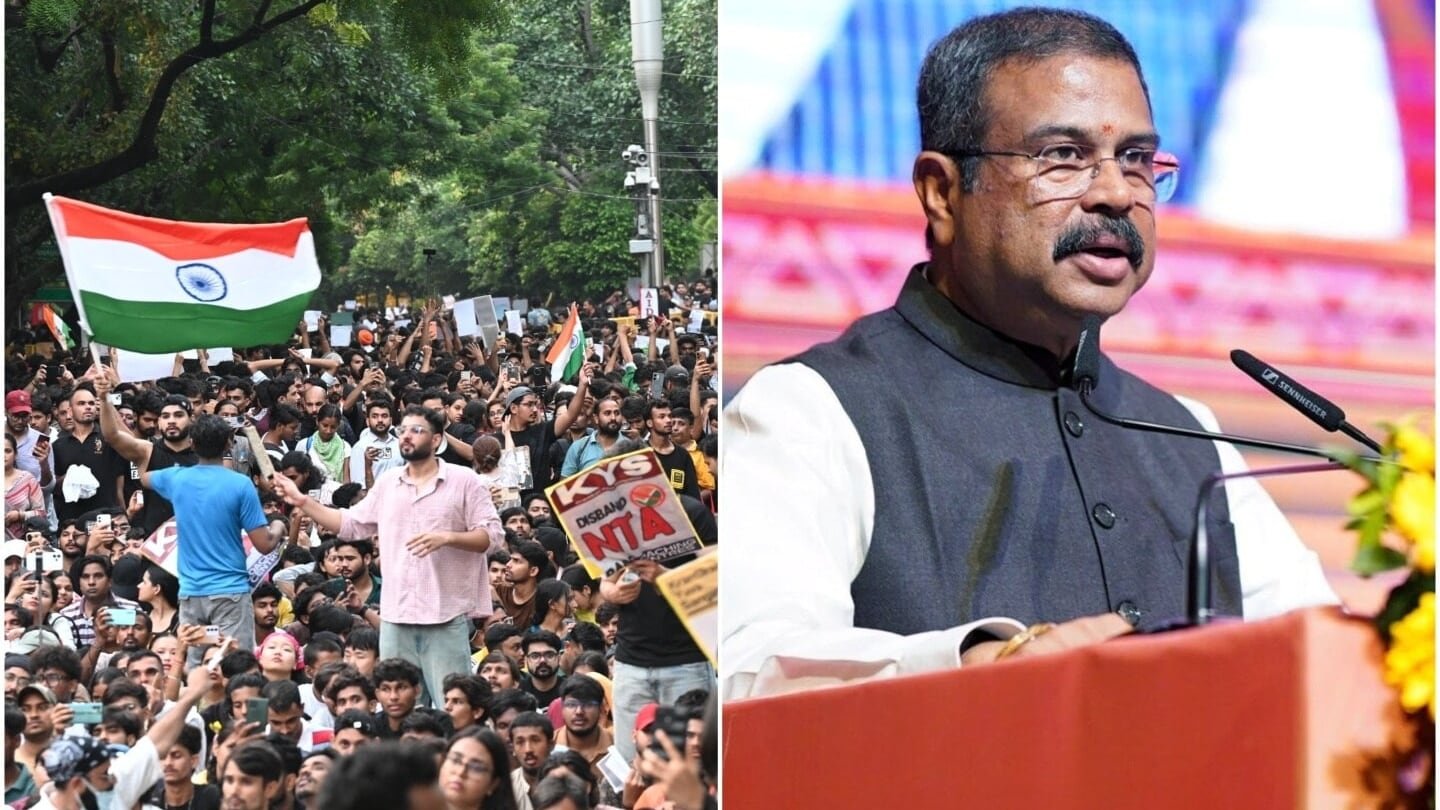
India's Union Education Minister Dharmendra Pradhan resigned on Saturday amid nationwide protests over the NEET-UG 2026 paper leak and examination irregularities. He submitted his resignation to Prime Minister Narendra Modi, saying that the decision was made in the interest of students, national unity, and the country's future.
In his resignation letter, Pradhan stated that he stepped down to ensure that students could focus on their education and careers without being caught in prolonged legal and political disputes. He also said that the situation should not be exploited by what he described as "anti-national elements."
Pradhan noted that the government responded swiftly after irregularities were detected in the NEET-UG 2026 examination by transferring the investigation to the Central Bureau of Investigation (CBI), cancelling the original examination, conducting a re-examination, and announcing that the test would be held in computer-based (CBT) mode from next year.
He wrote that he had accepted responsibility from the very beginning and remained committed to protecting the future of deserving students from examination fraud. However, he said that the developments of the past several days had deeply saddened him, leading him to conclude that resignation was the most appropriate course of action in the larger interest of the nation's youth.
CJP Welcomes the Resignation
The Cockroach Janta Party (CJP), which had spearheaded the protests demanding Pradhan's resignation, welcomed the announcement. Party leader Abhijeet Dipke described the resignation as proof that sustained public protests could hold the government accountable.
Supporters gathered at Jantar Mantar in New Delhi celebrated the announcement, with the party describing the development as a victory for "student power."
Background to the Protests
3 May 2026: NEET-UG examination conducted.
12 May 2026: The government cancelled the examination after allegations of a paper leak and handed the investigation to the CBI.
21 June 2026: A nationwide re-examination was held.
16 July 2026: Results of the re-examination were announced.
Despite these measures, protests by students, parents, and civil society groups continued, with demonstrations centred at Jantar Mantar in New Delhi. The movement gained additional national attention after environmental activist Sonam Wangchuk launched a prolonged hunger strike in support of the protesting students before eventually ending his fast.
CJP's Key Demands
The CJP had put forward three principal demands:
The resignation of Education Minister Dharmendra Pradhan.
Compensation for the families of students who died by suicide.
An assurance that no legal action would be taken against peaceful protesters.
According to the report, the government had already indicated its in-principle acceptance of the second and third demands. Pradhan's resignation effectively fulfilled the first demand as well.
Source :the Hindustan Times