Uncertain Future for Rohingya Refugees in Bangladesh: Safe Repatriation Remains Elusive After Nine Years
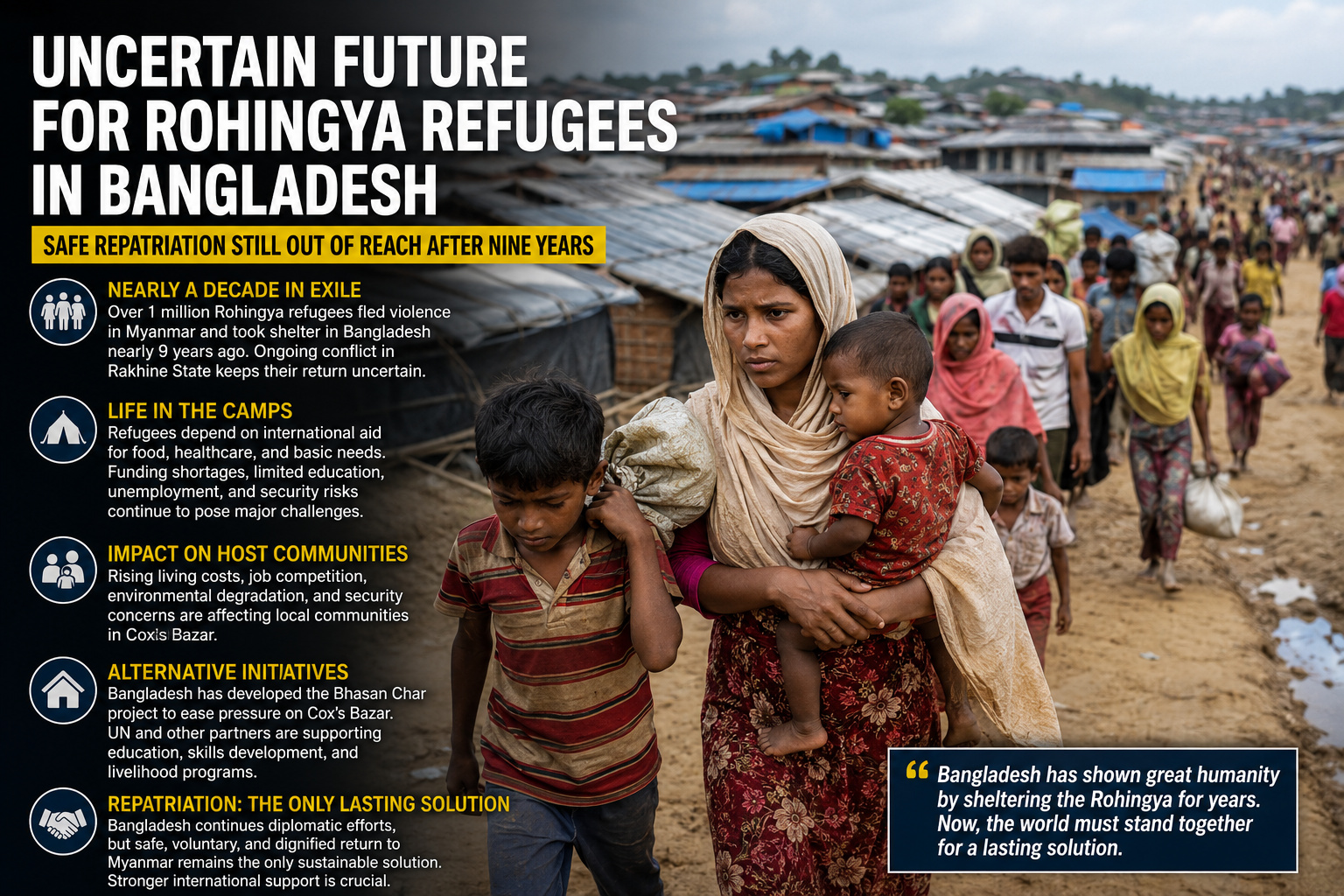
Nearly nine years after fleeing violence and persecution in Myanmar, more than one million Rohingya refugees remain in Bangladesh, facing an uncertain future. Despite ongoing humanitarian assistance, prospects for safe, voluntary, and dignified repatriation remain limited due to continued conflict and instability in Myanmar's Rakhine State. As the crisis enters its ninth year, both refugees and host communities in Cox's Bazar continue to grapple with economic, environmental, and security challenges.

Uncertain Future for Rohingya Refugees in Bangladesh: Safe Repatriation Remains Elusive After Nine Years
Cox’s Bazar, Bangladesh : Nearly nine years after fleeing persecution, violence, and conflict in Myanmar, more than one million Rohingya refugees in Bangladesh continue to face an uncertain future. Ongoing conflict and political instability in Myanmar’s Rakhine State have significantly reduced the prospects for their safe, voluntary, and dignified repatriation.
Currently, one of the world's largest refugee populations resides across 33 refugee camps in Ukhiya and Teknaf, Cox’s Bazar. While Bangladesh has continued to provide shelter and humanitarian assistance on humanitarian grounds, the prolonged crisis has become a major challenge for both refugees and host communities.
Camp Life: Dependency on Aid and Security Concerns
Most Rohingya refugees remain heavily dependent on international humanitarian assistance. Food, healthcare, and other basic services are being provided through support from the World Food Programme (WFP), the United Nations, and various international organizations.
However, global funding shortages have reduced humanitarian assistance in recent years, making daily life increasingly difficult for camp residents. Limited access to formal education and employment opportunities has left many young people idle, increasing the risk of human trafficking, criminal activities, and other forms of exploitation.
Security concerns also remain significant. Incidents of murder, kidnapping, violence, and fires frequently raise concerns about the safety of refugees living in the camps.
Impact on Host Communities
The prolonged presence of the Rohingya population has had a significant impact on local communities in Cox’s Bazar. Local workers have complained that competition in the labor market has increased, as some employers prefer lower-cost labor. At the same time, population pressure has contributed to rising living costs.
Environmental degradation is another major concern. Large areas of forest land have been cleared to establish refugee settlements, while hill-cutting activities have increased the risk of landslides. Environmental experts say long-term restoration programs will be necessary to address the damage.
Local residents have also expressed concerns regarding security issues, including drug trafficking, human trafficking, and the influence of criminal networks on surrounding communities.
Bhasan Char and Alternative Initiatives
To reduce pressure on Cox’s Bazar, the Government of Bangladesh has developed a planned housing project on Bhasan Char in the Bay of Bengal. Thousands of Rohingya refugees have already been relocated there. Government officials say the island offers improved housing, disaster protection infrastructure, and livelihood opportunities.
Meanwhile, the United Nations, the European Union, and other international partners continue to implement education, skills development, and livelihood programs for both Rohingya refugees and host communities.
Repatriation Remains the Only Durable Solution
Analysts believe that the long-term solution to the Rohingya crisis lies in their safe, voluntary, and dignified return to Myanmar. Bangladesh has continued diplomatic efforts toward this goal and has submitted verified repatriation lists to Myanmar authorities.
However, ongoing insecurity and political instability in Rakhine State have prevented meaningful progress in the repatriation process.
For nearly a decade, Bangladesh has earned international recognition for providing refuge to a massive displaced population. Nevertheless, observers argue that a sustainable resolution will require stronger international engagement, increased humanitarian funding, and sustained diplomatic pressure on Myanmar.
Until then, expanding humanitarian assistance, environmental restoration efforts, and economic support for both refugees and host communities will remain critical priorities.