Political Transition in West Bengal: How Mamata Banerjee’s Defeat Could Reshape Regional Politics and India–Bangladesh Relations
The political transformation in West Bengal is not merely an electoral event. It represents a turning point with potential consequences for society, governance, regional diplomacy, and communal harmony. Whether the state moves toward inclusive development or deeper polarization will depend largely on how political leaders, institutions, and civil society respond in the coming months. For India and Bangladesh alike, maintaining stability, cooperation, and mutual respect will remain essential in an increasingly sensitive regional environment.

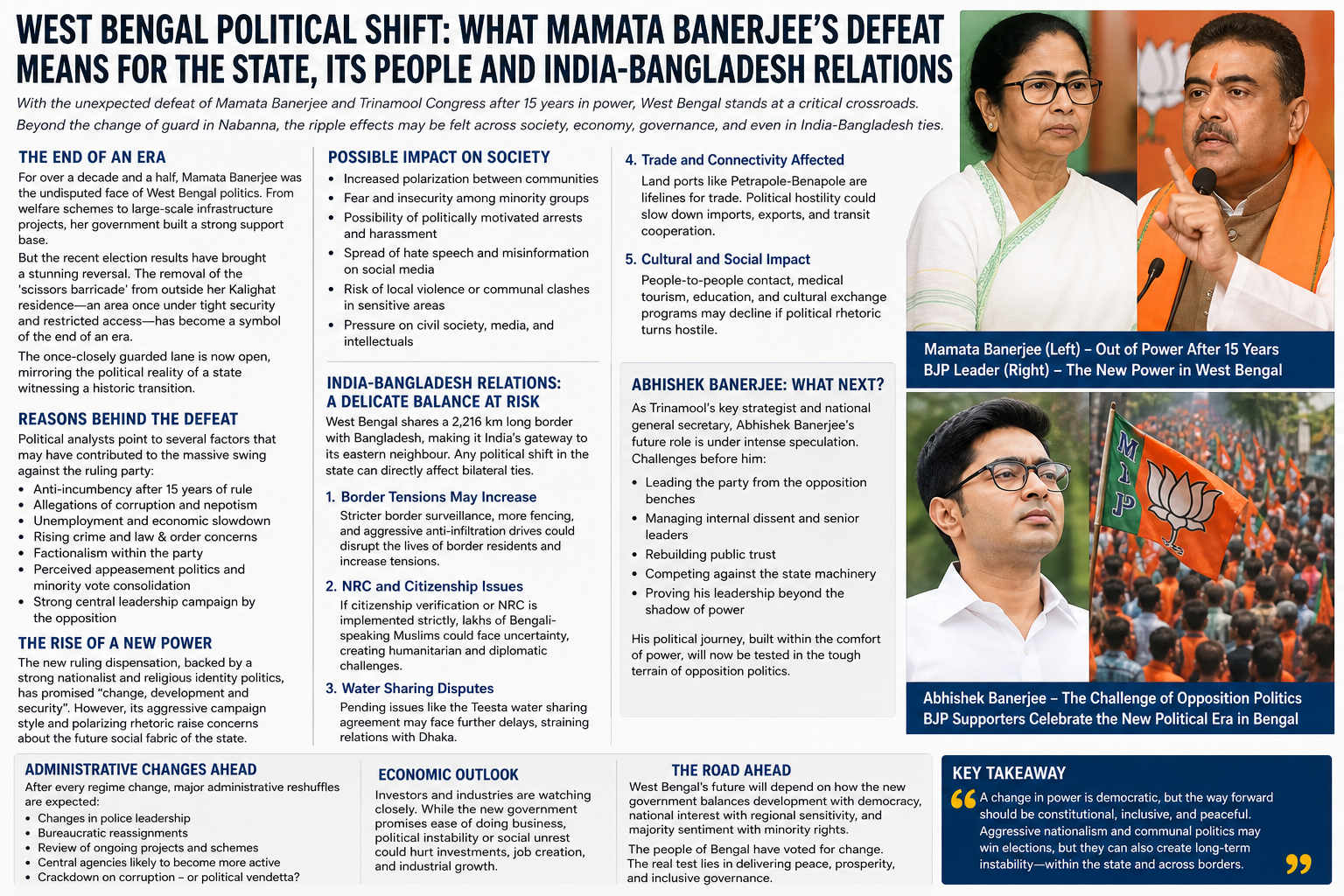
Political Transition in West Bengal: How Mamata Banerjee’s Defeat Could Reshape Regional Politics and India–Bangladesh Relations
The political landscape of West Bengal has entered a dramatic new phase following the electoral defeat of Mamata Banerjee and the Trinamool Congress (TMC). For more than a decade, Mamata remained one of India’s most influential regional leaders, shaping not only the politics of West Bengal but also playing a significant role in national opposition politics. Her party’s fall from power has triggered intense debate about the future of governance, communal harmony, regional identity, and India’s relationship with neighboring Bangladesh.
The removal of the heavily guarded security barricades near Mamata Banerjee’s residence at Harish Chatterjee Street in Kolkata symbolized more than just an administrative change. For many observers, it marked the visible end of an era in West Bengal politics. Residents who for years had faced strict security checks, identity verification, and movement restrictions suddenly found the area open and unrestricted.
Political analysts believe this transformation may represent a much deeper shift in the state’s political culture.
A State at a Political Crossroads
West Bengal has historically maintained a strong tradition of cultural pluralism, secular politics, and linguistic identity. From the Left Front era to the rise of the Trinamool Congress, the state often projected itself as politically distinct from the aggressive identity-based politics seen in several other parts of India.
However, the recent electoral outcome suggests that a large section of voters demanded political change after years of anti-incumbency, allegations of corruption, unemployment, political violence, and organizational fatigue within the ruling party.
At the same time, critics fear that the rise of a more aggressively nationalist political force could deepen communal polarization inside the state.
Concerns Over Communal Tensions
West Bengal’s social structure is deeply diverse. Hindus, Muslims, tribal communities, migrants, and linguistic minorities coexist across urban and rural regions. Analysts warn that if political rhetoric becomes increasingly centered on religion and identity, several risks may emerge:
- Increased social polarization between communities
- Fear and insecurity among minority populations
- Expansion of hate speech and online radicalization
- Heightened tensions in border districts
- Localized political clashes and unrest
- Increased pressure on civil society and independent media
Observers note that political transitions in highly polarized environments often create uncertainty within law enforcement and administrative institutions. Such conditions may lead to accusations of selective policing, political retaliation, or misuse of investigative agencies.
Implications for India–Bangladesh Relations
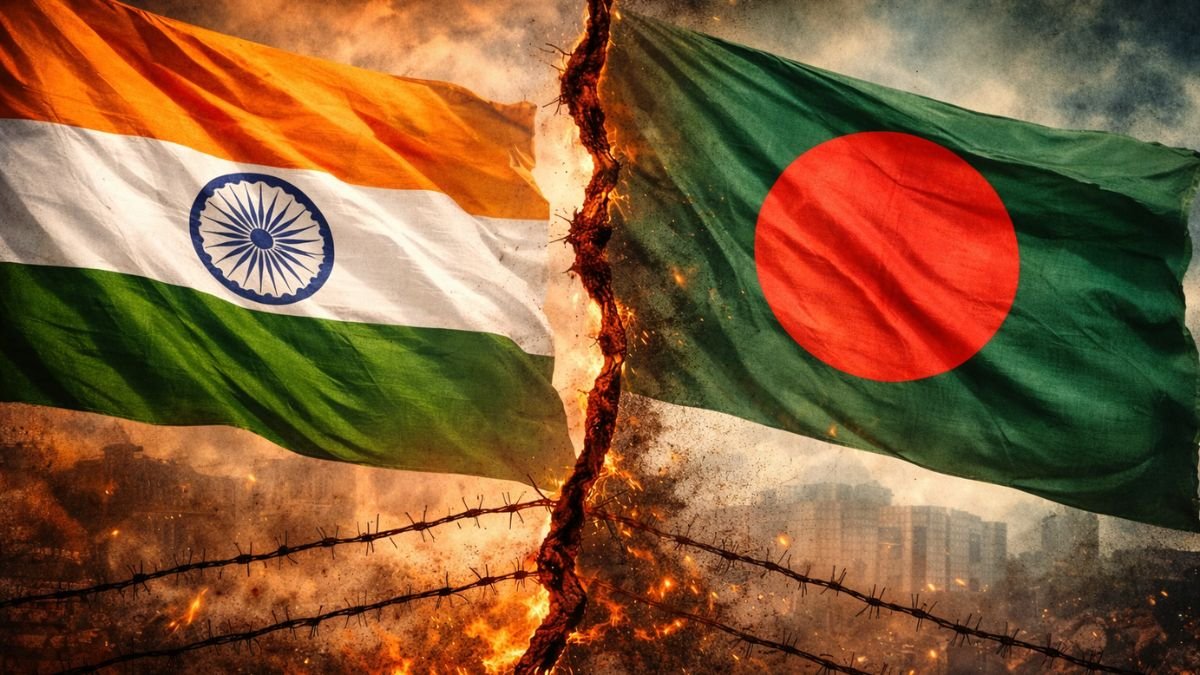
West Bengal shares deep historical, linguistic, cultural, and economic ties with Bangladesh. Any major political change in the state inevitably influences bilateral relations between New Delhi and Dhaka.
1. Border Security and Migration Politics
Issues such as undocumented migration, border fencing, cattle smuggling, and cross-border crime may once again dominate political discourse. A tougher political stance on migration could increase tensions among Bengali-speaking Muslim communities and create diplomatic sensitivities with Bangladesh.
Border regions may experience tighter surveillance and stricter movement regulations, affecting the daily lives of traders, transport workers, and families connected across the border.
2. NRC and Citizenship Debates
The possibility of renewed debates around the National Register of Citizens (NRC) and citizenship verification could create anxiety among vulnerable populations. Human rights groups have previously warned that aggressive citizenship policies may create fear and social instability.
3. Teesta Water Sharing Dispute
The unresolved Teesta River water-sharing agreement remains one of the most sensitive issues between India and Bangladesh. Since West Bengal plays a crucial role in approving such agreements, any hardline political position from the new state leadership could complicate negotiations.
4. Trade and Connectivity
West Bengal serves as one of South Asia’s most important trade gateways. The Petrapole–Benapole land port handles massive trade volumes between India and Bangladesh.
Political instability, aggressive rhetoric, or border tensions could negatively impact:
- Cross-border trade
- Logistics and transport
- Tourism and medical travel
- Regional connectivity projects
- Small business networks along the border
Economists argue that stable regional relations are essential for long-term economic growth in eastern India and Bangladesh.
The Future of Abhishek Banerjee
The defeat has also sparked intense speculation regarding the political future of Abhishek Banerjee, widely regarded as Mamata Banerjee’s political successor.
Over the past decade, Abhishek emerged as a powerful organizational strategist within the Trinamool Congress. His influence expanded rapidly after 2021, and he became central to the party’s electoral machinery, youth outreach, and campaign modernization.
However, critics inside and outside the party argue that:
- Centralization of power weakened senior leadership
- Corporate-style political management distanced grassroots workers
- Rapid promotion of new faces created internal resentment
- Organizational reforms came too late to counter anti-incumbency
Political observers now question whether Abhishek can adapt to opposition politics after spending most of his political career within a ruling establishment.
Administrative Changes Expected
Major political transitions in Indian states are usually followed by significant changes within the bureaucracy and police administration.
Possible developments may include:
- Transfers of senior police officials
- Reorganization of district administrations
- Reopening of corruption investigations
- Greater involvement of central agencies
- Policy reviews of previous government projects
While supporters may describe these moves as accountability measures, critics could view them as politically motivated.
Cultural and Ideological Shifts
West Bengal has long been associated with intellectual debate, artistic freedom, literature, theatre, and progressive politics. Analysts fear that increasing ideological polarization may create tensions within:
- Universities and educational institutions
- Film and cultural sectors
- Media organizations
- Academic research spaces
- Public discourse on history and identity
Debates over nationalism, religion, language, and historical narratives may become more intense in the coming years.
Economic and Social Challenges
Beyond political competition, the incoming administration will face serious governance challenges:
- Rising unemployment among youth
- Industrial stagnation
- Rural economic distress
- Infrastructure gaps
- Urban congestion and pollution
- Public dissatisfaction over corruption
Political stability will play a key role in determining whether investors and businesses remain confident about the state’s future.
Public Expectations and Democratic Responsibility
Every democratic transition raises public expectations. Many citizens hope for:
- Better governance
- Reduced corruption
- Improved law and order
- Faster development
- Greater transparency
However, analysts caution that excessive political revenge, communal rhetoric, or prolonged instability could damage the democratic environment and weaken social trust.