Deadly Clashes at Dhaka Rally Trigger Nationwide Strike Amid Allegations of Political Repression
Bangladesh’s political crisis deepened after deadly clashes erupted in the capital Dhaka during mass rallies organized by opposition and ruling party supporters, leaving at least two people dead, including a police officer. The main opposition party, the Bangladesh Nationalist Party (BNP), has accused the ruling Bangladesh Awami League government and security forces of carrying out violent attacks on its peaceful rally and suppressing democratic dissent.

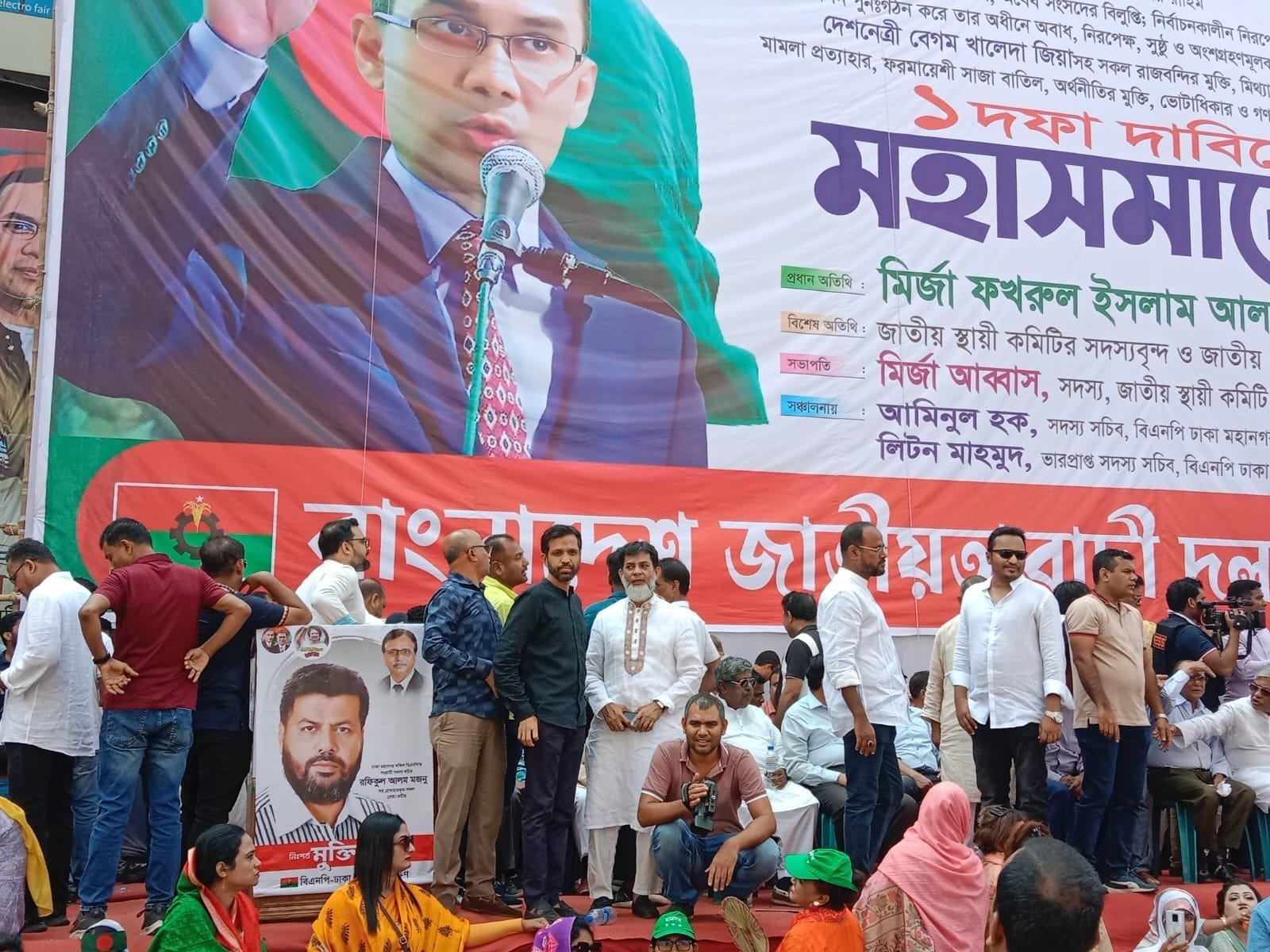
Deadly Clashes at Dhaka Rally Trigger Nationwide Strike Amid Allegations of Political Repression
DHAKA, Bangladesh | October 23, 2023 | International Report
Bangladesh’s political crisis deepened after deadly clashes erupted in the capital Dhaka during mass rallies organized by opposition and ruling party supporters, leaving at least two people dead, including a police officer. The main opposition party, the Bangladesh Nationalist Party (BNP), has accused the ruling Bangladesh Awami League government and security forces of carrying out violent attacks on its peaceful rally and suppressing democratic dissent.
In response, BNP announced a nationwide general strike, marking a dramatic escalation in political tensions ahead of the country’s national election period.
Violence Erupts During Rival Political Gatherings
The violence broke out on October 28, 2023, as tens of thousands of supporters from BNP, the ruling Awami League, and Bangladesh Jamaat-e-Islami gathered in Dhaka for separate political programs. Clashes quickly spread across key areas of the city, including major political and commercial districts.
Authorities confirmed that a police officer was killed during the violence. BNP leaders also reported that one of their activists, identified as youth leader Shamim Molla, died after allegedly being shot by police.

However, officials at Rajarbagh Central Police Hospital stated that the individual brought to the hospital showed no visible external injuries, suggesting that panic, heart failure, or other medical causes could have contributed to the death. An autopsy was ordered at Dhaka Medical College Hospital to determine the exact cause.
BNP Accuses Government of Systematic Crackdown
BNP leaders accused the government of launching what they described as a “coordinated and violent crackdown” against opposition supporters. They alleged that security forces and ruling party activists attacked their peaceful rally, forcibly dispersed demonstrators, and detained numerous leaders and activists.
BNP Secretary General Mirza Fakhrul Islam Alamgir announced the nationwide strike from the party’s rally stage in Dhaka, stating that the government had “destroyed the democratic space” and left the opposition with no alternative but to protest.
“The people of Bangladesh are being denied their fundamental rights, including the right to peaceful assembly and political p articipation,” BNP leaders said in a statement.
The party also reiterated demands for the release of BNP Chairperson Khaleda Zia and called for elections to be held under a neutral caretaker government.
Government Rejects Allegations, Announces Counter-Rallies
The Awami League rejected the accusations and blamed BNP and its allies for instigating violence and attempting to destabilize the country.
The ruling party announced nationwide “peace rallies” and pledged to maintain law and order. Authorities deployed large numbers of police, Rapid Action Battalion (RAB), and units of Border Guard Bangladesh to restore stability and secure key government installations.
Security forces established checkpoints and increased patrols across Dhaka amid fears of further unrest.
International Community Expresses Concern
The United States Embassy in Dhaka issued a statement condemning political violence and urging all parties to exercise restraint. The embassy emphasized the importance of peaceful assembly, democratic participation, and respect for human rights.
International observers have expressed growing concern about Bangladesh’s political environment, particularly regarding the shrinking space for opposition activities and increasing polarization.
Transport Remains Operational Amid Strike Call
Despite the strike call, the Dhaka Road Transport Owners’ Association announced that buses and public transport services would continue operating nationwide. However, security concerns and political tensions have significantly reduced public movement in some areas.
Residents reported heavy security presence across the capital, with armored patrols, checkpoints, and heightened surveillance.
Return to Mass Strike Signals Escalating Political Crisis
The strike marks BNP’s return to large-scale shutdown programs after several years. Analysts say the renewed protests reflect deepening political divisions and growing confrontation between the government and opposition.
Political observers warn that continued violence and suppression allegations could further destabilize Bangladesh’s political landscape and raise serious questions about the credibility and inclusiveness of future elections.
As tensions remain high, the country faces increasing uncertainty over its democratic process, political stability, and governance trajectory.