Political Rhetoric or Real Threat? Debate Over Iran’s Missile Timeline
U.S. President Donald Trump has claimed that Iran is developing missiles capable of reaching the United States “very soon.” However, multiple sources familiar with U.S. intelligence assessments say there is no evidence to support that timeline, raising questions about the accuracy of the president’s warning.

Political Rhetoric or Real Threat? Debate Over Iran’s Missile Timeline
Trump’s Claim on Iran Missile Threat Not Supported by U.S. Intelligence, Sources Say
U.S. President Donald Trump’s recent claim that Iran is developing a missile capable of striking the United States in the near future is not supported by current U.S. intelligence assessments, according to multiple sources familiar with classified and unclassified reports.
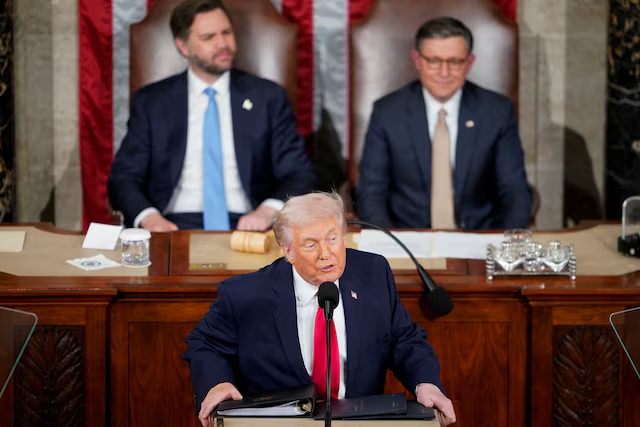
During his State of the Union address on Tuesday, Trump asserted that Tehran was “working on missiles that will soon reach” the United States, framing the issue as part of his broader argument for why Washington may need to consider military action against the Islamic Republic. However, three sources told reporters that existing intelligence assessments do not indicate Iran is close to deploying an operational intercontinental ballistic missile (ICBM) capable of reaching the U.S. homeland.
Two of the sources pointed to a 2025 unclassified assessment by the U.S. Defense Intelligence Agency (DIA), which concluded that Iran could take until 2035 to develop a “militarily viable” ICBM using its existing satellite-launch vehicle (SLV) technology. They said there have been no significant updates to that assessment.
White House Response
Despite the intelligence findings, the White House defended the president’s remarks. Spokesperson Anna Kelly said Trump was right to raise concerns about Iran’s missile ambitions, particularly given Tehran’s longstanding hostility toward the United States.
“President Trump is absolutely right to highlight the grave concern posed by Iran, a country that chants ‘death to America,’ possessing intercontinental ballistic missiles,” Kelly said.
Intelligence Community Assessment
According to the sources, U.S. intelligence agencies are not aware of any new assessments indicating Iran is on the verge of fielding an operational ICBM capable of reaching the continental United States. One source noted that even with technological assistance from countries such as China or North Korea—both of which have cooperated with Iran in various areas—Iran would likely require up to eight years at minimum to produce a functioning, operational ICBM system.
The The New York Times first reported that U.S. intelligence agencies believe Iran remains years away from acquiring missiles capable of striking American territory.
U.S. Secretary of State Marco Rubio struck a more measured tone, stating that Iran is “on a pathway to one day being able to develop weapons that could reach the continental U.S.,” but stopped short of suggesting such capability is imminent.
Broader Context: Nuclear Talks and Military Buildup
Trump’s remarks come amid renewed negotiations between Washington and Tehran over Iran’s nuclear program. Diplomatic efforts have so far failed to produce a breakthrough, while the United States has increased its military presence in the region.
In his address, Trump also claimed that Iran was attempting to rebuild aspects of its nuclear program that he said had been “obliterated” by U.S. airstrikes last June on three uranium-enrichment facilities. He did not provide public evidence to support that assertion.
Iran has consistently denied seeking nuclear weapons, maintaining that its uranium enrichment activities are intended solely for civilian energy purposes. In an interview with India Today TV, Iranian Foreign Minister Abbas Araghchi rejected allegations that Tehran is expanding its long-range missile capabilities.
“We are not developing long-range missiles,” Araghchi said. “We have intentionally limited our missile range to below 2,000 kilometers. We do not want to be a global threat. Our missiles are for deterrence and defense.”
IAEA and Expert Analysis
The International Atomic Energy Agency (IAEA) and the U.S. intelligence community have previously assessed that Iran halted its formal nuclear weapons development program in 2003. However, the IAEA has reported that Iran continues to enrich uranium, including to levels approaching weapons-grade purity in recent years.
Experts caution that while Iran’s space-launch vehicles demonstrate technological progress, converting such systems into operational ICBMs would require significant additional development—particularly in designing and testing re-entry vehicles capable of protecting a nuclear warhead during atmospheric descent.
David Albright, president of the Institute for Science and International Security and a former U.N. nuclear inspector, said Iran remains far from deploying a reliable nuclear-armed ICBM.
“Iran can launch a very long-range missile because of its space launch program,” Albright said. “But it needs substantial work to develop an adequate re-entry vehicle capable of surviving the extreme heat and stress of re-entering Earth’s atmosphere.”
He and other analysts also noted that Israeli airstrikes in 2023 and 2024 reportedly damaged key Iranian facilities involved in producing liquid- and solid-fuel ballistic missiles, potentially slowing development timelines.
Regional Capability vs. Global Reach
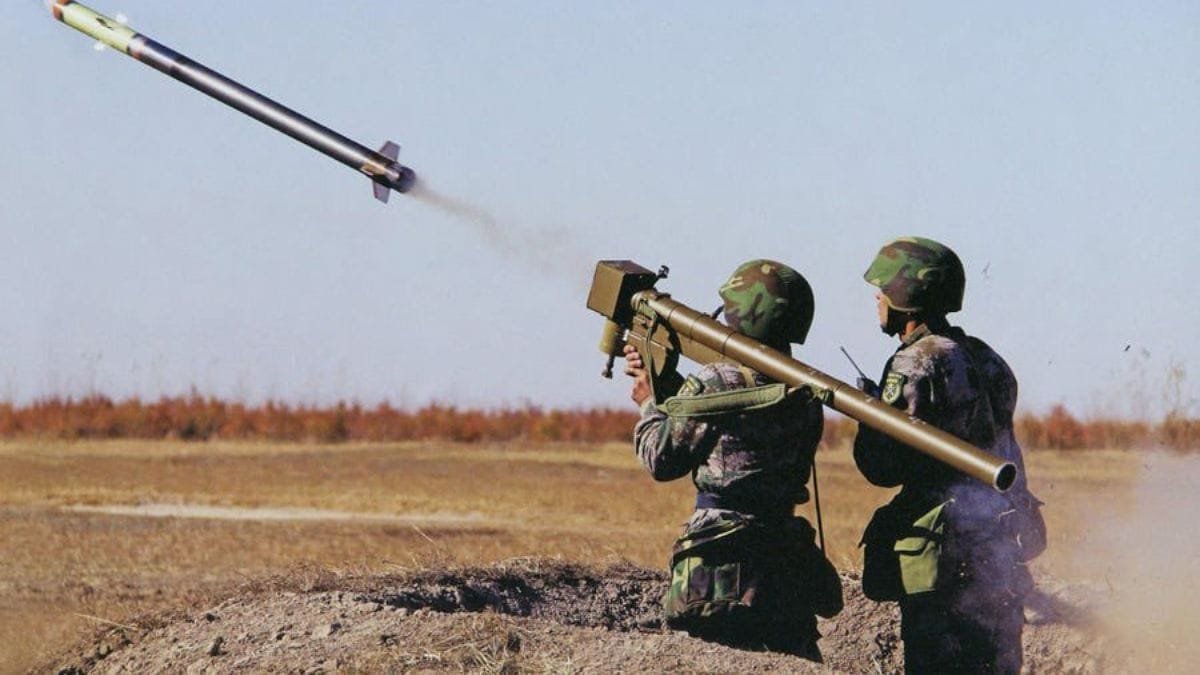
Iran currently maintains the largest ballistic missile arsenal in the Middle East. Its existing systems are capable of reaching Israel, U.S. military bases across the region, and parts of Europe. However, according to current U.S. intelligence estimates, the ability to strike the U.S. homeland with a militarily viable ICBM remains years away.
The discrepancy between Trump’s public statements and intelligence assessments may intensify debate in Washington over the appropriate U.S. response to Iran’s missile and nuclear activities, particularly as diplomatic negotiations remain fragile and regional tensions continue to rise.