Short-term volatility, long-term dominance: Why the U.S. remains the world’s top investment destination
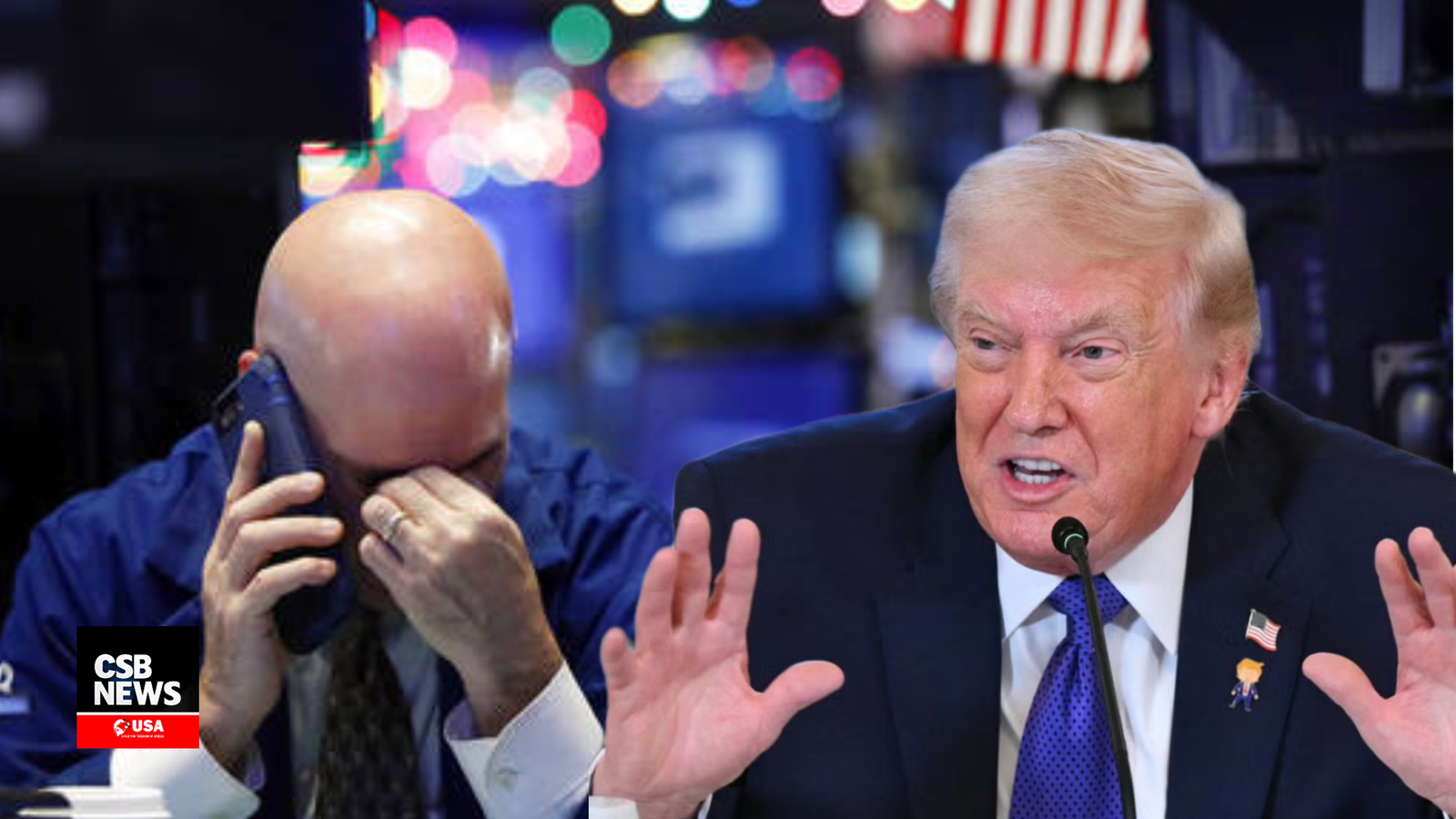
Despite short-term market volatility triggered by renewed tariff concerns, the United States continues to stand out as the strongest long-term investment destination, supported by strategic resource dominance, economic resilience, and assertive leadership under President Donald Trump.

Short-term volatility, long-term dominance: Why the U.S. remains the world’s top investment destination
While global markets reacted nervously to renewed tariff rhetoric from U.S. President Donald Trump, seasoned investors understand that periods of volatility often precede long-term opportunity. Despite short-term risk perceptions, the United States remains uniquely positioned to emerge as the world’s most attractive investment destination—backed by economic strength, strategic resource control, and assertive geopolitical leadership under Trump.
Short-Term Risk, Long-Term Opportunity
Recent selloffs across Wall Street reflect uncertainty, not structural weakness. History shows that U.S. markets repeatedly absorb shocks—whether from trade wars, monetary tightening, or geopolitical tension—and rebound stronger.
What some investors currently interpret as risk is, in reality, a strategic repricing phase, creating entry points for long-term capital.
Energy Dominance and Strategic Leverage
The United States already stands as a global energy superpower, and its strategic influence over oil-rich regions such as Venezuela further strengthens its long-term leverage.
Control over energy supply chains—oil, gas, refining capacity, and dollar-denominated energy trade—ensures that the U.S. remains central to global economic stability and pricing power.
Energy security is not merely an economic advantage; it is a geopolitical tool—and one the U.S. continues to consolidate.
Greenland: The Future’s Most Valuable Strategic Asset
Greenland is far more than a political controversy—it represents the future of global power.
-
Home to vast rare earth minerals essential for semiconductors, electric vehicles, AI infrastructure, and defense systems
-
Strategically located in the Arctic, where new global shipping routes are emerging
-
Critical to future technological and military dominance
President Trump’s focus on Greenland, while controversial in the short term, reflects a long-range strategic vision: controlling the raw materials and geography that will shape 21st-century global leadership.
In a world increasingly defined by resource competition, Greenland may become one of the most valuable territories on Earth.
U.S. Economic Fundamentals Remain Strong
Despite market volatility, the core pillars of the U.S. economy remain intact and resilient:
-
Stable GDP growth
-
A strong labor market
-
Global leadership in technology and artificial intelligence
-
The U.S. dollar’s continued dominance as the world’s reserve currency
These fundamentals ensure that capital ultimately flows back into U.S. assets, especially during periods of global uncertainty.
Trump’s Economic Nationalism: A Strategic Framework
Trump’s “America First” approach centers on three strategic objectives:
-
Protecting domestic industry
-
Securing control over critical resources and strategic territories
-
Preserving U.S. financial and currency dominance
While this strategy can generate short-term volatility, its long-term effect is to make the U.S. more self-reliant, competitive, and structurally powerful in a fragmented global economy.
What This Means for Investors
Current conditions are not a signal to exit—but an opportunity to reposition.
Long-term investors are increasingly focusing on U.S. exposure in:
-
Technology and AI
-
Energy and infrastructure
-
Defense and aerospace
-
Strategic minerals and supply chains
These sectors align directly with America’s geopolitical and economic trajectory.
Today’s market uncertainty is laying the foundation for tomorrow’s dominance. With strategic influence over energy-rich regions like Venezuela, potential access to rare-mineral powerhouses such as Greenland, and an already robust economic base, the United States is positioned to shape—and control—the next phase of global growth.
Under Donald Trump’s assertive leadership, short-term volatility may well be the price of long-term supremacy.