
Ford retreats from EVs in the U.S., takes $19.5B hit, shifts focus to hybrids and global market.
Ford is cutting several EV models and taking a $19.5B writedown, citing unprofitable U.S. sales while focusing on global EV and hybrid markets.

Ford retreats from EVs in the U.S., takes $19.5B hit, shifts focus to hybrids and global market.
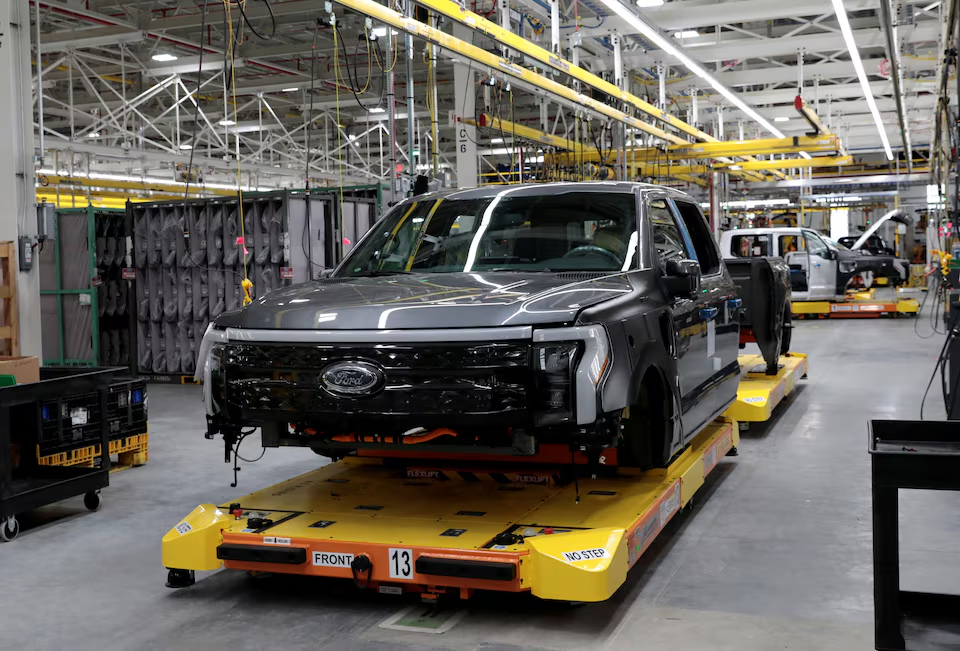
Ford CEO Jim Farley has announced a major retreat from several electric vehicle (EV) models, taking a $19.5 billion writedown on related assets, highlighting the U.S. auto industry’s dilemma: produce EVs for the domestic market or compete globally.
Farley admitted that many of the EVs Ford had hoped would revolution the American auto industry were unprofitable in the U.S., saying, “We can't allocate money for things that will not make money.” Since 2023, Ford has lost around $13 billion on EVs. The decision reflects the challenge automakers face after Trump-era policies removed subsidies and relaxed emissions rules, making U.S. EV sales unprofitable, while China and Europe continue to drive demand.
The move forces automakers to develop region-specific models, reversing decades of globalization strategies like Ford’s “One Ford” plan. Partnerships are becoming essential: Ford recently announced a collaboration with Renault for affordable EVs in Europe and is seeking a Chinese partner for EV platform technology.
Despite the cuts, Ford plans to keep a $30,000 midsize electric truck slated for 2027, designed to compete with Tesla and China’s BYD. Farley emphasized the need to compete globally, balancing U.S. profits from gasoline-powered trucks with international EV demand.
EV sales in the U.S. have dropped sharply following the expiration of the $7,500 federal tax credit, leaving the U.S. lagging behind China and Europe. Industry analysts note that EV economics are still largely dependent on government support.
Other automakers are also adjusting strategies: GM has recorded EV-related losses, Stellantis is focusing on hybrids and fleet sales, and Volkswagen is leaning on partnerships and standalone EV companies. Hybrids, which combine gasoline engines with electric motors, are becoming a popular compromise in the U.S., with companies like Toyota seeing significant sales growth.
Ford has pledged that by 2030, half its global sales will be EVs, hybrids, or extended-range electric models, up from 17% today, but most of these are expected to be hybrids, which are more profitable and align with current U.S. consumer trends.
Farley noted that the decision was influenced by multiple factors, including waning U.S. consumer interest, policy shifts, and global competition. “Over the last several months, it became really clear to the team. We’ve got to make a change,” he said.