Trump Administration Rejects G20 Agenda; Declaration Drafted Without U.S. Participation Called “Shameful” by White House Official
A G20 leaders’ declaration addressing the climate crisis and other global challenges was adopted in Johannesburg without any involvement from the United States, triggering fresh diplomatic tension. The White House criticised the move as “shameful,” while South African President Cyril Ramaphosa insisted the text—prepared after a year of negotiations—would not be reopened despite long-standing American objections. The dispute has laid bare the deepening rift between Washington and Pretoria as the first African G20 presidency pushes ahead without U.S. backing.

Trump Administration Rejects G20 Agenda; Declaration Drafted Without U.S. Participation Called “Shameful” by White House Official
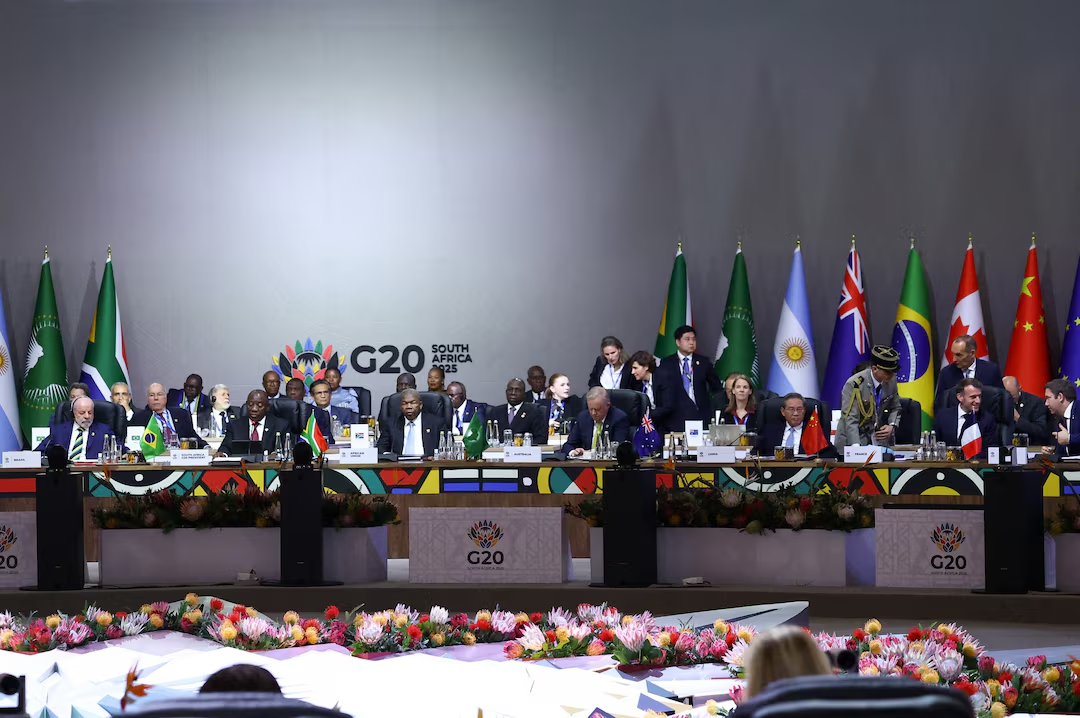
JOHANNESBURG, Nov 22 —A Group of 20 (G20) declaration tackling the climate crisis, debt burdens and global economic challenges was adopted on Saturday at a summit in South Africa, despite being drafted entirely without U.S. participation. The absence of Washington from the discussions prompted a sharp reaction from the White House, where one official labelled the development “shameful.”
South African President Cyril Ramaphosa’s spokesperson confirmed that the declaration contained language the United States—especially the Trump administration—has long opposed.
“It can’t be renegotiated,” the spokesperson said, adding that South Africa had spent the entire year preparing the text and that the final week had been “particularly intense.”
Ramaphosa, who is hosting the G20 leaders’ gathering in Johannesburg, said earlier that there was “overwhelming consensus” in favour of adopting the declaration.
CLIMATE CHANGE AT THE CENTER OF THE DISPUTE
Diplomats from G20 member states drew up the draft on Friday without U.S. involvement, four sources familiar with the matter told Reuters. The final document includes language the Trump administration has consistently rejected:
-
a firm acknowledgement of the seriousness of climate change,
-
the need for greater climate adaptation,
-
praise for ambitious renewable energy targets,
-
recognition of the crushing debt burdens facing poorer nations.
The reference to climate change was widely seen as a direct rebuke to President Donald Trump, who has repeatedly questioned the scientific consensus on human-driven global warming. U.S. officials had indicated in advance that they would oppose any reference to climate change in the declaration.
The White House did not immediately respond to requests for comment.
Opening the summit, Ramaphosa said:
“There has been overwhelming consensus… We must adopt the declaration. We cannot allow anything to diminish the value and stature of the first African G20 presidency.”
His confident tone marked a sharp contrast to his August visit to the White House, where Trump repeated the debunked claim that there was a “genocide” of white farmers in South Africa, dismissing Ramaphosa’s attempts to correct him.
TRUMP ADMINISTRATION REJECTS G20 HOST NATION’S AGENDA
President Trump has also rejected South Africa’s G20 agenda, which prioritises solidarity with developing nations, climate adaptation, clean-energy transitions and relief from crippling debt costs.
South African Foreign Minister Ronald Lamola told public broadcaster SABC:
“The multilateral platform cannot be paralysed because of the absence of someone who was invited.”
He added:
“This G20 is not about the United States. All 21 members are equal. Those of us who are here have decided where the world must go.”
GEOPOLITICAL UNDERCURRENTS: CHINA AND EUROPE
Despite the declaration’s adoption, geopolitical tensions were apparent.
EU Commissioner Ursula von der Leyen warned against “the weaponisation of dependencies,” an apparent reference to China’s export controls on rare earth minerals crucial for energy transitions, digital technology and defence.
THE ‘EMPTY CHAIR’ HANDOVER IN 2026
The United States is scheduled to host the G20 in 2026. Ramaphosa said he would have to hand over the rotating presidency to an “empty chair” due to the U.S. boycott.
South Africa reiterated on Saturday that it had rejected Washington’s offer to send its chargé d'affaires to formally receive the presidency.
Presidency spokesperson Vincent Magwenya said:
“The president will not hand over to a junior embassy official. It is a breach of protocol and will not be accommodated. America chose to boycott the summit—this was their decision.”