Exclusive: Delays, setbacks loom over Trump's Golden Dome missile shield
Trump’s Golden Dome missile-defense project is facing early delays due to the government shutdown and pending spending plans, but officials say progress continues and the Pentagon remains focused on delivering the system by 2028.

Exclusive: Delays, setbacks loom over Trump's Golden Dome missile shield
WASHINGTON, Nov. 21 — President Donald Trump’s Golden Dome missile-defense initiative—one of the most ambitious national security projects in U.S. history—is experiencing early delays due to the recent 43-day government shutdown and the absence of a finalized spending plan for the initial $25 billion Congress allocated this summer.
According to eight sources familiar with the program, hiring stalled during the shutdown and key personnel were diverted from their contract-approval work. Several officials and industry executives, who requested anonymity due to the project’s classified elements, said this slowed the rollout of Golden Dome’s first critical phase.
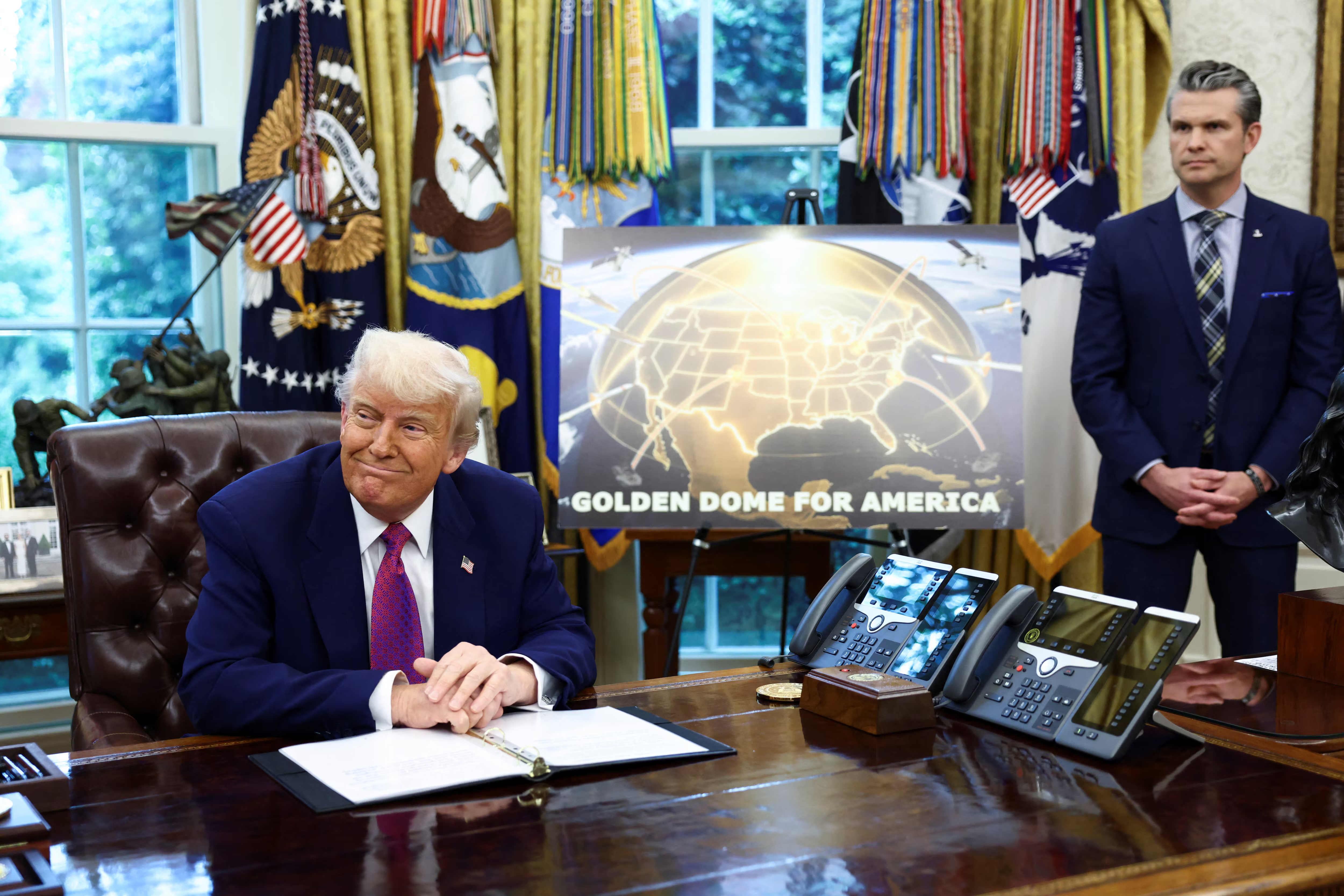
The Golden Dome program, announced on Day 7 of Trump’s new administration, is a $175 billion initiative designed to create a multi-layered national shield capable of intercepting ballistic, hypersonic, and advanced cruise missiles. Trump has stated that the system should be operational by 2028, a goal the Pentagon still says is achievable but challenging.
A formal spending plan—originally due to Congress in late August—is now expected in December, after Deputy Secretary of Defense Steve Feinberg completes the final review. Until that plan is in place, the Pentagon cannot issue major contracts for satellites, interceptors, ground systems, and the network architecture required for the shield.
While delays in defense contracting are common, the compressed timeline places added pressure on Golden Dome. Industry leaders warn that if key contracts slip past the Pentagon’s December 31 internal deadline, costs could rise. Still, the White House remains confident, calling Golden Dome “a visionary project led by a visionary President,” adding that significant work is underway to deliver next-generation missile-defense technology.
Pentagon officials say the program’s baseline architecture has been established, and implementation planning is ongoing. Lt. Gen. Michael Guetlein, who oversees the project, has met major internal milestones and is working to build a full team—currently short of its 30-member staffing target.
Defense contractors—expected to compete for satellites, interceptors, and communications systems—have expressed concerns about the high upfront investments needed for the development of space-based interceptors, a centerpiece of the system. Companies may need to spend hundreds of millions before any government production contracts are awarded.
Despite these hurdles, officials report progress in integrating U.S. early-warning systems from multiple intelligence agencies, a key step toward giving Golden Dome the real-time data needed to track and intercept enemy missiles.
The Pentagon says further updates on funding, architecture, and contract awards will follow once the final spending plan is approved.
(Reuters)