Saudi Crown Prince’s High-Stakes US Visit: Defense, AI and Nuclear Deals on the Table
Saudi Crown Prince Mohammed bin Salman arrives in Washington for a high-level meeting with President Trump, aiming to strengthen defense ties, push for AI and nuclear cooperation, and reset relations years after the Khashoggi fallout. Both nations seek strategic gains amid rising regional tensions and global power competition.

Saudi Crown Prince’s High-Stakes US Visit: Defense, AI and Nuclear Deals on the Table
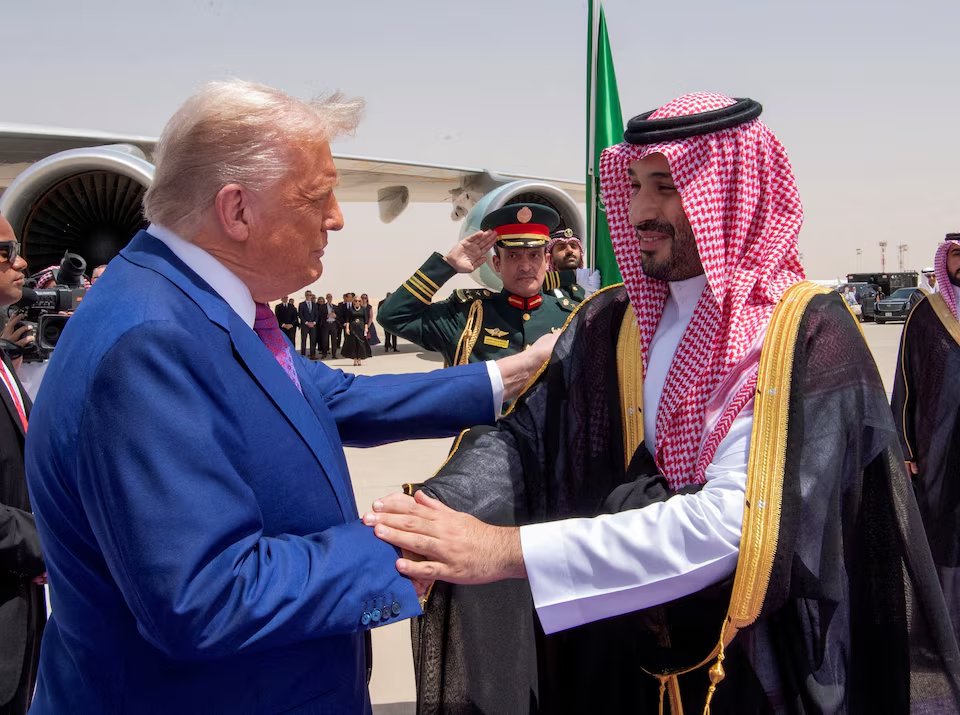
Saudi Arabia’s Crown Prince Mohammed bin Salman is set to visit the White House on Tuesday for talks with U.S. President Donald Trump, marking his first trip to the United States since the 2018 killing of journalist Jamal Khashoggi. The visit aims to reinforce decades-long cooperation on oil and security, while expanding into new areas including commerce, artificial intelligence, and potentially nuclear energy. Despite the international outrage that followed Khashoggi’s death and U.S. intelligence findings that MBS approved the operation, both countries appear ready to move forward as they pursue major strategic interests.
The United States is seeking to secure a portion of a $600 billion Saudi investment pledge made during Trump’s previous visit to the kingdom. Trump, who avoided raising human rights concerns during that trip, is expected to take a similar approach this time. For Saudi Arabia, the priority is obtaining stronger security guarantees amid rising instability in the region, as well as gaining access to advanced AI technologies and moving closer to an agreement on a civilian nuclear program.
The long-standing U.S.-Saudi security arrangement was shaken in 2019 when Washington did not respond militarily to Iranian attacks on Saudi oil facilities. More recently, concerns grew after Israel struck Doha in an operation targeting Hamas members. Trump later signed a defense pact with Qatar through executive order, raising expectations that Saudi Arabia could receive a similar deal. However, U.S. lawmakers have insisted that any formal defense pact requires Saudi normalization with Israel—something Riyadh has tied to Israeli recognition of Palestinian statehood. Israeli Prime Minister Benjamin Netanyahu has strongly opposed such concessions, complicating negotiations.
Analysts believe that while the Saudis will not get the full congressional defense pact they want, Trump may offer an executive order similar to Qatar’s, committing the two countries to immediate consultation in the event of threats. Such an order would signal progress but stop short of obligating U.S. military intervention.
At the same time, Saudi Arabia is pushing for major advances in artificial intelligence and nuclear energy as part of its Vision 2030 modernization plan. Access to high-end U.S. computer chips is crucial to Riyadh’s ambition to become a regional AI hub and rival the UAE, which already secured a major data center deal with Washington. MBS also wants to launch a civilian nuclear program with U.S. cooperation, a move that would help Saudi Arabia match regional competitors like Iran and the UAE. The United States, however, has demanded that Saudi Arabia agree not to enrich uranium or reprocess nuclear fuel—conditions that Riyadh has resisted.
Although progress has been difficult, experts believe the Biden–Trump team may announce movement toward a nuclear cooperation framework during the visit. With geopolitical tensions rising across the Middle East, both Washington and Riyadh see this meeting as an opportunity to strengthen their strategic partnership, even if neither side gets everything it wants.
(Reuters)