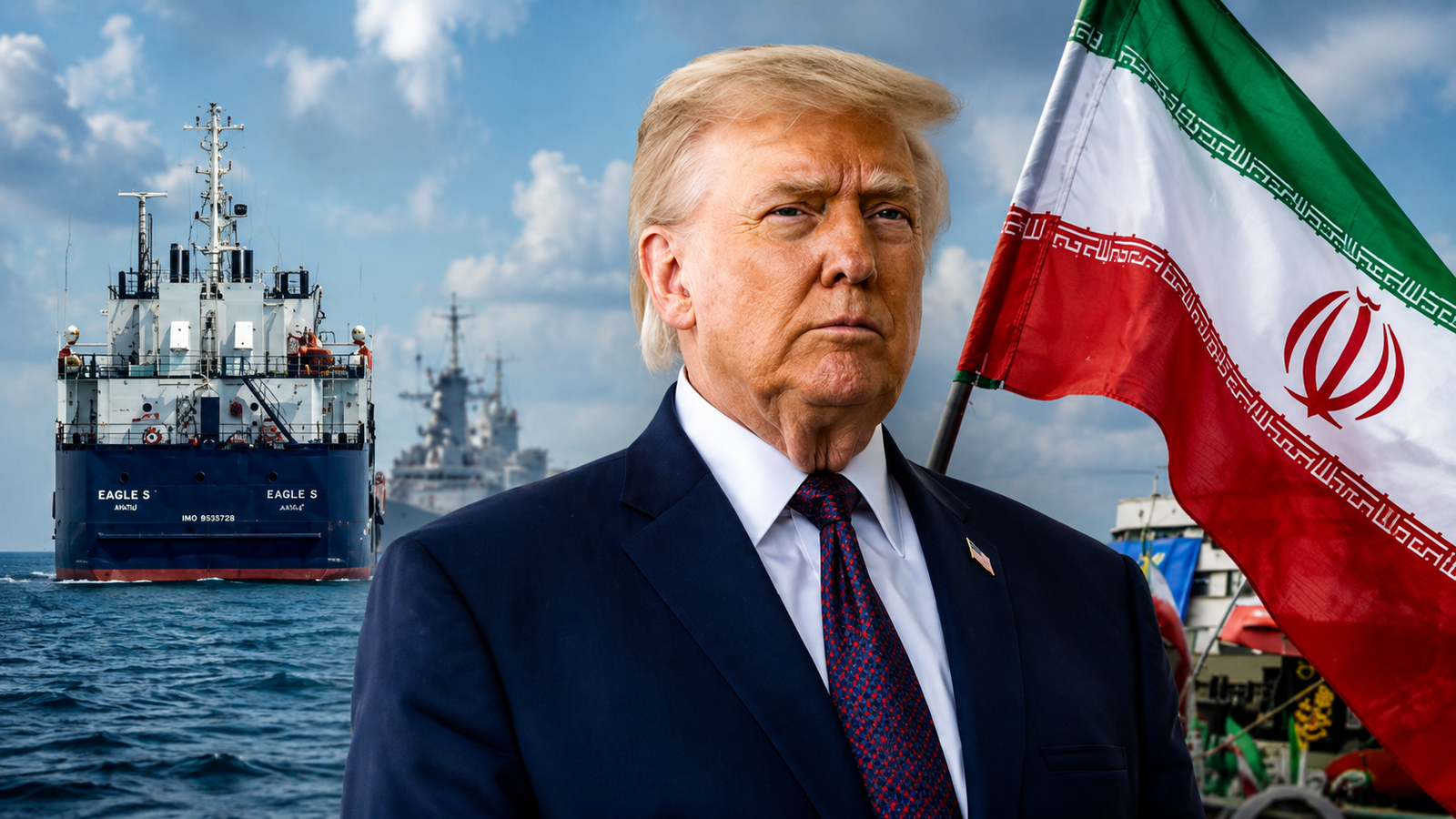
"I'm always a very peace-loving person – but sometimes, to achieve peace, you have to be tough." — President Donald Trump
President Donald Trump’s attention appears trapped in the escalating Israel-Iran conflict. Even during Monday’s meetings in Canada, he repeatedly sought updates from aides on the latest developments

"I'm always a very peace-loving person – but sometimes, to achieve peace, you have to be tough." — President Donald Trump
"I'm always a very peace-loving person – but sometimes, to achieve peace, you have to be tough." — President Donald Trump
President Donald Trump’s attention appears trapped in the escalating Israel-Iran conflict. Even during Monday’s meetings in Canada, he repeatedly sought updates from aides on the latest developments. This week, he has spent more time in the White House Situation Room than at any other point in his presidency.
But what surprised many was an unexpected moment on Wednesday. Trump suddenly emerged from the South Portico—not to provide an update on the war, but to oversee the installation of two nearly 100-foot-tall flagpoles.
“These are the best in the country, maybe the world,” the president told reporters and staff. “Great shape, beautiful heads. This is a very exciting project for me.”
Amid intense deliberations over Iran, that hour-long pause allowed him some time on the South Lawn to walk the grass—as he prepared for one of the most significant decisions of his presidency.
The following day, President Trump announced a “decision not to decide.”
Through White House Press Secretary Karoline Leavitt, he issued a statement saying he would postpone military action against Iran for two weeks to allow a chance for diplomacy.
This came after another Situation Room meeting where Trump reviewed attack plans and asked officials about potential consequences, as he had done every day.
After several days of military warnings—including evacuations of over 10 million people from Tehran—this pause gave him time to reflect on the alternative options presented by his military advisers.
It also allowed dissenting voices within his own party to express their positions. Some in support, others in opposition—since it’s now almost certain Trump is seriously considering bombing Iran’s nuclear facilities.
Publicly, Trump has not clarified his stance. On social media, he has issued warlike threats, while privately expressing concern that military action could drag the U.S. into another prolonged conflict.
In the Situation Room, Trump has primarily leaned on CIA Director John Ratcliffe and Joint Chiefs Chairman General Dan Kane. His special envoy Steve Witkoff has also kept backchannel communication open with Iranian Foreign Minister Abbas Araghchi, gauging chances for renewed talks.
He has notably ignored Director of National Intelligence Tulsi Gabbard twice. In March, she had said Iran was not building nuclear weapons—based on U.S. intelligence. On Friday, Trump remarked, “Then my intelligence agencies are wrong.” When a reporter mentioned Gabbard, Trump bluntly said, “She’s wrong.”
Despite all, Trump still relies most on his own instincts. And this week, his inner compass told him—not now.
Earlier this month at Camp David, when top national security officials informed him of Israel's imminent strike plans on Iran, he wasn’t surprised. Advisors had been preparing him for this possibility as Iran’s regional proxies had recently weakened—prompting Israel to act directly.
At Camp David, his team presented various military options.
He then spoke to Israeli Prime Minister Netanyahu, who confirmed a direct operation into Iran.
Ten days later, as Israel’s assault was in full swing, Trump attended the G7 summit in Canada, holding talks with U.S. allies. European leaders tried to discern whether Trump would order a U.S. strike—especially on Iran’s covert Fordow uranium enrichment facility.
They urged him to support a joint statement calling for a resolution that “de-escalates rather than inflames tensions in the Middle East.”
But Trump remained noncommittal—even during the summit dinner. He left early for Washington to take charge of the situation himself.
Midweek, though Iran signaled interest in talks, Trump’s patience seemed to wear thin. Some close to him believed he was now ready to strike Fordow.
“Time for talking is running out,” Trump said Wednesday during the flag-raising. Sweat beaded on his brow.
In private, Trump appeared more resolute about the need to destroy Fordow. He told the press, “Only we can do this. But that doesn’t mean I will,” after returning to the Oval Office.
Later, standing beside Juventus football players in the White House, he answered questions about Iran. The athletes stood silently, only posing for photos.
At one point, he looked at the players and said, “You guys are stealthy—you don’t lose, right?” No one answered.
“It was actually a bit strange,” said footballer Timothy Weah afterward. “He started talking about Iran—I thought we were here just to talk soccer!”
Although Trump hasn’t made a final decision, the fear of a prolonged war weighs heavily. Even his Republican Party is divided. Senator Lindsey Graham, who has spoken with Trump multiple times, said, “He’s focused, calm, and resolute.”
“When he says Iran will never have nuclear weapons, he means it,” said Graham.
On the other hand, former chief strategist Steve Bannon—firmly anti-war—had lunch with Trump on Thursday. A day earlier, Bannon had said:
“My mantra—let Israel finish the job. We don’t need another Iraq. That would tear the country apart.”
Ultimately, Trump is making the decision in his own style—listening to advice and choosing what will please the most supporters.
But the message may not be so simple. Trump doesn’t hold all the cards. Israel attacked at a time when he had publicly asked them to wait. And Iran—known historically to harden under pressure—may not bend.
Upon arriving at his home in New Jersey on Friday, Trump admitted it would now be difficult to ask Netanyahu to stop while Israel is succeeding militarily.
He said the two-week diplomatic window he offered was the maximum, and he may act even sooner.
Whether this will be the most consequential decision of his presidency, Trump wasn’t sure. But he said what’s on his mind most is how history will remember him.
“I always want to be seen as a man of peace,” Trump said.
“But sometimes, to bring peace, you have to be tough.”