President Donald Trump's Second Term and the Rise of the U.S. as a Solo Superpower with a Unilateral Tariff Policy
Under President Donald Trump, the United States has not formally declared itself as a solo superpower, but on the day of his swearing-in, he declared, "We will make America great again, and America is entering a golden age.
President Donald Trump's Second Term and the Rise of the U.S. as a Solo Superpower with a Unilateral Tariff Policy
President Donald Trump's Second Term and the Rise of the U.S. as a Solo Superpower with a Unilateral Tariff Policy
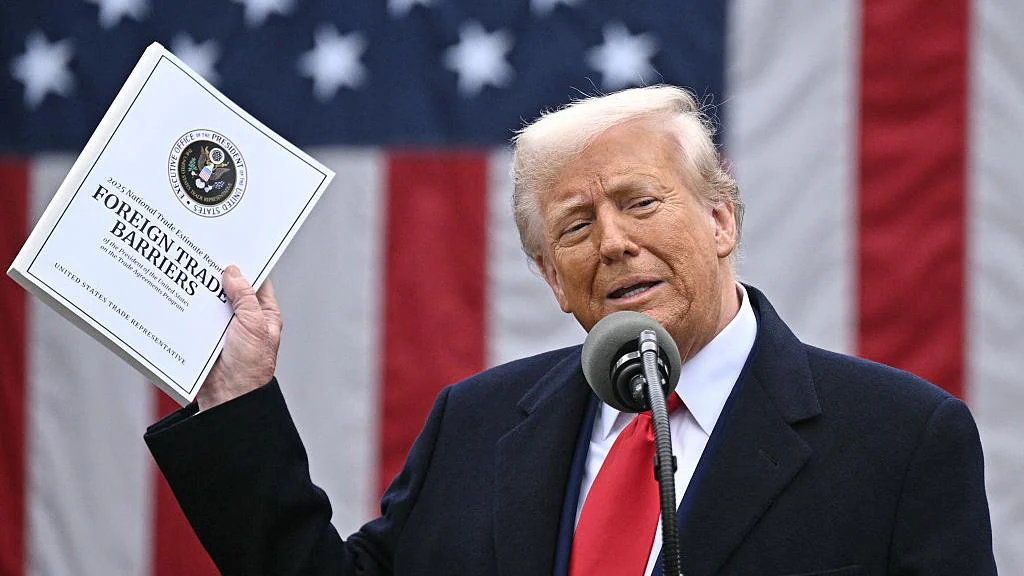
Under President Donald Trump, the United States has not formally declared itself as a solo superpower, but on the day of his swearing-in, he declared, "We will make America great again, and America is entering a golden age." In line with this, to revive and strengthen the U.S. economy, President Trump announced a new global tariff policy that would have no room for reliable friends, followers, or admirers. Before the end of Trump’s second administration, the world might witness the rise of a solitary superpower, which will be clearly reflected in his risky foreign economic policies, diplomatic maneuvers, and unclear defense and security initiatives.
The Trump administration is attempting to restore the U.S. as a "great power," but Trump claims that America's position in the world has diminished. In light of this, he aims to establish the U.S. as the sole superpower, where other countries will follow its commands. However, to establish his dominance, he has raised complaints with many allied and rival countries about their trade policies and benefits, particularly Mexico, Canada, the EU, Japan, South Korea, India, Indonesia, Vietnam, and China.
Trump didn’t stop at just raising tariffs; he used the threat of tariffs to demand concessions on other important issues. He pressured Mexico and Canada to take further steps in controlling illegal immigration and the flow of fentanyl. He extracted agreements from Colombia by threatening tariff hikes. Additionally, Trump has prioritized bilateral relations over multilateral agreements, urging NATO members to contribute more to their own defense.
Moreover, Trump’s decisions, such as withdrawing from the Paris Climate Agreement, exiting the UN Human Rights Council, and issuing executive orders to limit USAID's global operations, reflect his disregard for multilateralism. By refusing to allow the world to speak out against his policies, he has demonstrated his desire for unilateral power.
Trump is aware that the only country capable of challenging America's superpower status is China. He initiated an economic cold war with China during his first term and continues his strategy in the second term to curb China's rise.
Ultimately, Trump’s vision of a solo superpower could be a challenge for other countries. According to the balance of power, other nations may strategically enhance their own strength to resist U.S. dominance. The European Union may either unite further or break apart, with individual countries boosting their military power. Russia, China, India, Indonesia, Brazil, South Africa, Iran, North Korea, and other nations may seek strategic independence and power to counter the U.S.