

SpaceX Makes History! Starship Successfully Returns to Texas After 22-Hour Space Mission
SpaceX has achieved a major milestone in space exploration as its Starship spacecraft successfully returned to its Texas launch site after spending more than 22 hours in space. The spacecraft completed 14 orbits around Earth before being caught by giant mechanical arms at the launch tower for the first time.

CSB News USA
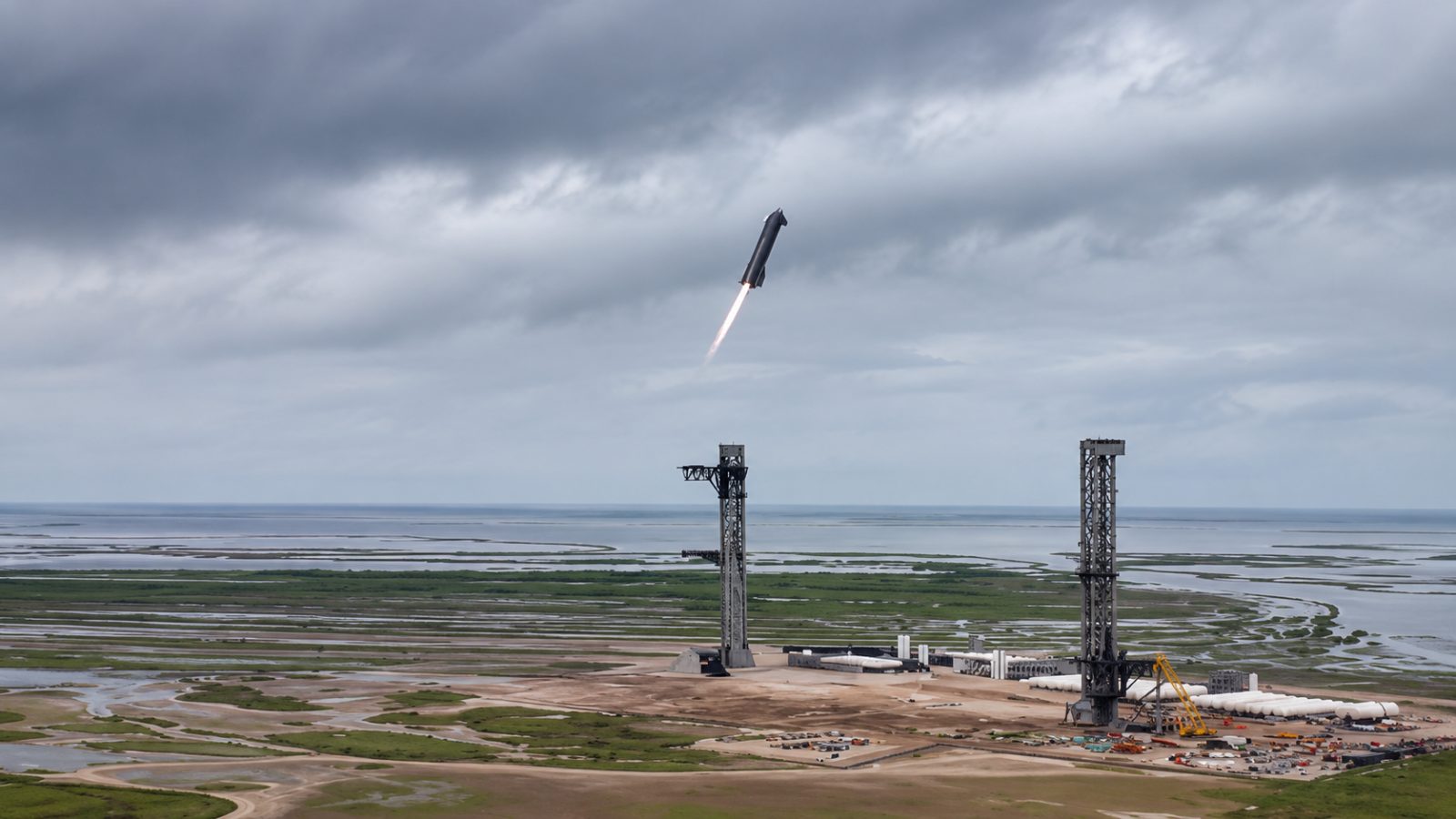
The remarkable achievement took place on Saturday, November 14, 2026, following the spacecraft's 15th test flight. The mission marks the first successful return and tower catch of a Starship spacecraft after an orbital journey.
According to reports, the spacecraft spent approximately 22.5 hours in space, completing 14 orbits around Earth before returning to Starbase, Texas.
A Historic Achievement for SpaceX
During its return, Starship descended through Earth's atmosphere at extremely high speeds, facing intense heat and pressure.
As it approached the launch tower, the spacecraft reignited its engines, adjusted its position and slowly descended vertically.
Two giant mechanical arms, popularly known as "Mechazilla" or "chopsticks," successfully caught the spacecraft as it hovered above the launch platform.
The successful catch represents a major breakthrough in SpaceX's long-term goal of developing a fully reusable rocket system.
26 Starlink Satellites Successfully Deployed
During the mission, Starship also deployed 26 Starlink V3 satellites into orbit.
The satellites are expected to help expand SpaceX's global internet network and increase its overall capacity.
The spacecraft operated at an altitude of approximately 260 kilometers above Earth before beginning its return journey.
Booster Recovery Attempt Failed
Although the Starship spacecraft successfully returned to the launch tower, the mission did not achieve a complete recovery of both rocket stages.
The Super Heavy booster, which carried Starship into space, failed to return to the launch pad because of an onboard guidance and navigation issue.
The booster was diverted toward the Gulf of Mexico, ending SpaceX's attempt to recover both stages during the same mission.
Despite this setback, the successful recovery of the Starship upper stage marks a significant engineering achievement.
Why Is This Achievement Important?
SpaceX, led by billionaire entrepreneur Elon Musk, is working to develop a fully reusable rocket system that could significantly reduce the cost of space travel.
Unlike traditional rockets that are discarded after launch, Starship is designed to return to Earth and be used again.
The technology could eventually support commercial space missions, satellite deployment, lunar exploration and future human missions to Mars.
Future Plans: Moon and Mars Missions
NASA is also relying on Starship technology as part of its Artemis program, which aims to return astronauts to the Moon.
SpaceX hopes to use the spacecraft for future lunar missions and eventually support human exploration of Mars.
However, several technical challenges remain, including improving the heat shield and demonstrating reliable recovery and reuse of both rocket stages.
A New Chapter in Space Exploration
The successful return of Starship after more than 22 hours in orbit represents an important step toward making space transportation more affordable and reusable.
Although the booster recovery attempt failed, SpaceX's latest achievement demonstrates significant progress in its ambitious space exploration program.
The milestone could help shape the future of commercial spaceflight and humanity's journey beyond Earth.
Reporter
CSB News USA
Related News

$51 Million Healthcare Fraud: Two Florida Residents Face Federal Charges

Trump’s Asylum Policy Faces Major Legal Challenge Before the US Supreme Court

FAA Chief Apologizes After Nationwide Flight Shutdown Disrupts Thousands of American Travelers

Comments 0
Log in or create a free account to join the conversation. You can comment anonymously.
No comments yet. Be the first.