

FAA Chief Apologizes After Nationwide Flight Shutdown Disrupts Thousands of American Travelers
FAA Administrator Bryan Bedford has apologized to thousands of Americans affected by Friday’s nationwide flight shutdown. Officials say the unprecedented disruption was triggered by problems involving aging telecommunications equipment and air traffic control systems. The FAA says passenger safety came first, while airlines continue working to restore normal flight schedules.

Reporter · CSB News USA
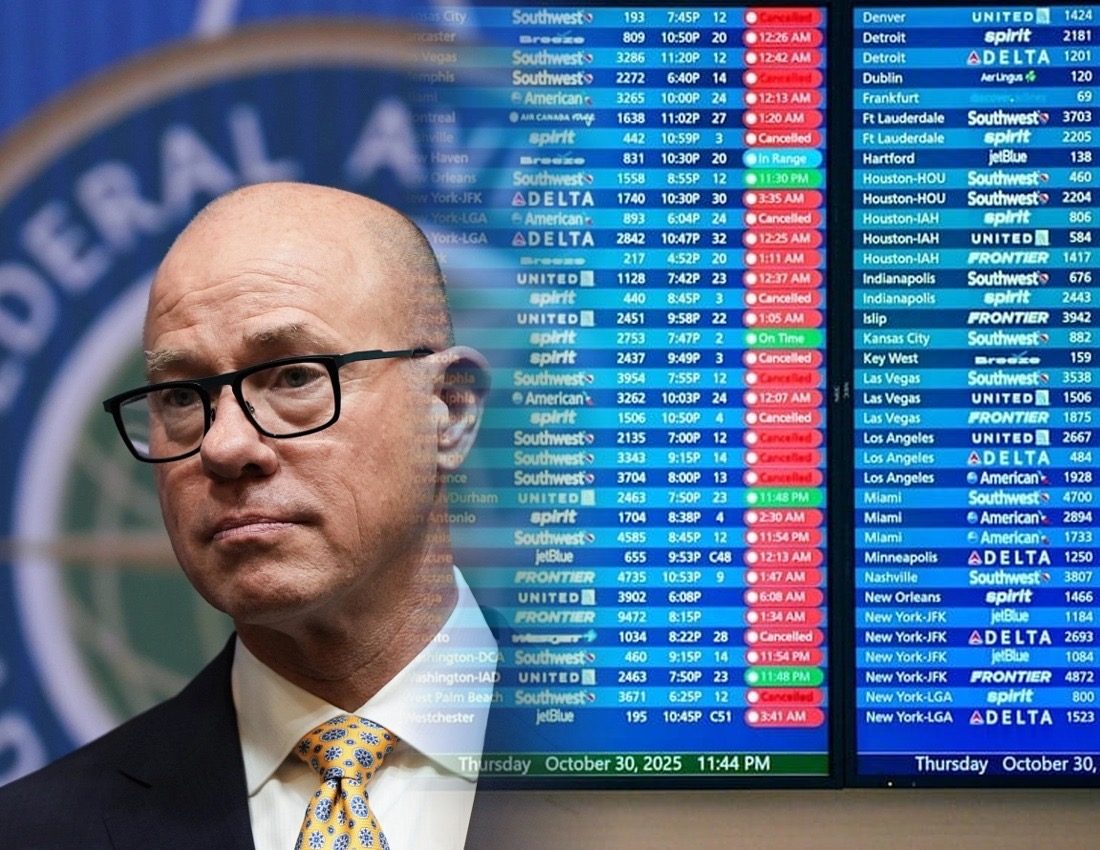
Federal Aviation Administration Administrator Bryan Bedford has apologized to thousands of American travelers whose journeys were disrupted by Friday’s nationwide flight shutdown, saying the decision to halt flights was made to protect passengers and aviation safety.
Speaking during a news briefing following the major disruption, Bedford acknowledged the inconvenience caused to passengers across the United States. He emphasized that federal aviation officials had acted with extreme caution after problems affected communications and radar systems used by air traffic controllers.
“Everybody came together to try to mitigate this just as quickly as possible and to take care of the travelers that were out there,” Bedford said. “So again, I’m sorry that we put you through this, but we did it for the right reasons.”
His apology came after one of the most significant disruptions to American air travel in recent years. Thousands of passengers experienced canceled flights, lengthy delays, missed connections and unexpected overnight stays at airports as airlines struggled to manage the consequences of the shutdown.
The incident happened on Friday, November 13, 2026, when the FAA issued a nationwide ground stop affecting departures from airports across the United States. The restriction was introduced after officials detected instability in telecommunications systems supporting air traffic control operations.
According to the U.S. Department of Transportation, the technical problems affected the stability of communications and radar systems used to monitor and manage aircraft. Authorities said the decision was made out of an abundance of caution because reliable communication between pilots and air traffic controllers is essential to safe flight operations.
Transportation Secretary Sean Duffy said the disruption began at approximately 3:36 p.m. Eastern Time, when officials noticed inconsistencies in radar information and communications involving air traffic control centers and terminal radar approach facilities.
The FAA subsequently ordered the nationwide ground stop at approximately 3:54 p.m. Eastern Time. At that moment, more than 3,500 aircraft were already in the air, according to Duffy.
Officials said pilots and air traffic controllers followed established safety procedures to bring aircraft safely to the ground. The government stressed that the shutdown did not mean every communication or radar system had completely stopped working. Instead, instability in the systems created enough uncertainty to justify temporarily restricting departures.
The nationwide restriction was lifted at approximately 8:15 p.m. Eastern Time on Friday, after more than four hours. However, reopening the airspace did not immediately return airline operations to normal.
According to Reuters, approximately 9,200 flights were canceled and another 7,500 were delayed on Friday. The disruption continued into Saturday, when airlines canceled more than 5,300 additional flights and delayed nearly 6,300 others by Saturday afternoon.
The figures demonstrated how a technical problem affecting air traffic control could create a nationwide transportation crisis. Even after the FAA allowed flights to resume, airlines faced the difficult task of repositioning aircraft, locating available pilots and flight attendants, arranging replacement flights and accommodating passengers who had missed their original connections.
Bedford said the aviation system was stable following the restoration efforts. However, he warned that passengers would need additional time before airline schedules could return to normal. Officials expected most operations to recover by late Sunday, November 15.
One of the most important developments in the investigation involved a telecommunications upgrade being carried out by L3Harris, a longtime contractor that provides network services for the FAA.
According to Transportation Secretary Duffy, the contractor had been performing routine maintenance at a remote FAA facility. The work involved replacing aging copper telecommunications lines with modern fiber-optic connections.
The transition from older analog technology to digital communications is part of a broader effort to modernize America’s aging air traffic control infrastructure.
However, officials believe something went wrong during the maintenance work. Duffy explained that a router associated with the upgrade began generating an unusually high volume of connection attempts, overwhelming other routers in the air traffic control network.
He said the system experienced more than 1,000 connection attempts every four to five seconds. This created instability in communications with aircraft and disrupted some radar information.
The problems affected 17 of the FAA’s 22 en route air traffic control centers, according to information provided by officials and reported by Reuters.
These centers play an essential role in managing aircraft during the cruising portion of their journeys. They coordinate aircraft movements across large sections of American airspace and help maintain safe distances between planes.
Bedford and Duffy said the nationwide shutdown was necessary because officials could not risk allowing normal departures to continue while the reliability of important communications systems was uncertain.
Investigators are now examining whether the disruption resulted from an installation mistake by the contractor, a defective router or another technical failure. Officials have not yet announced a final determination about the exact cause.
L3Harris has said it is taking the incident seriously and is supporting the FAA’s investigation.
Authorities have also addressed concerns that the disruption might have resulted from a cyberattack. Duffy said officials did not believe a cyberattack caused the incident. Bedford also said there was no evidence of malicious activity or an artificial intelligence-related problem.
However, investigators are continuing their examination, and the precise technical cause has not yet been conclusively established.
The disruption has also renewed questions about the condition of America’s air traffic control infrastructure. For years, aviation officials have warned that parts of the system depend on aging equipment and telecommunications technology that requires modernization.
Duffy used the incident to renew his call for additional congressional funding. He has requested approximately $50 billion to upgrade the country’s air traffic control infrastructure, increasing an earlier request of $30 billion.
Congress previously approved $12.5 billion for modernization efforts. Duffy said the government has made progress, including replacing 69 percent of older copper communications lines with high-speed fiber connections, but acknowledged that much more work remains.
The funding debate is particularly important because the FAA manages one of the world’s busiest aviation systems. Thousands of commercial flights operate across the country every day, connecting major cities, smaller communities and international destinations.
A disruption affecting communications infrastructure can therefore have consequences far beyond the facility where the original technical problem occurs.
Airlines were also forced to make difficult operational decisions during the recovery period. Delta Air Lines, United Airlines and American Airlines each canceled approximately one-quarter of their scheduled flights on Saturday, while JetBlue canceled nearly 45 percent, according to Reuters.
Airlines also issued travel waivers allowing affected passengers to change their reservations without additional fees under specified conditions.
Passengers whose flights were canceled or significantly disrupted were advised to contact their airlines directly to arrange alternative travel or request applicable refunds. Travelers were also encouraged to check flight status before leaving for the airport because schedules could change even after operations resumed.
The disruption created particular difficulties for passengers traveling internationally, families with connecting flights, business travelers and people attending important personal events.
For many travelers, the problem was not simply the cancellation of one flight. A delayed departure could mean missing a connecting flight, losing a hotel reservation, missing work or remaining stranded far from home.
The government thanked air traffic controllers, pilots, flight attendants, airport personnel and ground crews for helping manage the emergency. Officials credited their coordinated response with ensuring that aircraft already in the air landed safely.
The incident has raised important questions about how quickly the United States can replace aging aviation technology and prevent similar disruptions in the future.
For now, Bedford’s apology reflects the government’s recognition that thousands of ordinary travelers paid the price for a technical failure within a critical national transportation system.
Although officials maintain that the shutdown was the right decision from a safety perspective, passengers will expect more than an apology. They will want a clear explanation of what happened, accountability where appropriate and improvements that reduce the possibility of another nationwide disruption.
The FAA’s investigation and modernization efforts will therefore remain important in the coming days as the agency works to restore public confidence in the reliability of American air travel.
Related News
Marco Rubio Questions Whether Americans Have a Moral Right to Exist as a Distinct Nation

SpaceX Launches Starship Flight 15 in Historic Bid for First-Ever Orbital Round Trip
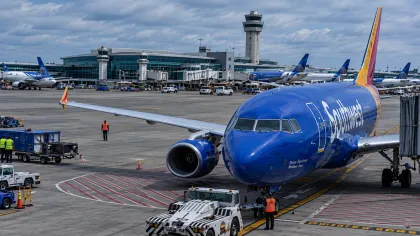
US AIRSPACE REOPENS AFTER NATIONWIDE FLIGHT SHUTDOWN THOUSANDS OF FLIGHTS DISRUPTED
Comments 0
Log in or create a free account to join the conversation. You can comment anonymously.
No comments yet. Be the first.