

FAA Grounds US Departures Nationwide After Major Air Traffic Control Communications Failure
A major communications failure forced US aviation authorities to halt departing flights nationwide on November 13, 2026. Thousands of travelers faced delays, cancellations and uncertainty as the Federal Aviation Administration investigated the disruption. Officials said the problem appeared telecommunications-related, while security agencies found no immediate evidence of a deliberate cyberattack.

Reporter · CSB News USA
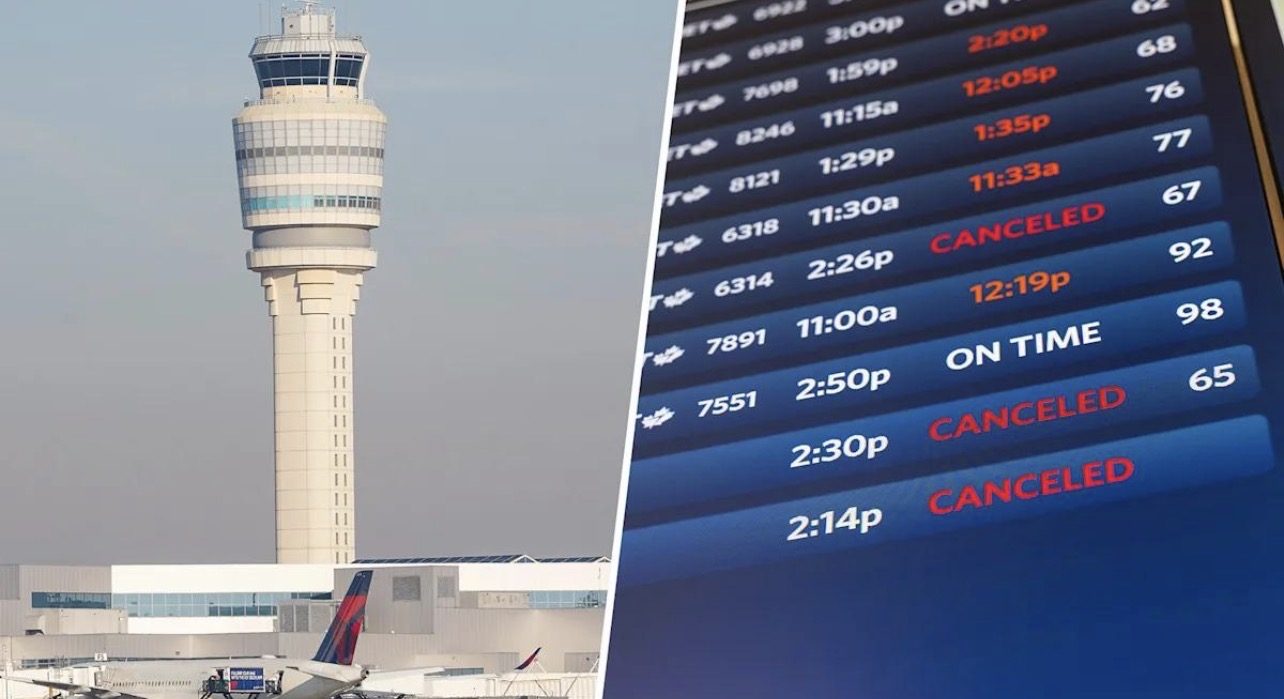
A major communications failure brought the United States aviation system into an extraordinary disruption on Friday, November 13, 2026, forcing federal authorities to halt departing flights at airports across the country. Thousands of passengers faced unexpected delays, cancellations and uncertainty as airlines struggled to respond to the nationwide restrictions.
The Federal Aviation Administration (FAA), the government agency responsible for overseeing civil aviation and managing the country's airspace, issued an unprecedented nationwide ground stop after communications problems affected multiple air traffic control centers. The agency described the decision as necessary because of extraordinary circumstances and safety concerns.
The disruption affected airports across the United States, including some of the country's busiest aviation hubs. Passengers at major airports in New York, San Francisco, Boston, Chicago, Los Angeles and Washington experienced significant interruptions to their travel plans.
According to the Associated Press, the FAA's restrictions were connected to communication problems affecting all 22 regional air route traffic control centers. These centers play a critical role in directing aircraft as they travel between airports, helping pilots and controllers maintain safe distances and coordinate movements across the national airspace system.
The nationwide order was issued shortly before 4 p.m. Eastern Time on Friday. Transportation Secretary Sean Duffy confirmed that the FAA was investigating the communication issue and that technicians were working to identify the problem.
The decision meant that aircraft scheduled to depart from US airports were required to remain on the ground until further instructions. The restrictions were not the same as an order requiring every aircraft already flying to land immediately.
Planes that were already airborne were allowed to continue toward their destinations and land safely. Incoming international flights were also handled individually, depending on operational conditions and the ability of air traffic controllers to manage them safely.
This distinction was important because the disruption did not mean that the entire American airspace had become inaccessible. Instead, aviation authorities restricted new departures to prevent additional aircraft from entering an air traffic system experiencing serious communication difficulties.
The scale of the disruption quickly became apparent as airlines and airport authorities attempted to manage the growing backlog.
According to figures cited by the Associated Press from aviation analytics company Cirium, approximately 481 flights had either been canceled or failed to depart within 180 minutes of their scheduled departure time by 4:40 p.m. Eastern Time on Friday.
That figure represented approximately 1.8 percent of the 26,284 flights scheduled to depart from US airports that day. However, officials and aviation analysts warned that the impact could become significantly larger because more than 11,000 departures were scheduled after 4 p.m. Eastern Time.
New York, San Francisco and Boston were among the areas experiencing particularly significant disruption during the initial stages of the incident.
At airport terminals, passengers faced changing departure information, extended waiting periods and uncertainty about whether their flights would operate as scheduled. Some travelers had already boarded aircraft or were preparing for takeoff when the restrictions were announced.
At Chicago O'Hare International Airport, passengers discovered the disruption through airport information screens showing widespread flight delays. Some travelers contacted family members and friends to discuss alternative arrangements, while others considered staying overnight rather than attempting to find another way to reach their destinations.
The situation was especially difficult for passengers with connecting flights, business appointments, family events and weekend travel arrangements. Even travelers whose original flights were not immediately canceled faced the possibility of missing connections because of the growing disruption across the aviation network.
The central question for investigators was what caused the communications failure and why it affected such a large portion of the national air traffic control system.
Air traffic control depends on continuous communication between pilots and controllers. Radio systems, telecommunications networks, radar equipment and other technical infrastructure work together to ensure that aircraft can safely travel through controlled airspace.
Regional air route traffic control centers are particularly important because they coordinate aircraft movements over large geographical areas, including flights traveling between major cities and across different regions of the country.
When communication systems become unreliable, controllers may lose the ability to coordinate aircraft movements with the level of certainty required for safe operations. Under those circumstances, limiting new departures can prevent additional aircraft from entering areas where controllers may face operational difficulties.
This is why the FAA chose to issue a nationwide ground stop rather than allow normal departures to continue while technicians investigated the problem.
The Department of Homeland Security also addressed concerns about whether the incident could have been caused by a deliberate attack.
Homeland Security Secretary Markwayne Mullin told reporters at the White House that there was no immediate indication that the disruption was the result of a malicious cyberattack.
He described the incident as a telecommunications outage based on the information available at that time. However, he emphasized that investigators would continue examining the circumstances to establish the underlying cause.
Mullin also reassured the public that officials were accounting for flights and that there was no immediate reason for families to fear for the safety of people already traveling by air.
His comments were significant because a nationwide aviation communications failure naturally raised questions about the possibility of cyberattacks, sabotage or other security-related incidents.
However, the absence of immediate evidence of a cyberattack does not establish the final cause. Investigators still needed to examine the affected communications infrastructure, technical records and operational systems before reaching a definitive conclusion.
Officials also addressed speculation about a possible connection between the disruption and a recent Microsoft service outage.
Mullin said he saw no reason to connect the two incidents and described them as separate issues. Microsoft also stated that it had no indication that its recent service disruption was related to the FAA's nationwide ground stop.
Another important question concerned the condition of the technology used by the American air traffic control system.
The United States operates one of the world's busiest and most complex aviation networks. Millions of passengers travel through its airports, while thousands of commercial, cargo and private aircraft use its airspace.
Managing that volume requires dependable communications infrastructure, modern surveillance systems and reliable coordination between regional control centers.
However, concerns about aging aviation technology have been raised repeatedly in recent years.
In 2023, a failure involving the FAA's Notice to Air Missions system forced the agency to temporarily halt nationwide departures. That system provides pilots and aviation personnel with important safety information about conditions that could affect flights.
The January 2023 disruption was the first nationwide departure ground stop since the September 11, 2001, terrorist attacks. It resulted in more than 1,300 canceled flights and nearly 10,000 delayed flights, according to government reporting.
The November 2026 incident was different because it involved communications problems affecting regional air traffic control centers rather than the same flight safety notification system.
Nevertheless, both incidents highlighted how technical problems involving critical aviation infrastructure can affect air travel across the entire country.
The Government Accountability Office has previously warned about challenges involving outdated FAA technology. Its September 2026 assessment also raised concerns about aviation communications security and the need for stronger monitoring and risk management.
The federal government has been working to modernize the nation's air traffic control infrastructure. Congress approved $12.5 billion for modernization efforts, including improvements to communications equipment and other essential systems.
However, Transportation Secretary Sean Duffy has said that an additional $30 billion would be needed to complete the broader modernization effort.
The latest disruption is likely to intensify questions about whether the existing infrastructure is sufficiently reliable to support the demands of modern American aviation.
The incident also comes after a separate communications outage affected major airports in the northeastern United States in September 2026. That earlier disruption was linked to a telecommunications line damaged during construction work in New Jersey.
Although the September incident and the November nationwide disruption both involved aviation communications, there was no confirmed evidence that they shared the same cause.
For airlines, restoring normal operations after a nationwide ground stop can be more complicated than simply allowing aircraft to depart again.
Flights operate according to interconnected schedules involving aircraft, pilots, cabin crews, airport gates and connecting passengers. When departures are suspended for several hours, aircraft and personnel can end up in locations different from those originally planned.
As a result, even after restrictions are lifted, airlines may need additional time to reorganize their schedules and move aircraft and crews into position.
Passengers could therefore experience continuing delays and cancellations even after the communications problem is resolved.
Travelers with international connections could also face difficulties because missed connections on one flight can affect several other journeys. Passengers traveling through major American hubs may be particularly vulnerable to these disruptions.
The incident is also important for international travelers flying to and from the United States. Passengers departing from overseas airports for American destinations may experience changes if their connecting flights or onward journeys are affected.
Airlines generally make decisions about individual flight cancellations, rebooking and schedule changes based on operational conditions and the latest instructions from aviation authorities.
Passengers were advised to check directly with their airlines before traveling to the airport and to monitor flight information regularly. Travelers should also keep their booking details and airline notifications available so they can respond quickly to schedule changes.
For passengers whose flights are canceled or significantly delayed, the available options depend on the airline's policies, the circumstances of the disruption and the applicable passenger protection rules.
The FAA's nationwide decision demonstrated how heavily modern air travel depends on reliable communications infrastructure. Even when aircraft, airports and runways remain physically operational, a failure in the systems connecting pilots and air traffic controllers can force authorities to restrict operations across an entire country.
As the investigation continues, officials face two major priorities: restoring normal air traffic operations and determining exactly what caused the communications failure.
The authorities must also establish whether the disruption resulted from equipment malfunction, telecommunications infrastructure problems, software-related issues or another technical failure.
Until investigators complete their examination, it would be premature to attribute the incident to a cyberattack or any specific technical component.
For now, the nationwide disruption serves as another warning about the importance of maintaining reliable aviation technology. With millions of people depending on air travel every day, even a temporary failure in critical communications systems can create consequences far beyond the airports where the problem first becomes visible.
Related News

Melania Trump Thanks US Military Families During Special Visit to Fort Rucker Ahead of Thanksgiving

Abdul El-Sayed to Take US Senate Oath on Holy Quran, Making History as First Muslim Senator
FBI Deputy Director Warns Dark Web Criminals as Global Operation Leads to 354 Arrests

Comments 0
Log in or create a free account to join the conversation. You can comment anonymously.
No comments yet. Be the first.