

Democratic Opposition Mounts Pressure on Hakeem Jeffries Ahead of Crucial House Leadership Vote
Growing opposition within the Democratic Party is putting Hakeem Jeffries under increasing pressure. Progressive activists and some incoming lawmakers are questioning his leadership as Democrats prepare for crucial internal elections that could shape the party’s political future.

International Broadcast Journalist · CSB News USA
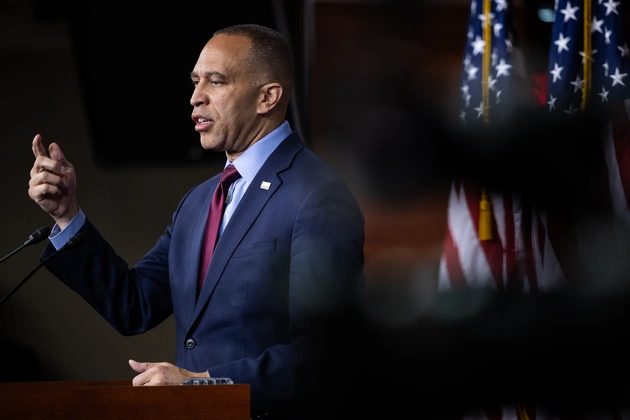
Growing opposition within the Democratic Party is raising questions about the future of House Democratic Leader Hakeem Jeffries as progressive activists and some incoming lawmakers demand changes in the party’s leadership and political direction.
The growing disagreement comes after Democrats achieved significant gains in the November 3, 2026, midterm elections, positioning the party to take control of the House of Representatives when the new Congress begins in January 2027. Although the election results strengthened Democratic prospects in Washington, they also exposed disagreements over leadership, policy priorities and the party’s future strategy.
Jeffries, a Democratic representative from New York, has served as House Democratic leader since January 2023. He is expected to become the next Speaker of the House after Democrats take control of the chamber. However, increasing criticism from progressive activists and some members of the party has created uncertainty about how much support he will receive during the internal leadership election.
One of the clearest demonstrations of the growing opposition occurred on November 13 at a Democratic Party gathering in Denver, Colorado. During a discussion about the party’s future, approximately 10 protesters interrupted Jeffries and criticized his leadership.
According to Reuters, the demonstrators argued that Democratic leaders needed to respond more aggressively to economic difficulties affecting ordinary Americans. They raised concerns about the rising cost of living, housing affordability, health care and other issues that remain important to Democratic voters.
Some protesters also demanded stronger action on foreign policy, including opposition to President Donald Trump’s war on Iran and changes to American military support for Israel.
Jeffries remained composed during the interruption and did not engage in a confrontation with the demonstrators. The incident nevertheless highlighted the growing frustration among sections of the Democratic Party that believe its established leadership is not doing enough to address voters’ concerns.
The disagreement reflects a broader divide between moderate Democrats and the party’s progressive wing. Moderate lawmakers generally support a more cautious political approach, emphasizing economic stability, practical legislation and the ability to govern effectively. Progressive Democrats, meanwhile, are demanding more ambitious policies involving universal health care, affordable housing, corporate accountability and campaign finance reform.
The criticism has also extended beyond public demonstrations. An Axios report published on November 6 described growing pressure on Democratic lawmakers to reconsider supporting Jeffries for Speaker of the House.
According to the report, several congressional offices received substantial numbers of telephone calls and emails from constituents opposing Jeffries’ leadership. One incoming Democratic lawmaker reportedly received approximately 150 calls opposing his candidacy, while another senior Democratic lawmaker reported receiving more than 500 calls over two days.
These figures suggest that opposition to Jeffries has become an organized issue among some Democratic activists and voters. However, they do not establish that most Democratic voters or members of Congress oppose him. The reported figures represent communications received by individual congressional offices rather than the results of a nationwide opinion survey.
Progressive activists argue that the party needs leaders who are more willing to challenge powerful corporate interests and respond directly to economic inequality. They also want Democratic lawmakers to adopt stronger positions on campaign financing and American foreign policy.
Despite these concerns, Jeffries continues to maintain significant support within the Democratic Party. Several established lawmakers remain confident in his ability to lead the incoming Democratic majority and manage disagreements within the caucus.
There is also an important political distinction between public opposition and an actual leadership challenge. As of November 14, no formally declared challenger had emerged to contest Jeffries for the position of House Speaker.
The upcoming Democratic leadership elections are scheduled for November 18 and 19. These elections will provide an important indication of whether the criticism represents a serious threat to Jeffries’ position or whether the majority of Democratic lawmakers remain prepared to support him.
Democrats are projected to hold at least 255 seats in the next House of Representatives, compared with 169 for Republicans, while 12 contests remain undecided, according to Reuters reporting on November 13. The expected Democratic majority gives the party a strong opportunity to shape congressional priorities after January.
However, the Speaker’s election will still require substantial support. If all 435 House seats are filled and members vote for a named candidate, a candidate generally needs 218 votes to secure the position.
That means even a relatively small group of Democratic lawmakers withholding support could complicate Jeffries’ path to the speakership. Nevertheless, his current position within the party makes him the leading candidate.
The leadership debate is also taking place alongside a separate dispute in the Senate. On November 13, Democratic Senator Chris Van Hollen of Maryland announced that he would challenge Chuck Schumer for the position of Senate Democratic leader.
Although the Senate contest is separate from Jeffries’ leadership position in the House, it reflects a wider debate within the Democratic Party about whether established leaders should continue directing the party or whether a different generation of political leadership is needed.
For Jeffries, the immediate challenge is to maintain unity among moderate and progressive Democrats while preparing to lead the House majority. His supporters believe his experience and political strategy make him the right person for the position. Critics, however, want stronger commitments on economic issues, campaign finance reform and foreign policy.
The disagreement also raises questions about how Democrats will use their newly secured congressional power. Some lawmakers want to focus on practical legislative achievements and economic concerns, while progressives are pushing for more substantial changes to government policies.
The November leadership elections will therefore be an important test of party unity. They will help determine whether the growing opposition can translate into a meaningful challenge or whether Jeffries will retain the confidence of his Democratic colleagues.
For now, Jeffries remains the leading candidate to become the next Speaker of the House. However, the protests, constituent pressure and disagreements over policy demonstrate that maintaining party unity could become one of his biggest challenges as Democrats prepare to return to power in January 2027.
Related News

FAA Grounds US Departures Nationwide After Major Air Traffic Control Communications Failure
Melania Trump Thanks US Military Families During Special Visit to Fort Rucker Ahead of Thanksgiving
Abdul El-Sayed to Take US Senate Oath on Holy Quran, Making History as First Muslim Senator
Comments 0
Log in or create a free account to join the conversation. You can comment anonymously.
No comments yet. Be the first.