

Trump Pulls JD Vance From Iran Talks, Redirects Him to Domestic Investigations
President Donald Trump has redirected Vice President JD Vance away from diplomatic negotiations with Iran, instructing him to focus on alleged corruption and crime in Democratic-led cities and states. The decision signals a major shift in Washington’s approach to the Iran conflict and raises questions about the future of diplomatic efforts.

Reporter · CSB News USA
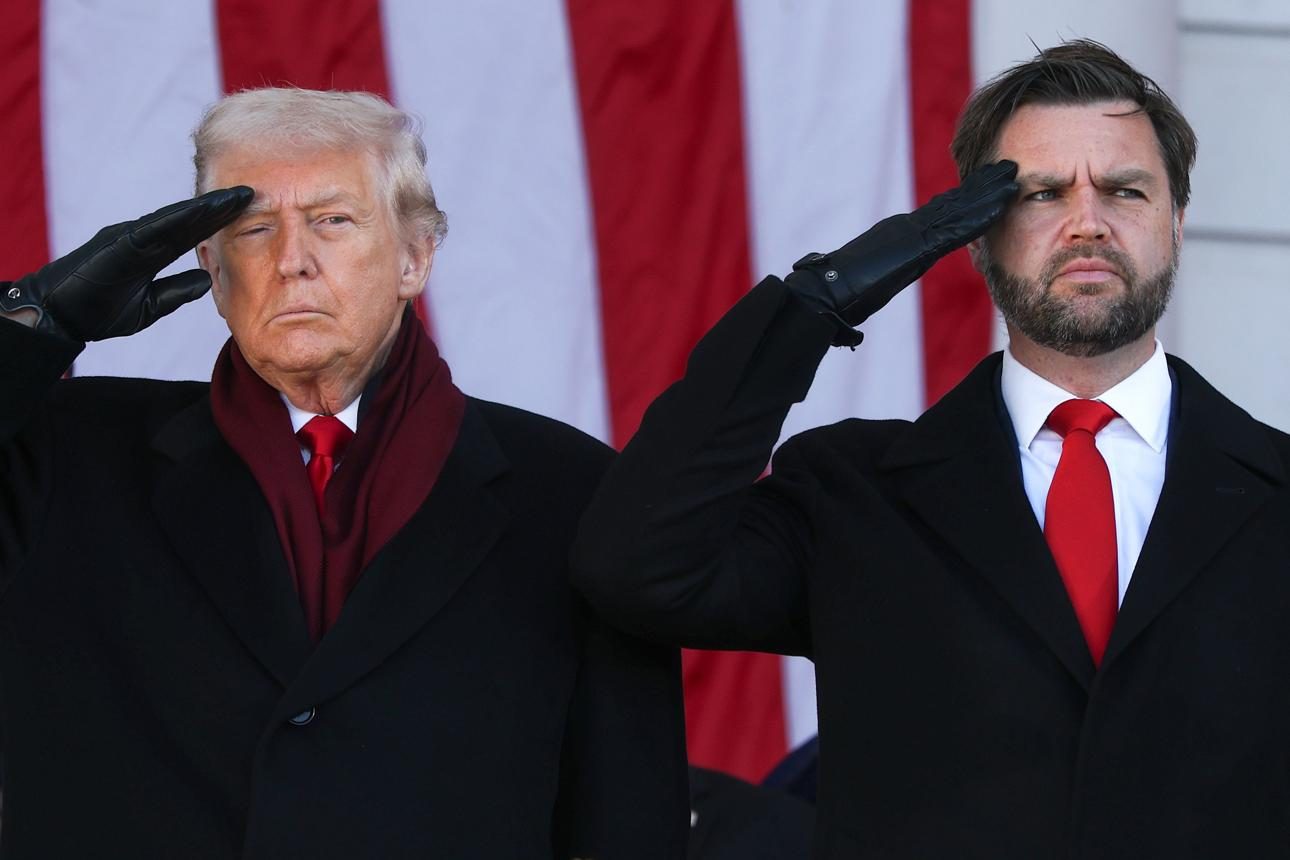
President Donald Trump has instructed Vice President JD Vance to step away from his diplomatic efforts involving Iran and concentrate instead on investigating alleged corruption and criminal activity in Democratic-led American cities and states. The announcement represents a significant change in the vice president’s responsibilities at a time when the United States remains involved in a prolonged and increasingly complicated conflict with Iran.
Trump made his position clear through a series of posts on his social media platform, Truth Social, on Thursday, November 12. His comments indicated that he no longer considers a diplomatic agreement with Tehran necessary and wants Vance to devote his attention to domestic political and investigative priorities.
The announcement has attracted considerable attention in Washington because Vance had played an important role in the administration’s efforts to negotiate an end to the conflict with Iran. His involvement included diplomatic outreach, discussions about a possible ceasefire and efforts to restart negotiations over Iran’s nuclear program.
In one of his Truth Social messages, Trump wrote that the United States did not need an agreement with Iran anymore.
"We don't need a deal with Iran. Those days have long since passed," Trump wrote.
He also claimed that Washington had already secured significant financial and strategic advantages, referring to Iran's money and the strategically important Strait of Hormuz.
Trump then directly addressed Vance's responsibilities, saying he had asked the vice president to devote his complete attention to what he described as widespread corruption and criminal activity in Democratic-controlled cities and states.
The president specifically mentioned California, Minnesota and Illinois, accusing Democratic political leaders of allowing serious financial misconduct and poor governance.
Trump argued that addressing alleged financial wrongdoing could help reduce government spending and improve the country's budget situation.
However, these accusations represent the president's political claims. They should not be treated as established evidence that Democratic leaders or entire state governments are involved in criminal activity. Any specific allegations of wrongdoing would require independent investigation and supporting evidence.
The decision is particularly significant because Vance had emerged as one of the administration's important figures in discussions surrounding the Iran conflict.
For months, the vice president had been involved in diplomatic efforts aimed at finding a possible resolution. Those efforts included exploring arrangements that could establish a ceasefire, reopen important international shipping routes and create conditions for renewed discussions about Iran's nuclear activities.
According to reporting by The Washington Post, Vance had recently been exploring possible outreach to hard-line figures in Tehran. The discussions were intended to identify a potential path toward ending the conflict and reducing regional tensions.
Reports also indicated that Vance was considering possible face-to-face discussions with senior Iranian security officials. However, the reported meeting had not been confirmed as an actual diplomatic engagement.
The Wall Street Journal had previously reported on the possibility of Vance holding discussions with Iranian security official Mohsen Rezaei. The reports suggested that the vice president could become a central figure in a renewed diplomatic initiative.
Reuters also reported that Vance had taken on a role in efforts to resolve the conflict but was increasingly distancing himself from the political and economic consequences of the war.
Trump's latest announcement appears to interrupt Vance's direct involvement in those efforts, although it does not necessarily mean that all diplomatic communication between Washington and Tehran has ended.
The political timing of the announcement is also important.
The United States recently experienced significant political consequences following the November 2026 midterm elections. Democrats secured major victories, creating a difficult situation for Trump's Republican Party.
The Iran conflict and its economic consequences became major issues during the election campaign. Rising energy costs, concerns about international security and uncertainty surrounding the duration of the conflict contributed to public dissatisfaction.
Vance himself made unusually direct comments about the war following the Republican Party's election setbacks.
In a social media statement after the election, the vice president argued that the Iran conflict had played a major role in the party's disappointing performance.
"The reason we lost is the war," Vance wrote.
He also questioned whether the political and economic costs of the conflict had been worth the consequences for Republicans.
His comments attracted attention because Vance is one of Trump's closest political allies and is widely viewed as a potential Republican presidential candidate in the 2028 election.
The vice president has previously expressed reservations about prolonged American military involvement overseas. His political position has often emphasized avoiding unnecessary foreign conflicts and prioritizing American interests at home.
The recent disagreement over Iran has therefore raised questions about how the administration will balance its military objectives with domestic political concerns.
Trump, however, has continued to defend his approach to the conflict. He has argued that preventing Iran from obtaining nuclear weapons remains an important American national security objective.
The president has also indicated that military action could resume if diplomatic efforts fail or if Iran continues to threaten American interests and regional allies.
Another important development concerns the administration's approach to the Strait of Hormuz.
The waterway is among the world's most strategically important shipping routes. A significant portion of international oil and petroleum shipments normally passes through the region.
Any disruption to shipping through the strait can affect international energy markets, transportation costs and the economies of countries that depend heavily on imported fuel.
The ongoing conflict has created uncertainty for commercial shipping companies, energy producers and governments across the Middle East.
For countries in the Gulf region, the situation is particularly important because regional stability is closely connected to maritime trade, energy exports and international security.
The Washington Post reported that Gulf governments had been concerned about the possibility of renewed military action and had continued supporting diplomatic efforts to prevent another escalation.
Qatar has also remained involved in regional diplomatic activity. Trump met with Qatar's prime minister, Mohammed bin Abdulrahman Al Thani, at the White House earlier in the week, according to reporting by The Washington Post.
Regional governments have strong reasons to support negotiations because a prolonged confrontation could create additional security and economic challenges.
The possibility that Washington may reduce its diplomatic engagement has therefore raised concerns among regional observers.
Khalid Al-Jaber, executive director of the Middle East Council on Global Affairs in Qatar, told The Washington Post that the region faces uncertainty about what could happen after the United States begins or escalates military operations.
His comments reflected broader concerns that military pressure alone may not produce a lasting political settlement.
For the United States, the decision to redirect Vance could also affect the administration's internal foreign policy structure.
Vance had been working alongside other figures involved in the administration's Iran strategy, including special envoy Steve Witkoff and Jared Kushner.
Secretary of State Marco Rubio has also played an important role in the administration's diplomatic approach.
According to The Independent, Rubio had recently indicated to G7 counterparts that the administration was considering a strategy focused on isolating Iran rather than immediately pursuing another diplomatic agreement.
The administration's approach therefore appears to be shifting toward continued economic and strategic pressure on Tehran.
However, there are still unanswered questions about whether other American officials will continue pursuing indirect communication with Iranian representatives.
Trump's announcement also does not automatically establish that Vance has been permanently excluded from every foreign policy discussion. The specific instruction concerned his attention and involvement in the Iran issue, redirecting him toward domestic investigations.
Vance is also expected to continue his responsibilities as vice president and his leadership role in the administration's Task Force to Eliminate Fraud, which was established to address alleged government fraud and financial misconduct.
The task force has become an important part of Trump's domestic political agenda.
The president has repeatedly accused Democratic-controlled governments of allowing waste, fraud and financial mismanagement. His administration has argued that stronger investigations could uncover significant financial losses.
Democratic officials, meanwhile, have challenged several of Trump's accusations and criticized what they describe as politically motivated investigations.
The coming weeks could reveal whether the president's latest directive leads to a substantial change in the administration's domestic enforcement priorities.
For Vance, the reassignment could represent a major shift in his political position. His previous involvement in Iran diplomacy gave him an opportunity to demonstrate his ability to handle complicated international negotiations.
Moving away from that responsibility and focusing on domestic investigations could change how his role is viewed by both supporters and critics.
It could also influence discussions about his future political ambitions, particularly as attention increasingly turns toward the next presidential election.
For Iran, Trump's statement sends a message that Washington is currently less interested in pursuing the kind of agreement Vance had reportedly been exploring.
Nevertheless, Tehran has not publicly agreed to the American president's position, and the fundamental disagreements between the two countries remain unresolved.
Issues surrounding Iran's nuclear activities, sanctions, regional security and freedom of navigation through the Strait of Hormuz continue to complicate any possible settlement.
Whether the United States eventually returns to direct negotiations will depend on decisions made by the White House, Iranian leadership and other regional governments.
As of November 13, 2026, the confirmed development is that Trump has publicly redirected Vance away from his Iran negotiating role and instructed him to concentrate on alleged corruption and crime in Democratic-led areas.
What remains uncertain is whether this change will lead to a complete suspension of diplomatic efforts, whether another American official will take over Vance's negotiating responsibilities and whether Washington and Tehran will eventually return to the negotiating table.
Related News
Trump Says No Iran Deal Is Needed, Directs JD Vance to Focus on Domestic Issues
Abdul El-Sayed Offers Trump a Chance to Put His Name on Universal Healthcare Plan

Kennedy Family Seeks to Join Lawsuit Against Trump’s 250-Foot Memorial Arch
Comments 0
Log in or create a free account to join the conversation. You can comment anonymously.
No comments yet. Be the first.