

Part of: US Midterm Election 2026
Trump’s Alaska Election Lawsuit Triggers New Battle Over Senate Race
President Donald Trump’s lawsuit targeting Alaska’s Senate election has intensified concerns over election oversight, voter choice and federal intervention as Republicans and Democrats prepare for the November 3 midterm elections.

INTERNATIONAL BROADCAST JOURNALIST · CSB News USA
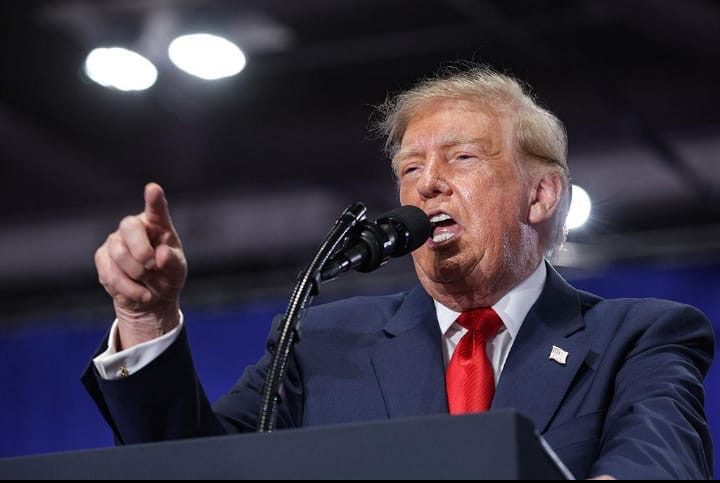
President Donald Trump has confirmed that he personally directed his administration to pursue a federal lawsuit seeking to delay certification of Alaska’s U.S. Senate election under certain circumstances if Republican incumbent Dan Sullivan loses the race. The legal challenge has sparked a fresh political and legal controversy over election administration, voter confusion and the limits of federal authority over state-run elections.
According to The Associated Press, the U.S. Department of Justice filed the lawsuit on October 22, 2026, focusing on the presence of a second candidate with a similar name on Alaska’s Senate ballot. Trump acknowledged his role in the decision on October 23, saying he had instructed his administration to proceed with the legal action.
The case comes as Alaska prepares for a closely watched Senate contest between Republican Sen. Dan S. Sullivan and Democratic challenger Mary Peltola, a former congresswoman. Another candidate, Daniel J. Sullivan Jr., is also running in the election, raising concerns among Republicans that voters could confuse the two candidates.
The Trump administration argues that the presence of the similarly named candidate could create voter confusion and potentially affect the election outcome. The Justice Department is seeking to prevent certification under circumstances in which a court determines that confusion may have influenced the result.
The lawsuit does not establish that election fraud has occurred or that voters have been misled. Instead, it raises questions about whether the similarity between the candidates’ names could affect the outcome and whether federal law permits the government to intervene in the certification process.
Republicans have expressed concern that votes cast for Daniel J. Sullivan Jr. could reduce support for the incumbent senator. However, the two candidates are distinguished on the ballot by their middle initials and other identifying information. The incumbent is identified as a Republican and the sitting senator, while the other candidate does not have a party affiliation listed.
Alaska’s Supreme Court previously rejected efforts to remove the second candidate from the ballot, allowing him to remain in the race.
The administration has defended the lawsuit as an effort to protect election integrity and preserve the possibility of investigating voter confusion.
On October 25, Attorney General Todd Blanche rejected claims that the administration was attempting to improperly interfere with Alaska’s election. He argued that the legal action was intended to establish safeguards rather than automatically prevent the state from certifying its results.
The administration’s position has nevertheless drawn scrutiny from election experts and political figures concerned about federal intervention in state election procedures.
The U.S. Constitution gives states a central role in administering elections, although Congress can establish rules governing federal elections. Whether the Justice Department can obtain the specific relief it seeks will depend on the applicable law and the court’s assessment of the evidence.
Legal experts have questioned whether the federal statute cited by the administration provides sufficient authority to block certification in the circumstances described in the lawsuit.
The dispute has intensified political tensions ahead of the November 3 midterm elections, when voters will determine the balance of power in Congress.
Democrats have criticized the lawsuit, arguing that it could undermine voters’ ability to determine the outcome of an election through established procedures. Peltola has condemned the legal action, while Republican Sen. Lisa Murkowski has also expressed criticism of the administration’s approach.
The Alaska contest has attracted national attention because control of the Senate could depend on a small number of closely contested races. The outcome could influence legislative negotiations, committee assignments and the confirmation of presidential nominees.
Alaska’s ranked-choice voting system adds another layer of complexity. Under the system, candidates can be eliminated in successive rounds if no candidate receives the required majority of initial votes, with voters’ later preferences helping determine the final result.
Consequently, the final outcome may not be known immediately after Election Day.
The federal court must determine whether the administration has established a valid legal basis for delaying certification under the circumstances outlined in its complaint. The case will require consideration of the relevant election laws, the evidence of potential voter confusion and the limits of federal judicial authority.
For Alaska voters, the central issue is whether the election will proceed under established state rules and whether any court order will affect the certification timetable.
The lawsuit itself does not invalidate ballots, establish wrongdoing or determine who will win the Senate race. Any such conclusion would require appropriate legal findings supported by evidence.
As the November 3 election approaches, the dispute has become another major test of the relationship between federal authority and state control over elections.
Trump’s Campaign Spending Surges as Midterm Battle Intensifies
Trump’s Russia Policy Triggers Rare Bipartisan Pushback in Congress Ahead of Midterms

Trump Administration Faces Court Challenge Over 20,000 California Mail-In Ballots Ahead of Midterm Elections
Trump and Melania Cast Early Ballots in Florida as Midterm Campaign Intensifies
Related News
Trump’s Campaign Spending Surges as Midterm Battle Intensifies
Obama Backs Abdul El-Sayed in High-Stakes Michigan Senate Race as Midterm Battle Intensifies
Trump Considers Moving White House Press Corps, Sparking Fresh Fears Over Press Freedom
Comments 0
Log in or create a free account to join the conversation. You can comment anonymously.
No comments yet. Be the first.