

Part of: US Midterm Election 2026
Trump Administration Faces Court Challenge Over 20,000 California Mail-In Ballots Ahead of Midterm Elections
A major election dispute is unfolding as the Trump administration seeks to verify the citizenship of thousands of California voters, raising questions about election security, voting rights and state authority ahead of the November 3 midterm elections.

Reporter · CSB News USA
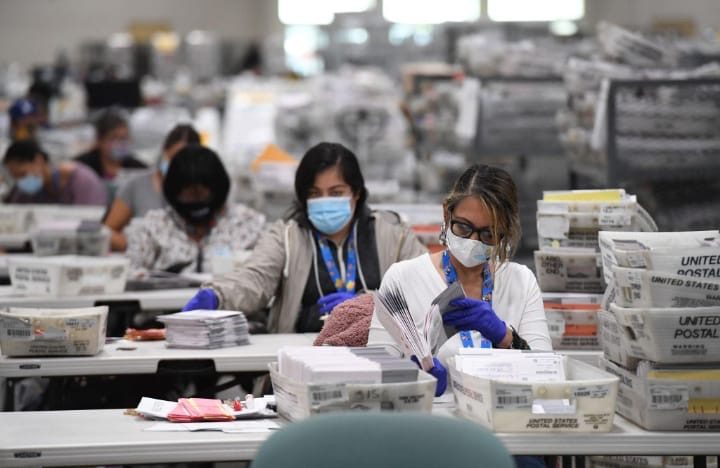
The dispute comes at a critical moment for American politics, with voters preparing to elect members of Congress on November 3. The case could influence the broader national debate over election security, voting rights and the balance of power between the federal government and individual states.
The U.S. Department of Justice filed its lawsuit against California election officials on October 15, seeking a court order that would prevent the state from counting mail-in ballots associated with approximately 20,000 people whom federal authorities suspect may not be U.S. citizens. The administration says the ballots should be separated from other votes until citizenship can be verified. The allegations have not established that all, or even most, of the people identified are ineligible voters.
California officials have challenged the request, arguing that the federal government has not adequately explained its methodology or provided sufficient evidence to support the allegations. California Secretary of State Shirley Weber has said the state cannot reasonably withhold ballots based on information whose reliability has not been established. Los Angeles County election officials have also raised concerns about the way the information was delivered.
According to The Associated Press, federal authorities supplied election officials with a list of names on a password-protected USB drive. Officials questioned both the security of the delivery method and the accuracy of the information. California has more than 23 million registered voters, making the verification process particularly significant for election administrators.
On October 25, a three-judge panel of the U.S. Court of Appeals for the Ninth Circuit heard arguments in the dispute. Judges questioned whether the Justice Department had established a sufficient legal basis for the emergency intervention it requested.
Judge Mark Bennett, appointed by President Trump, questioned whether the requested order would conflict with the constitutional authority of states to administer elections. Judge Gabriel Sanchez, appointed by former President Joe Biden, also questioned whether the appeals court should intervene before the lower court considered the matter.
The panel indicated that it would seek to act quickly. The proceedings were taking place just days before the November 3 elections, increasing the urgency of the legal dispute. A hearing in the lower court had been scheduled for October 27.
The dispute has also drawn attention to the difficulty of accurately matching citizenship records with voter-registration databases. California officials cited concerns that some people on the federal list might be U.S. citizens or individuals whose registrations had already been canceled.
The Associated Press reported that a preliminary review of a sample of 200 names from the list found that more than 40% had canceled registrations, over 70% had no voting history, and nearly 40% were born in the United States. These findings concern a limited sample and do not establish the citizenship status of every person on the federal list.
Reuters reported that cases of noncitizens being federally charged with illegal voting have been rare. Noncitizens are generally prohibited from voting in federal elections, and knowingly casting an unlawful ballot can carry serious legal consequences. However, a person appearing on a government list is not, by itself, proof that the person is ineligible to vote.
The November 3 midterm elections will determine control of Congress for the remainder of President Trump's term. Republicans currently hold narrow majorities, and the outcome will affect the administration's ability to advance legislation, negotiate spending measures and pursue its policy agenda.
California is particularly important because it has 52 seats in the U.S. House of Representatives. Several competitive congressional contests across the country could determine which party controls the chamber.

Related News
Nicki Minaj Pledges Lasting Support for Trump at Michigan Rally Ahead of Midterms
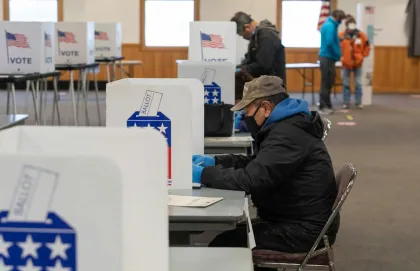
Trump Administration Faces Legal Fight Over Alaska Senate Election Certification
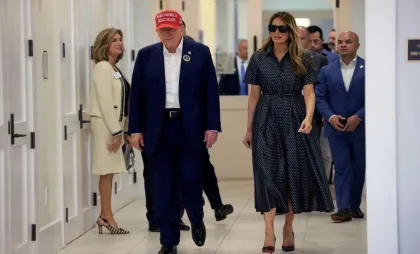
Trump and Melania Cast Early Ballots in Florida as Midterm Campaign Intensifies

Comments 0
Log in or create a free account to join the conversation. You can comment anonymously.
No comments yet. Be the first.