
NYC Begins Clearing Child Care Waitlist as More Than 29,000 Children Still Wait
New York City is beginning to remove more than 10,000 children from its child care voucher waitlist, offering relief to thousands of families while nearly 29,000 children remain waiting for assistance.
.jpeg )
NYC Begins Clearing Child Care Waitlist as More Than 29,000 Children Still Wait
New York City is beginning to make progress on a child care voucher waitlist that has left thousands of low-income families waiting for assistance for more than a year.
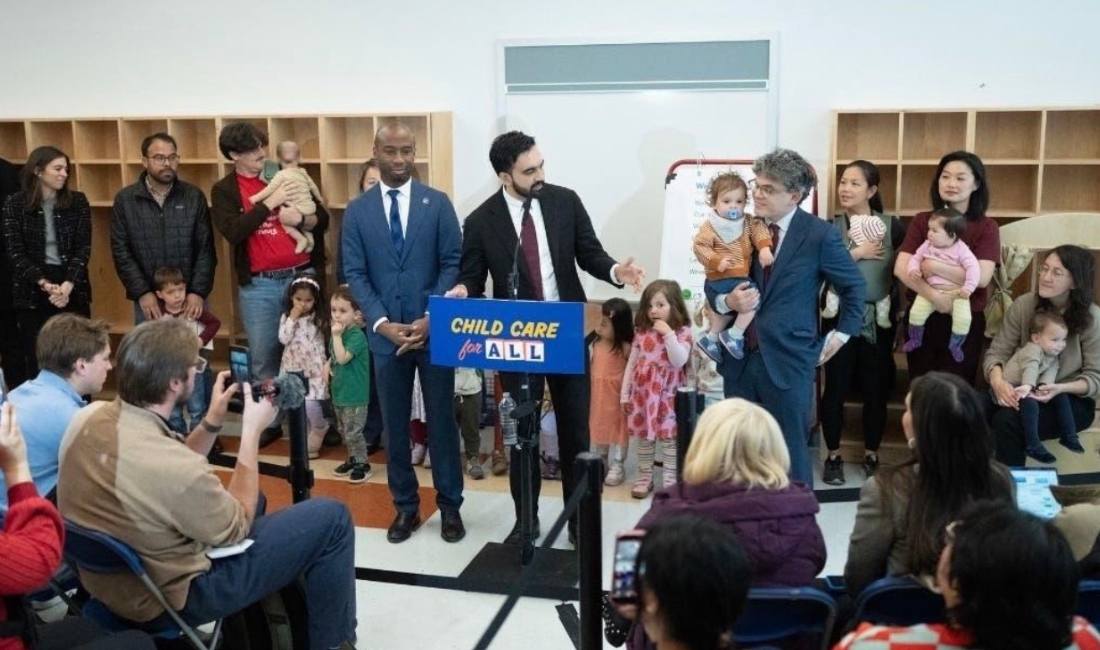
Mayor Zohran Mamdani announced that the city is starting to move more than 10,000 children off the waitlist and into the process of receiving child care assistance. The move marks the first major reduction in the waitlist in roughly 15 months and offers new hope to families who have been waiting for affordable child care.
However, the problem is far from over. More than 29,000 children remain on the waitlist, meaning thousands of families are still waiting for financial help to pay for child care.
Mamdani described the development as a sign that there is “light at the end of the voucher tunnel,” while acknowledging that a large number of families are still waiting.
The child care assistance program has operated for nearly three decades and provides financial support to eligible families so they can afford child care while parents work, attend school or participate in approved training programs.
The current crisis began in May 2025, when demand for child care assistance exceeded the amount of available funding. As more eligible families applied for help, the city was unable to immediately provide vouchers to everyone who qualified. Instead, thousands of children were placed on a waiting list.
The list continued to grow over the following months, creating significant uncertainty for parents and child care providers.
For many families, child care is not simply a convenience. It is essential for maintaining employment. Parents who cannot find affordable and reliable care may be forced to reduce their working hours, turn down jobs or leave the workforce entirely.
Child care providers have also warned that the shortage of available vouchers can create financial problems for their businesses. When families cannot afford care, providers can lose enrollment and revenue, even when there is a strong demand for their services. The city’s latest move is designed to begin addressing both problems.
Families will be contacted on a rolling basis and invited to complete the necessary steps to receive assistance. Eligibility will still need to be confirmed before a child can receive a voucher.
The city has indicated that priority will be given to families facing particularly difficult circumstances, including families experiencing homelessness, families with children who have special needs and families with incomes within specified eligibility limits.
The assistance can cover children from infancy through age 13 in many cases. Children with special needs may qualify for assistance for a longer period, depending on their circumstances and eligibility.
The financial support can be used with participating child care providers across New York City, giving eligible families greater flexibility in choosing care that fits their needs.
City officials have also emphasized that families should not assume that being on the waitlist automatically means they will immediately receive a voucher. The process is being carried out in stages, and families must respond when they are contacted and provide the information required to verify their eligibility.
The waitlist itself is a result of a larger funding challenge facing New York City’s child care system. In May 2025, the city announced that it did not have enough funding to provide new child care vouchers to every eligible family seeking assistance. That decision led to the creation of a growing waitlist.
The issue quickly became a major concern for parents, child care providers and city lawmakers.
Additional funding has since been directed toward child care, allowing the city to begin reducing the backlog.
New York State has also committed significant funding toward child care initiatives in New York City. State and city investments are expected to help expand access and reduce the number of families waiting for assistance.
The new funding is particularly important because New York City has one of the highest costs of living in the United States. Child care can represent a major portion of a family’s monthly expenses, particularly for families with young children.
For working parents, the availability of affordable child care can determine whether they can continue working full time.
The city’s latest announcement therefore has implications beyond child care itself. Supporters say it could help parents remain in the workforce, increase household financial stability and strengthen the city’s economy.
For child care providers, bringing thousands of additional children into the voucher system could also provide more predictable enrollment and revenue. Still, advocates say the city must do more.
With more than 29,000 children remaining on the waitlist, advocates and families are calling for continued investment so that the current progress does not stop after the first group of children receives assistance.
The challenge will be maintaining enough funding to support existing families while also providing assistance to those who remain on the waiting list.
The city’s announcement does not mean the child care crisis has been solved. Instead, it represents the beginning of an effort to reduce a backlog that has affected thousands of New York families.
The most important question now is how quickly the remaining children can be moved off the waitlist and whether future funding will be sufficient to prevent another large backlog from developing.
For families who have spent more than a year waiting, however, the first movement on the list represents an important change.
After months of uncertainty, more than 10,000 children are now moving toward access to child care assistance, while tens of thousands of others continue to wait.
The development is therefore both a major step forward and a reminder of the scale of New York City’s child care challenge.