

Trump Rejects ‘Fake Deal’ With Iran, Says Tehran Must Accept U.S. Terms
President Donald Trump has accused Iran of seeking a “fake deal” to end the nearly nine-month war, insisting that any agreement must meet Washington’s demands. His remarks at the White House come as diplomatic efforts continue, but negotiations remain stalled and concerns grow over another escalation in the Middle East.

Reporter · CSB News USA
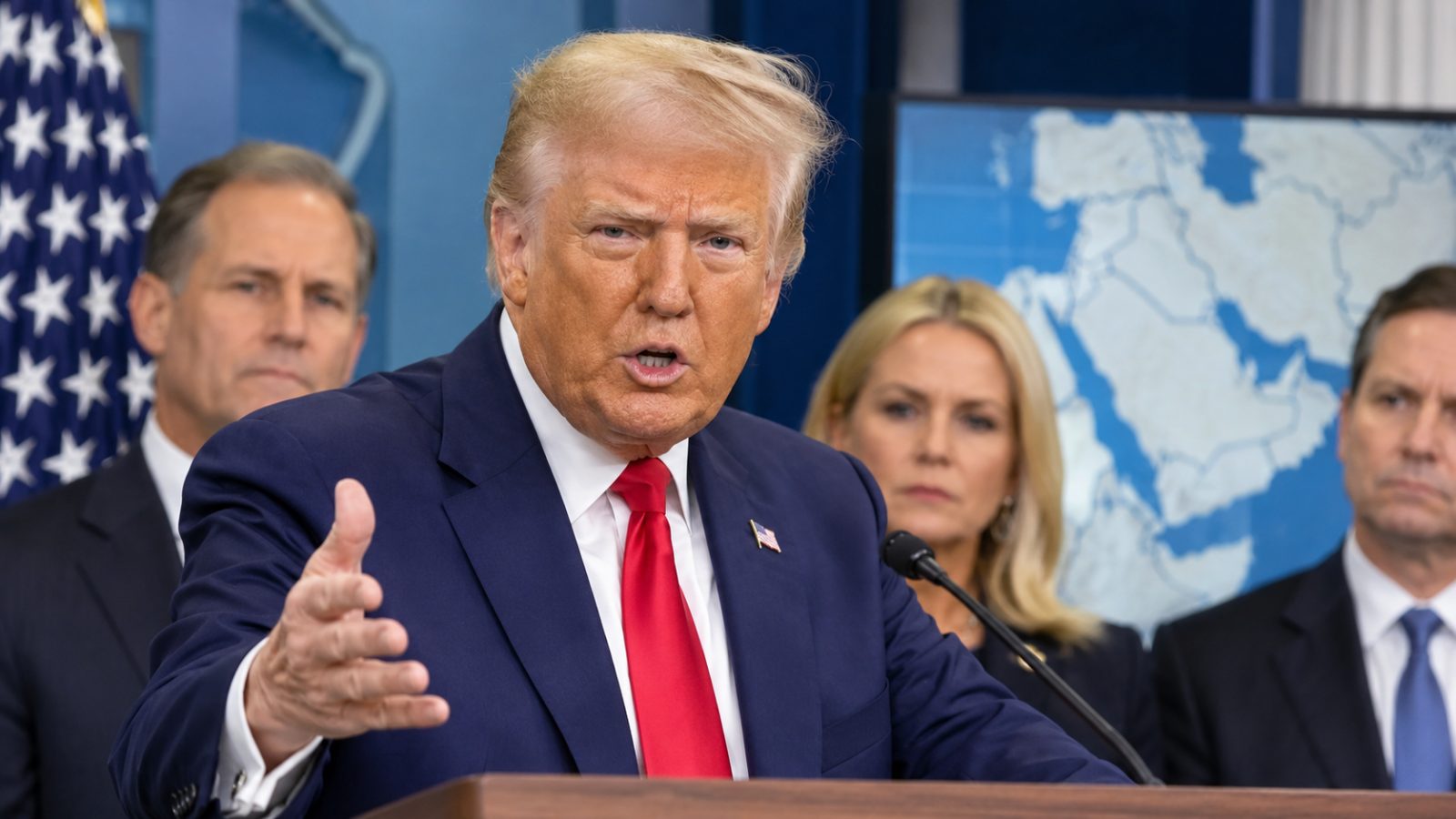
President Donald Trump has accused Iran of trying to secure what he described as a “fake deal” to end the nearly nine-month war with the United States. Speaking at the White House on Friday, November 20, Trump said Tehran wants an agreement but is unwilling to accept terms that he considers reasonable.
“We want to make a real deal, not a fake deal,” Trump told reporters during a lengthy lunchtime news conference. He also accused Iran of misleading the international community for decades, saying the country had been “bullshitting people for 51 years.”
Trump’s comments came one day after he returned from a three-day trip to Asia, where he held meetings with international leaders, including Chinese President Xi Jinping and Russian President Vladimir Putin.
The president’s latest remarks highlight the continuing uncertainty surrounding the conflict and the difficulties facing diplomatic efforts to reach a lasting agreement.
“They want to make a deal, but they don’t want to make a deal that’s acceptable to me,” Trump said.
His statement suggests that Washington remains open to negotiations but is not prepared to accept an agreement that falls short of its demands.
Trump has repeatedly insisted that Iran must never be allowed to develop nuclear weapons. During Friday’s news conference, he again made clear that preventing Iran from obtaining nuclear weapons remains a central objective of his administration.
The conflict began in February 2026, when the United States and Israel launched joint military strikes against Iranian targets. The opening attacks killed several senior Iranian officials and military commanders, including Supreme Leader Ayatollah Ali Khamenei, according to international media reports.
Since then, the conflict has involved repeated military attacks, threats and diplomatic efforts. Although the intensity of the initial fighting has decreased, tensions remain high, and both sides continue to face significant disagreements.
In June, the United States and Iran signed a memorandum of understanding aimed at ending the conflict. However, the agreement has not produced a lasting settlement. Negotiations remain stalled over several major issues, including Iran’s nuclear program, economic sanctions, maritime security and the future of military operations in the region.
The United States says it is maintaining a naval blockade of Iranian ports in the Persian Gulf and the Gulf of Oman. Iran, meanwhile, continues to assert control over the strategically important Strait of Hormuz.
The waterway is one of the world’s most important energy shipping routes. A significant portion of global oil supplies passes through the strait, making any disruption a major concern for international markets.
Any further escalation could affect oil prices, shipping costs and the economies of countries that depend heavily on energy imports.
Trump also addressed concerns about the economic consequences of the war, particularly rising fuel prices in the United States.
He said the conflict had increased fuel costs less than he initially expected. Trump claimed that he had feared oil prices could reach $300 per barrel, but said prices had recently fallen to around $80.
However, energy prices are influenced by several factors, including global supply, demand, shipping security and political developments across the Middle East. Continued uncertainty around the Strait of Hormuz could create further volatility in international oil markets.
Meanwhile, diplomatic efforts to prevent another major escalation are continuing.
According to an Axios report published Friday, Trump’s special envoys Steve Witkoff and Jared Kushner met senior Qatari officials in Berlin on Thursday to discuss efforts to revive negotiations between Washington and Tehran.
Qatari Prime Minister Sheikh Mohammed bin Abdulrahman Al Thani and Qatari envoy Ali al-Thawadi reportedly attended the meeting.
Qatar has played an important role in diplomatic communication between the United States and Iran. The Gulf country has been working to help revive ceasefire arrangements, restart nuclear negotiations and prevent the conflict from returning to full-scale fighting.
The latest meeting followed a visit by the Qatari prime minister to Washington the previous week, where he reportedly discussed the Iran conflict with Trump and Vice President JD Vance.
Qatari officials have also maintained contact with Iranian Foreign Minister Abbas Araghchi. According to the Axios report, Araghchi met the Qatari prime minister in Turkey to discuss ways to overcome the diplomatic deadlock.
An Iranian technical delegation also reportedly visited Doha earlier in the week as part of continuing diplomatic contacts.
Iranian officials have also held discussions with representatives in Pakistan and Oman. These diplomatic contacts suggest that regional countries are trying to prevent the conflict from expanding further.
Despite these efforts, there has been no significant breakthrough in negotiations.
One of the biggest obstacles remains the disagreement over Iran’s nuclear activities. Washington wants guarantees that Tehran will not develop nuclear weapons. Iran, however, has long defended its nuclear program and opposed restrictions it considers unacceptable.
The United States is also seeking broader security arrangements involving regional military activities and maritime routes.
Trump’s position has created uncertainty about what Washington will do next. In a recent interview with Axios, he reportedly said he was not rushing to make another major decision about Iran and suggested that he would assess the situation after the beginning of the new year.
His comments indicate that the administration may continue diplomatic and economic pressure while considering its next steps.
Vice President JD Vance and Secretary of State Marco Rubio were also present during Friday’s White House news conference.
Vance was asked about the political consequences of the Iran conflict following Republican losses in the November midterm elections. He said the president makes the final decisions and that his responsibility is to support the president.
Trump also defended the decision to launch military action, saying he would make the same decision again if necessary to prevent Iran from obtaining nuclear weapons.
Meanwhile, Israeli Prime Minister Benjamin Netanyahu has reportedly urged Washington to maintain pressure on Iran and consider further action against its military capabilities.
This has added another challenge to diplomatic efforts, as regional governments are concerned that renewed military operations could destabilize the entire Middle East.
For Gulf countries, the situation is particularly sensitive. Any disruption to shipping through the Strait of Hormuz could affect oil exports, international trade and economic activity across the region.
Countries such as Qatar, Saudi Arabia, the United Arab Emirates, Kuwait and Oman have strong interests in preventing the conflict from spreading.
The international community is also watching the situation closely because the consequences could extend far beyond the Middle East.
Higher energy prices could affect transportation, food production, manufacturing and household expenses in many countries. Developing economies that rely on imported fuel could face additional financial pressure.
For millions of people living and working in the Gulf region, prolonged instability could also create concerns about regional security, employment and economic conditions.
Trump’s latest comments have therefore attracted attention not only because of their strong language but also because they come at a critical moment in diplomatic efforts.
Although he says he wants an agreement, his insistence on acceptable terms leaves little indication that Washington is prepared to make major concessions.
Iran has also shown no clear sign that it is ready to accept all of the conditions being discussed by the United States.
The central question now is whether both sides can find common ground before another major military confrontation takes place.
For now, diplomatic contacts are continuing, but the possibility of renewed fighting remains a serious concern.
Trump’s message from the White House was clear: the United States wants a lasting agreement with Iran, not a temporary arrangement that fails to address Washington’s concerns. Whether Tehran is willing to accept such an agreement remains uncertain.
News Sources: Associated Press, CBS News, ABC News and Axios.
Related News
Trump Says Cutting US Nuclear Weapons Is Difficult While Other Countries Keep Theirs
Israel Pushes for New Iran Strikes, Trump Says No Rush on Decision
Trump’s Cyber Chief Sean Cairncross to Leave White House Amid Midterm Fallout
Comments 0
Log in or create a free account to join the conversation. You can comment anonymously.
No comments yet. Be the first.