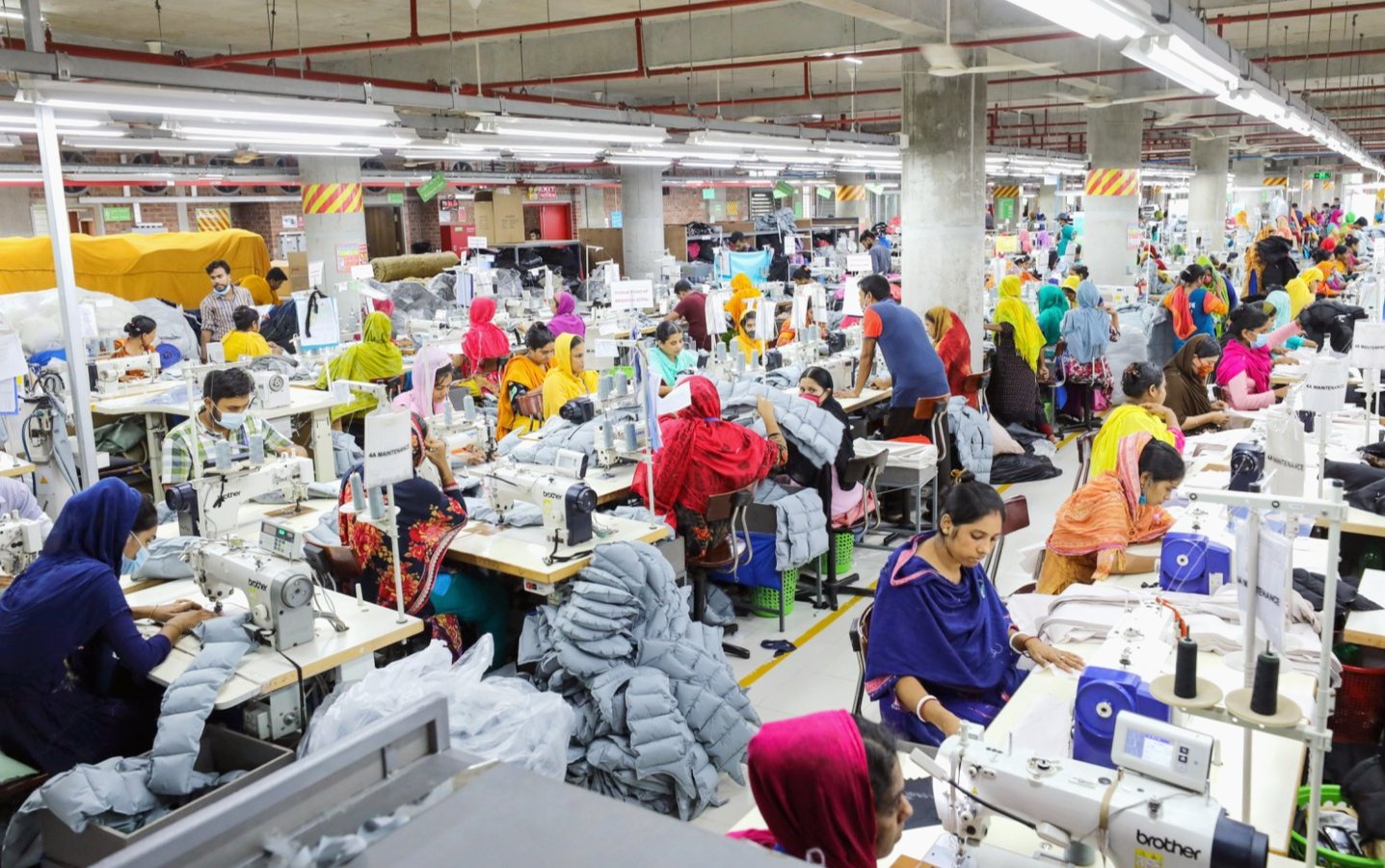
Bangladesh Eyes Economic Revival as Boeing Deal Opens New Global Aviation Opportunities
Bangladesh Eyes Economic Revival as Boeing Deal Expands Aviation, Boosts Global Connectivity, Trade, Tourism and Opens New Opportunities for Future Growth.

Bangladesh Eyes Economic Revival as Boeing Deal Opens New Global Aviation Opportunities
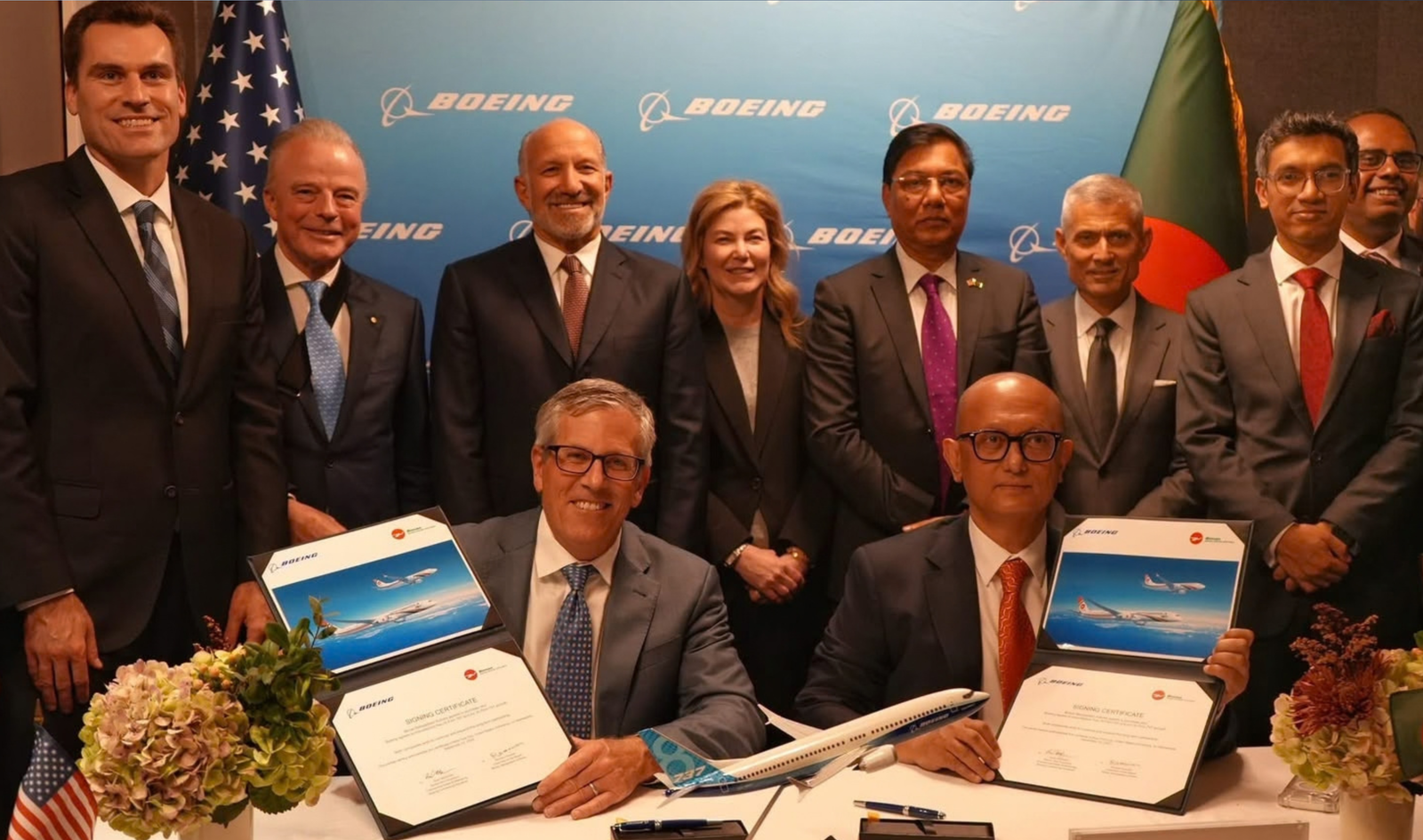
Bangladesh’s national flag carrier, Biman Bangladesh Airlines, has signed an agreement with U.S. aerospace giant Boeing to purchase 11 additional aircraft, marking another major step in the airline’s ambitious fleet modernization and international expansion program.
The agreement was signed in New York on the sidelines of the 81st session of the United Nations General Assembly. Biman Chairman Rumee A. Hossain and Boeing Senior Vice President of Commercial Sales and Marketing Brad McMullen signed on behalf of the two organizations.
The latest order consists of five Boeing 787-10 Dreamliners and six Boeing 737-8 aircraft. Combined with Biman’s previous order for 14 Boeing jets earlier this year, the carrier now has 25 Boeing aircraft on order.
In April, Biman placed its largest-ever aircraft order, worth approximately $3.7 billion, for eight 787-10 Dreamliners, two 787-9 Dreamliners and four 737-8 jets. Deliveries under that earlier agreement are scheduled to begin in November 2031 and continue through October 2035.
The latest signing ceremony was attended by senior officials from both Bangladesh and the United States, including Bangladesh’s Civil Aviation and Tourism Minister M. Rashiduzzaman Millat, State Minister for Foreign Affairs Humaiun Kobir, U.S. Commerce Secretary Howard Lutnick and U.S. Deputy Secretary of State Christopher Landau.
Boeing says the new aircraft will support Biman’s strategy to modernize its fleet and expand its international network. The 787 Dreamliner and 737 MAX families can provide roughly 20 to 25 percent better fuel efficiency than the aircraft they replace, potentially helping the airline control operating costs while increasing passenger and cargo capacity.
The purchase also carries broader economic significance for Bangladesh. Reuters reported that Dhaka has been seeking to increase imports from the United States amid a bilateral trade imbalance of roughly $6 billion and concerns over tariffs affecting Bangladesh’s export-oriented economy, particularly the garment industry.
U.S. Ambassador to Bangladesh Brent T. Christensen welcomed the additional aircraft purchase and described the development as another “win-win” for U.S.-Bangladesh relations.
For Bangladesh, however, the economic impact of such a large fleet expansion will ultimately depend on how effectively the new aircraft are deployed. Expanding profitable international routes, increasing passenger numbers and cargo traffic, improving operational efficiency and strengthening airline management will be important to realizing the potential benefits of the investment.
Long-haul connectivity is particularly significant. The 787-9 aircraft included in Biman’s April order are intended to support services to Europe and North America, while the larger 787-10s are designed to add capacity on high-demand international routes. The 737-8s are expected to strengthen regional connections with destinations across the Middle East, India and Southeast Asia.
Bangladesh has also expressed interest in strengthening direct air connectivity with the United States, including plans for future commercial service between Dhaka and New York. Such connectivity could potentially benefit the large Bangladeshi diaspora while supporting tourism, business travel and trade.
At the same time, Boeing is not the only aircraft manufacturer in Biman’s expansion plans. The airline is considering a separate proposal involving 10 Airbus aircraft, although negotiations remain ongoing.
The Boeing purchase therefore represents more than simply adding aircraft to Biman’s fleet. It is part of a much larger effort to modernize Bangladesh’s aviation sector, deepen international connectivity and position the national carrier for future growth.
Whether that ambition translates into broader economic gains will depend on financing, delivery schedules, route planning, passenger demand and Biman’s ability to operate its significantly larger fleet efficiently.
For now, the 11-aircraft agreement signals that Bangladesh is pursuing one of the most significant expansions in the history of its national airline — with aviation increasingly viewed as a gateway to deeper global trade, tourism and economic connectivity.