IAEA–Iran Nuclear Talks Stall After Strikes on Natanz, Grossi Urges Dialogue
Diplomatic efforts to revive nuclear oversight between Iran and the international community have hit a new setback, as the head of the UN’s nuclear watchdog confirmed that inspectors remain locked out of key Iranian facilities damaged in recent attacks. The developments come amid heightened regional tensions and stalled U.S.–Iran negotiations.

IAEA–Iran Nuclear Talks Stall After Strikes on Natanz, Grossi Urges Dialogue
The Director General of the International Atomic Energy Agency (IAEA), Rafael Grossi, said the agency’s communication with Tehran continues but remains “very limited” following a series of attacks on Iranian nuclear sites in June.
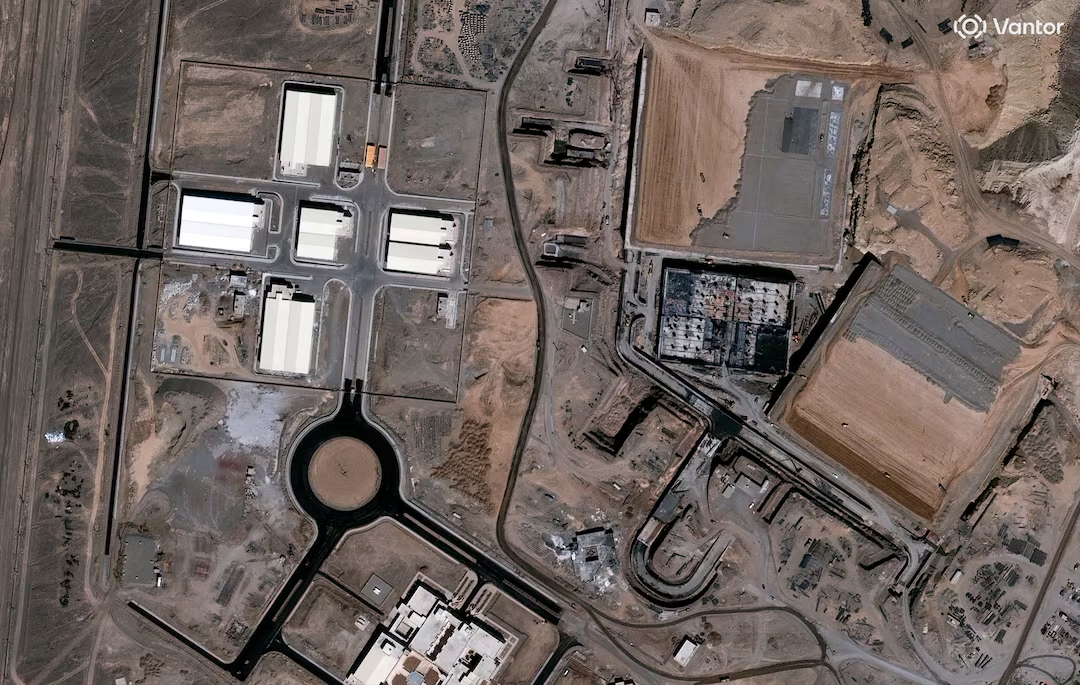
“We are, of course, in conversation with Iran, but at the moment, it's very limited. Until last Thursday, it was very intense,” Grossi stated, emphasizing that the agency currently has no inspectors on the ground in Iran. Instead, the IAEA is closely monitoring satellite imagery to assess damage and activity at sensitive nuclear facilities.
Tehran has not allowed IAEA inspectors to return to its bombed sites since the attacks, raising fresh concerns about transparency and compliance with international nuclear agreements.
Natanz at the Center of Concerns
The uranium-enrichment complex at Natanz Nuclear Facility was among the primary targets in the June strikes. According to the IAEA:
-
An above-ground enrichment plant was completely destroyed.
-
An underground facility housing two centrifuge halls was severely damaged.
Natanz has long been a focal point in international disputes over Iran’s nuclear program due to its capacity to enrich uranium, a process that can be used for civilian energy production or, at higher levels, weapons development.
Diplomatic Deadlock in Geneva
Grossi recently traveled to Geneva to participate in the latest rounds of Oman-mediated talks between Iran and the United States. During those meetings, he engaged with both delegations on technical nuclear matters.
However, negotiations failed to produce a breakthrough.
“An understanding eluded the parties this time,” Grossi told the IAEA Board of Governors. “I am sure we are, quite understandably, feeling a strong sense of frustration.”
When asked about criticism from Iranian officials, including remarks by Tehran’s envoy, Grossi declined to escalate tensions, stating: “I will not get into a polemic on that. We stand by what I said before.”
Calls for Dialogue to Resume
Despite the diplomatic impasse, Grossi urged all sides to return to constructive engagement. The absence of inspectors and reduced transparency at sensitive sites have intensified global concerns about the direction of Iran’s nuclear program.
With satellite monitoring replacing on-site inspections and formal talks stalling, pressure is mounting on both Washington and Tehran to resume meaningful negotiations before the situation further deteriorates.