People’s Mandate Reshapes Bangladesh: BNP Secures Historic Landslide Victory and Forms Government
Bangladesh has entered a new political chapter after the Bangladesh Nationalist Party (BNP) secured a decisive and historic parliamentary majority, forming the government with a powerful public mandate. Led by Tarique Rahman, the party’s overwhelming electoral victory reflects a clear expression of the people’s will for political stability, democratic governance, and national recovery following a prolonged period of political transition. Analysts say the scale of the victory not only strengthens the legitimacy of the new government but also signals a turning point in Bangladesh’s democratic and institutional trajectory.

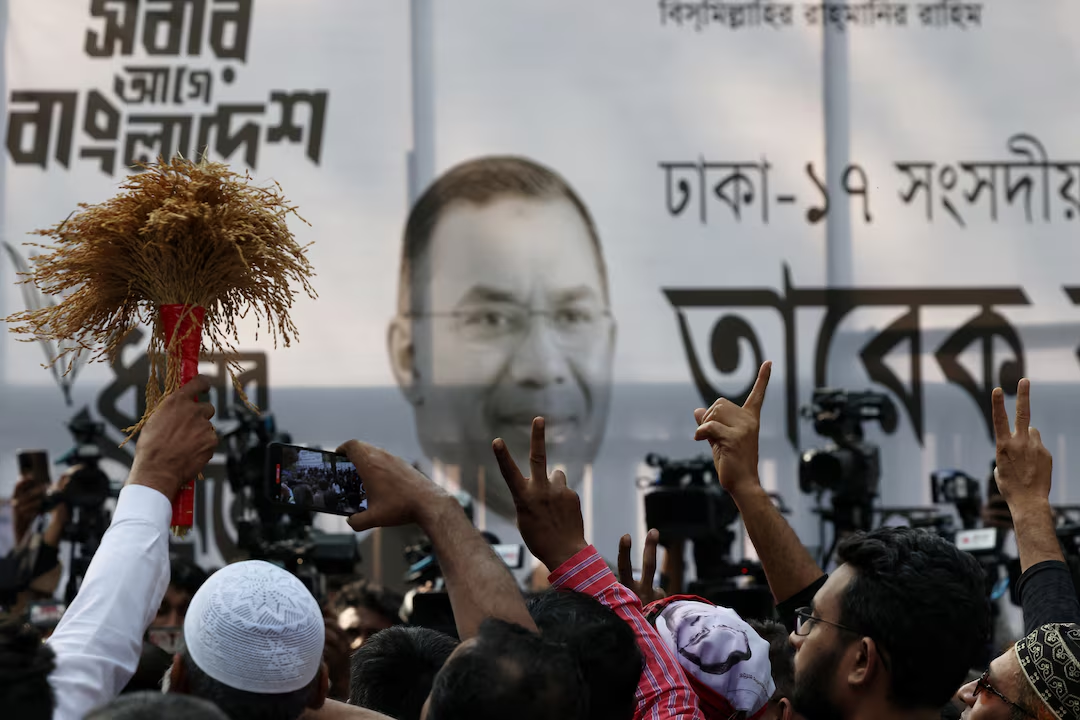
People’s Mandate Reshapes Bangladesh: BNP Secures Historic Landslide Victory and Forms Government
Bangladesh has entered a new political era after the Bangladesh Nationalist Party (BNP) secured a decisive parliamentary majority in the 13th National Parliament election, forming a government with what analysts describe as one of the strongest electoral mandates in the country’s modern democratic history.
The election, held after a prolonged period of political transition and institutional uncertainty, has been widely interpreted as a clear expression of public will and a reaffirmation of electoral democracy. With an overwhelming number of seats secured, the BNP now holds the political authority to implement its policy agenda and lead Bangladesh into a new phase of governance and national reconstruction.

Decisive Parliamentary Majority Reflects Clear Public Mandate
According to official election results, the Bangladesh Nationalist Party won well over the simple majority threshold required to form a government in the 300-seat National Parliament. The party’s electoral success gives it strong legislative control, ensuring stability and enabling the swift passage of key reforms.
Political observers say the scale of the victory demonstrates a unified and decisive national mandate.
The landslide outcome not only positions the BNP as the dominant political force in Bangladesh but also provides the institutional foundation necessary to govern effectively without reliance on fragile coalition arrangements.
“This election reflects a decisive shift in public sentiment,” said regional political analysts. “It is a clear message that the people want stability, accountability, and a government with the authority to act.”
Democratic Transition and the Restoration of Electoral Legitimacy
The election came after a 17-month interim period marked by political uncertainty, economic challenges, and institutional disruptions. During this time, many key sectors—including governance, finance, education, and industry—faced operational and structural difficulties.
The parliamentary election therefore represented not only a political contest but also a national referendum on the country’s future direction.
Voter turnout was strong, reflecting widespread public engagement and confidence in the electoral process. Citizens across urban and rural regions participated actively, reinforcing the legitimacy of the outcome.
International observers and political experts described the election as a critical milestone in restoring constitutional governance and democratic continuity.
Leadership and Organizational Strength Played Central Role
The BNP’s victory is widely attributed to its long-standing political infrastructure, extensive grassroots network, and ability to mobilize broad-based support across diverse demographic and geographic segments.
Led by party chairman Tarique Rahman, the party campaigned on promises of restoring institutional stability, strengthening democratic governance, reviving the economy, and ensuring greater political accountability.
Political analysts noted that the BNP’s organizational discipline and historical presence in Bangladesh’s political landscape allowed it to consolidate public support at a critical moment.
“The party successfully positioned itself as a vehicle for democratic restoration and national stability,” said one South Asia political expert.

Public Demand for Stability and Institutional Recovery
The election results reflect broader public expectations for governance reform and national recovery.
Over the past two years, Bangladesh experienced multiple challenges, including:
-
Economic uncertainty and inflationary pressures
-
Decline in foreign investment confidence
-
Institutional disruptions in education and administration
-
Industrial and export sector instability
Many voters viewed the election as an opportunity to restore effective governance and strengthen institutional performance.
Public sentiment, reflected in the election outcome, indicates strong demand for:
-
Political stability
-
Economic recovery
-
Institutional integrity
-
Law and order
-
Long-term national development
International Recognition and Strategic Implications
The BNP’s decisive victory has drawn attention from international governments, diplomatic missions, and global observers.
Foreign policy experts note that a strong parliamentary mandate enhances Bangladesh’s global standing by ensuring political predictability and policy continuity—two key factors for foreign investment and international cooperation.
Bangladesh’s strategic importance in South Asia, combined with its role as one of the world’s fastest-growing emerging economies, means the new government’s policies will have regional and global implications.
International partners are expected to closely monitor the government’s economic policies, investment climate reforms, and diplomatic engagement strategies.
Opportunities and Responsibilities of a Strong Mandate
With a commanding parliamentary majority, the new BNP-led government has both an unprecedented opportunity and significant responsibility.
Key priorities expected to shape the government’s agenda include:
-
Restoring economic growth and investor confidence
-
Strengthening democratic institutions
-
Reforming governance and administrative systems
-
Revitalizing industrial production and export sectors
-
Ensuring rule of law and public security
-
Expanding employment opportunities
The scale of the electoral mandate gives the government the legislative authority necessary to implement structural reforms without major parliamentary obstacles.
However, analysts emphasize that public expectations will also be correspondingly high.
“A strong mandate provides both power and accountability,” said a regional governance specialist. “The government’s performance will now be judged by its ability to deliver stability, growth, and institutional renewal.”

A Turning Point in Bangladesh’s Democratic Evolution
The 2026 parliamentary election represents a defining moment in Bangladesh’s democratic journey.
The BNP’s decisive victory is widely seen as more than a political triumph—it is a reflection of public participation, democratic engagement, and national aspirations for stability and progress.
By delivering a clear and decisive electoral mandate, the people of Bangladesh have reshaped the country’s political landscape and opened a new chapter in its governance.
The coming years will determine how effectively this mandate is translated into policy, reform, and national development.
For now, the election stands as a powerful demonstration of democratic expression and the enduring role of public will in shaping the nation’s future.