BJP's Outstanding Victory in Delhi Assembly Elections, Winning Most Seats
Delhi — Prime Minister Narendra Modi’s ruling Hindu nationalist party, the Bharatiya Janata Party (BJP), has won the majority of seats in Delhi's state assembly elections for the first time in the 21st century. According to official results on Saturday, BJP secured 40 seats in the 70-member Delhi Legislative Assembly, marking a significant victory in the capital region with a population of 200 million. As a result, the Aam Aadmi Party (AAP), which had been in power since 2015, has been ousted, securing only 17 seats.

BJP's Outstanding Victory in Delhi Assembly Elections, Winning Most Seats
BJP's Outstanding Victory in Delhi Assembly Elections, Winning Most Seats
Delhi — Prime Minister Narendra Modi’s ruling Hindu nationalist party, the Bharatiya Janata Party (BJP), has won the majority of seats in Delhi's state assembly elections for the first time in the 21st century. According to official results on Saturday, BJP secured 40 seats in the 70-member Delhi Legislative Assembly, marking a significant victory in the capital region with a population of 200 million. As a result, the Aam Aadmi Party (AAP), which had been in power since 2015, has been ousted, securing only 17 seats.
Counting is still ongoing in 13 seats, but AAP's founder and key leader Arvind Kejriwal and his deputy Manish Sisodia have lost their seats, despite their party gaining widespread support due to its welfare policies and anti-corruption movement.
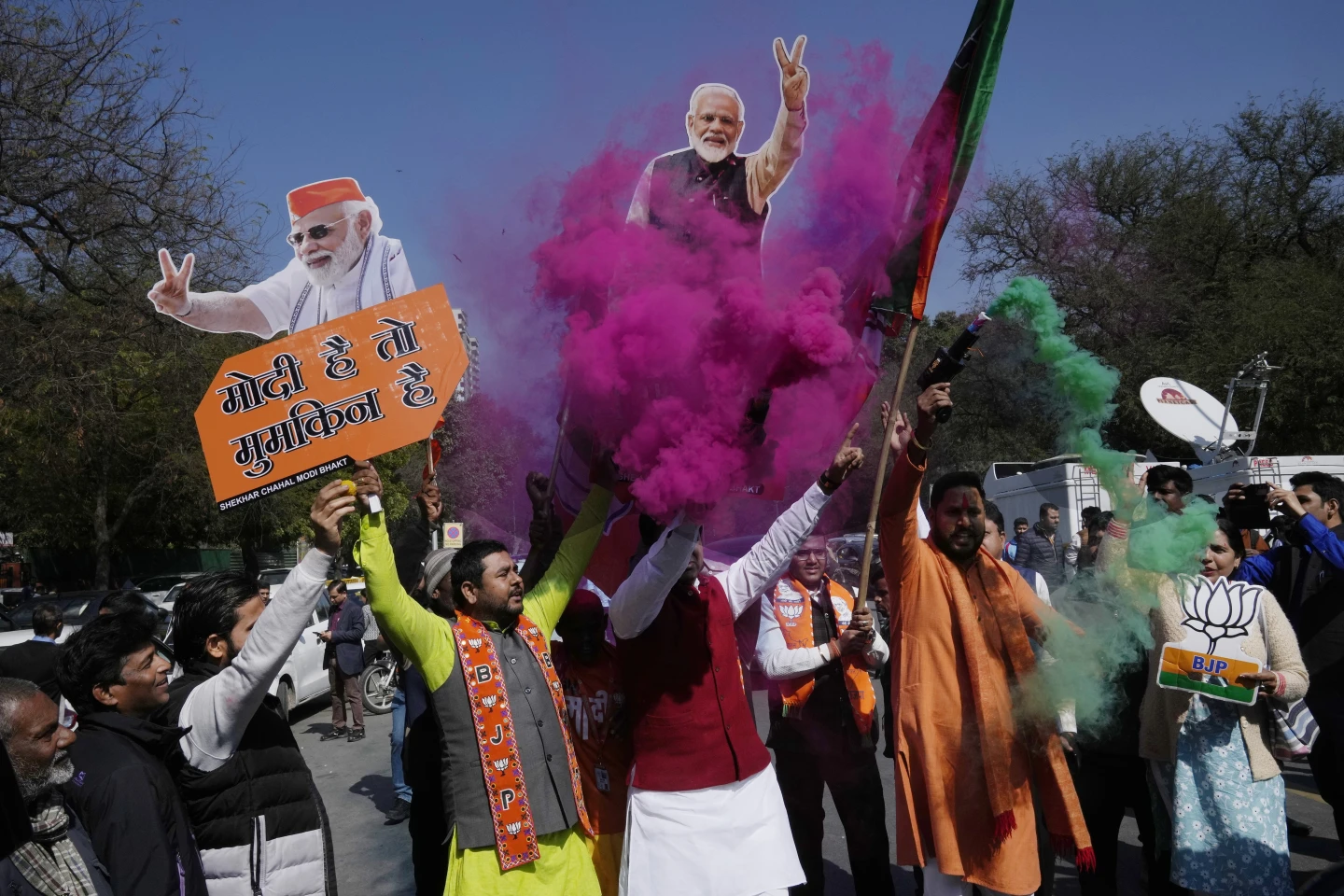
BJP supporters, waving party flags and Modi posters, chanted slogans and danced outside the party headquarters in the capital, as most exit polls predicted the party's victory. Amit Shah, India’s powerful Home Minister and BJP leader, stated in a message, "This proves that people cannot be misled by lies every time."
Over 15 million voters participated in Wednesday’s election, with a 60% voter turnout.
The AAP’s defeat and BJP's victory are seen as a significant achievement, especially considering that in last year’s national election, BJP failed to secure a majority on its own but formed the government with coalition partners. Last year, BJP regained some ground by winning state elections in northern Haryana and western Maharashtra.
Ahead of the election, Modi’s party reduced income taxes for the salaried middle class, one of its key voter blocks.
During the election campaigns, both Modi and Kejriwal promised to reform government schools and provide healthcare, electricity, and a monthly stipend of 2,000 rupees (approximately $25) for women. Kejriwal was arrested last year on charges of taking bribes from a liquor distributor. He has denied the allegations, claiming they were part of a political conspiracy.
The Supreme Court allowed Kejriwal and other ministers to be released on bail. Kejriwal later resigned from the Chief Minister’s position, appointing his senior party leader Atishi as the new Chief Minister, who won her seat on Saturday. Opposition parties widely condemned Kejriwal’s arrest, accusing Modi’s government of using federal investigative agencies to harass and weaken political opponents.
In 2012, Kejriwal formed the Aam Aadmi Party (AAP) by tapping into public anger over corruption. His pro-poor policies focused on reforming state-run schools and providing affordable electricity, healthcare, and bus transport for women.
In 2020, AAP won 62 out of 70 seats in a landslide victory, with BJP securing only 8 seats and the Congress party failing to win any.
BJP had been ousted from power in Delhi in 1998 by the Congress party, which ruled the government for 15 years.