US Launches Third Consecutive Night of Strikes on Iran as Trump Announces Hormuz Blockade
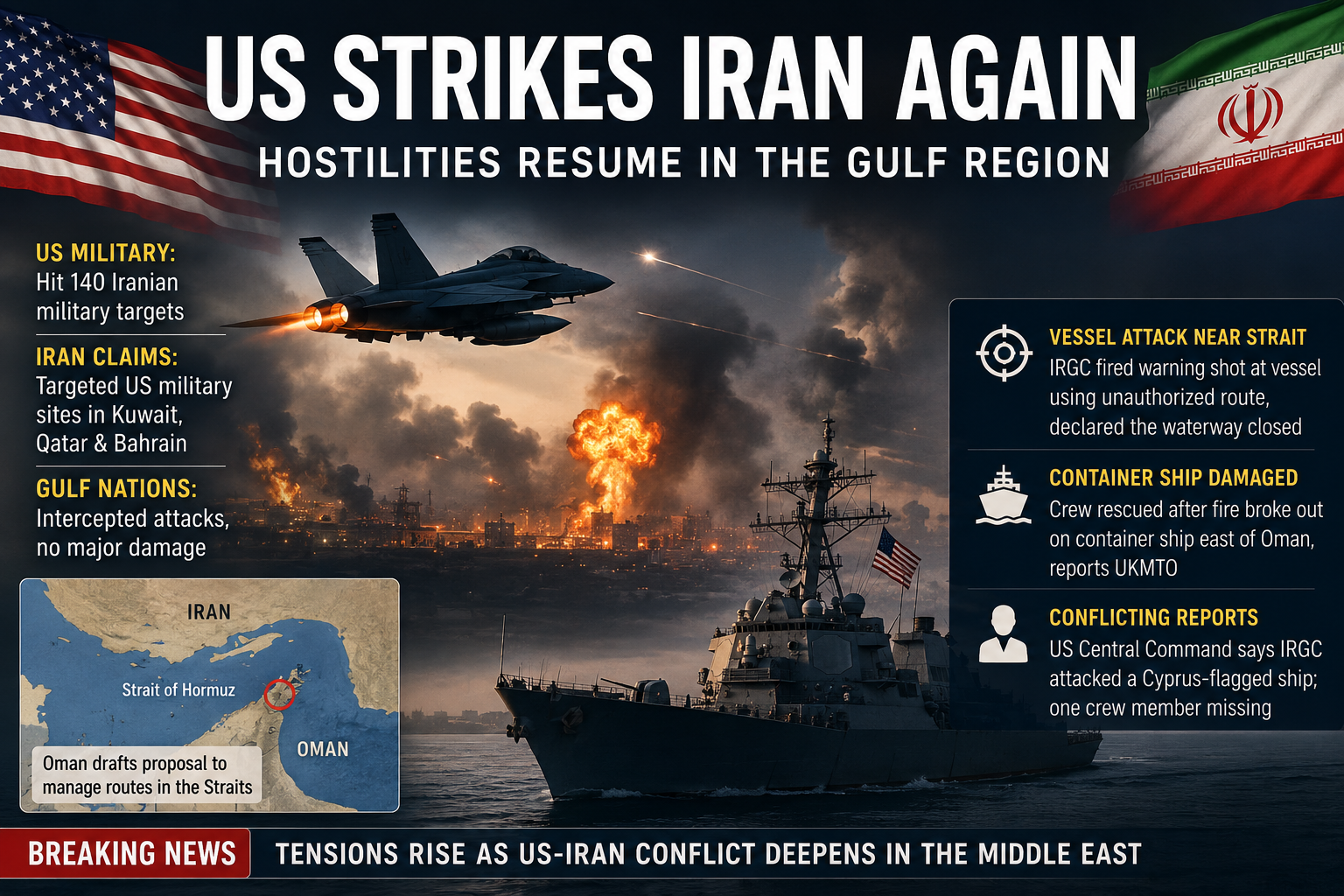
The United States launched a third consecutive night of military strikes on Iran, just hours after President Donald Trump announced that Washington would reinstate a maritime blockade against the country and impose charges on ships for safe passage through the Strait of Hormuz, marking an apparent reversal of previous U.S. policy

US Launches Third Consecutive Night of Strikes on Iran as Trump Announces Hormuz Blockade
The United States launched a third consecutive night of military strikes on Iran, just hours after President Donald Trump announced that Washington would reinstate a maritime blockade against the country and impose charges on ships for safe passage through the Strait of Hormuz, marking an apparent reversal of previous U.S. policy.
According to U.S. Central Command (CENTCOM), the latest strikes are intended to impose significant costs on Iranian forces and degrade their ability to attack civilians and commercial shipping in the Strait of Hormuz.
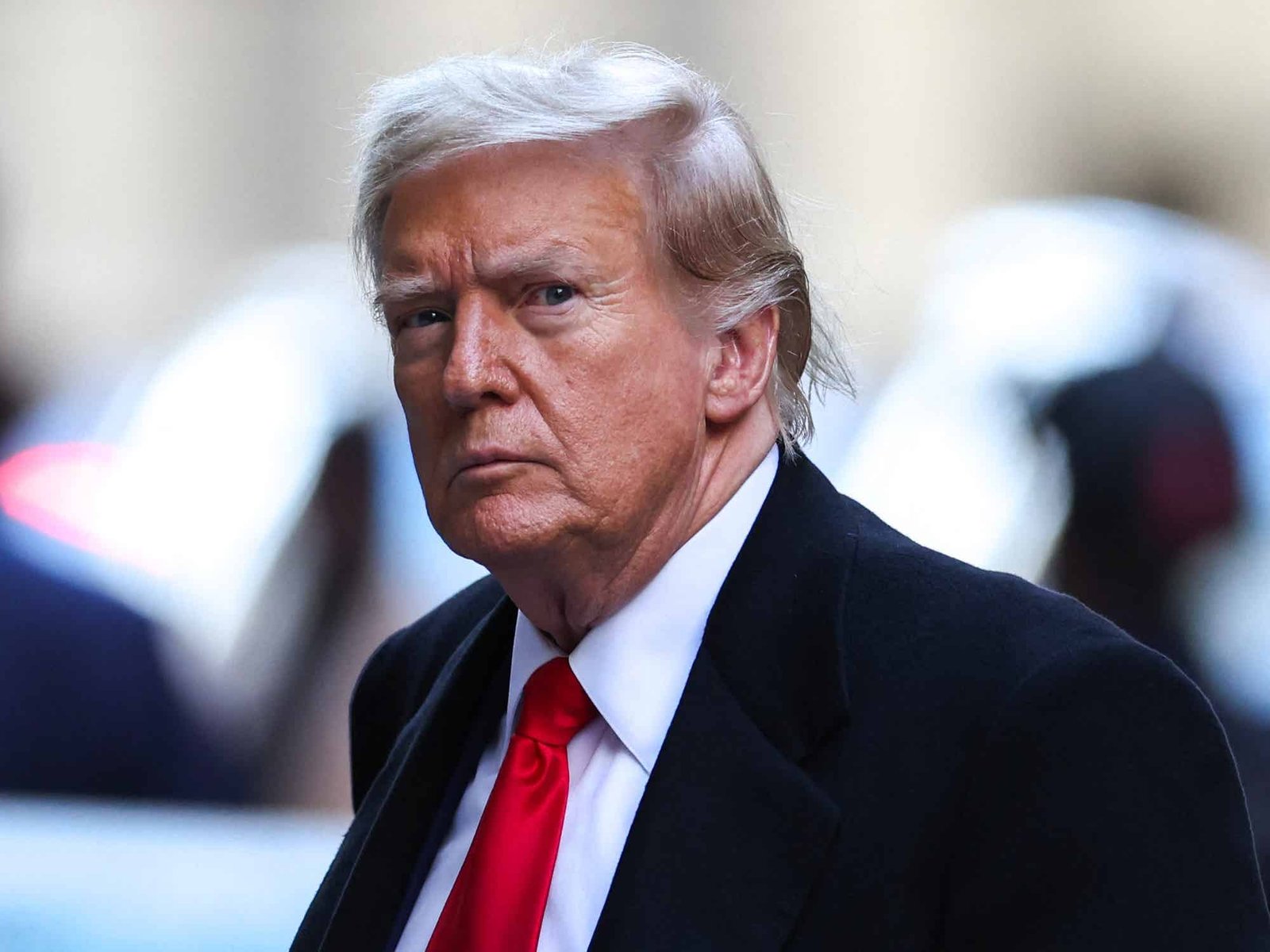
Speaking to conservative radio host Hugh Hewitt, Trump said, “We’re going to hit them very hard tonight and we’re going to hit them hard tomorrow—and there’s not a damn thing they can do about it.”
UAE Tankers Targeted
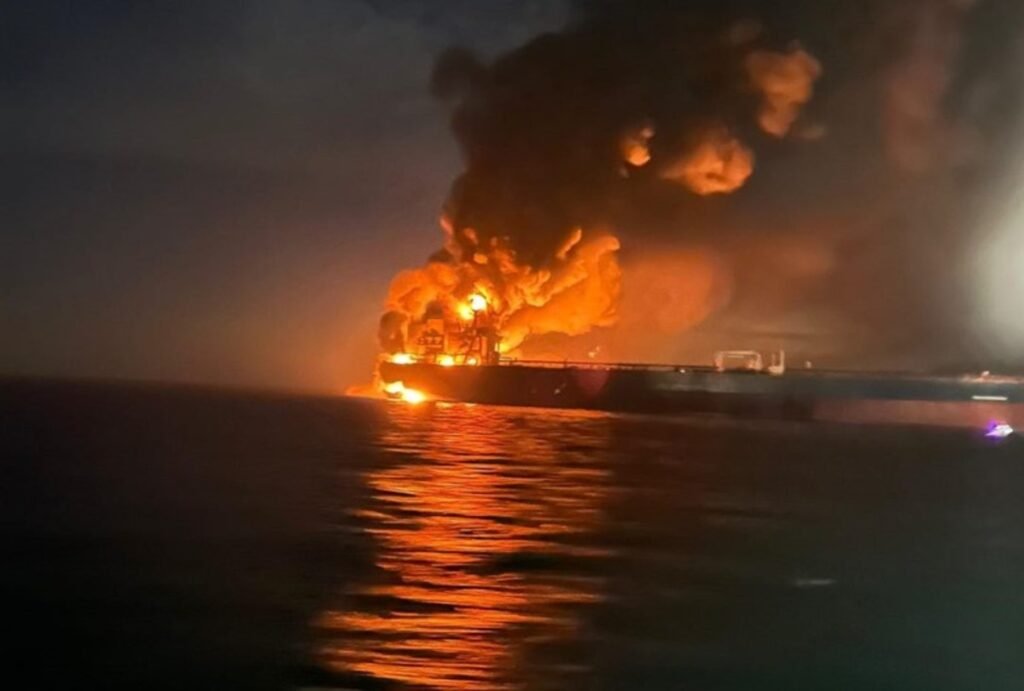
Late Monday, the United Arab Emirates said two of its national oil tankers were struck by two Iranian cruise missiles in Omani territorial waters along the southern lane of the Strait of Hormuz. The attack killed one Indian crew member and injured eight others, four of them seriously.
Oil Prices Rise
The escalating conflict pushed Brent crude prices up 7.8% to $81.92 per barrel on Monday, although prices remain below the wartime peak of $120 per barrel reached earlier in the conflict.
Trump Proposes 20% Transit Tariff
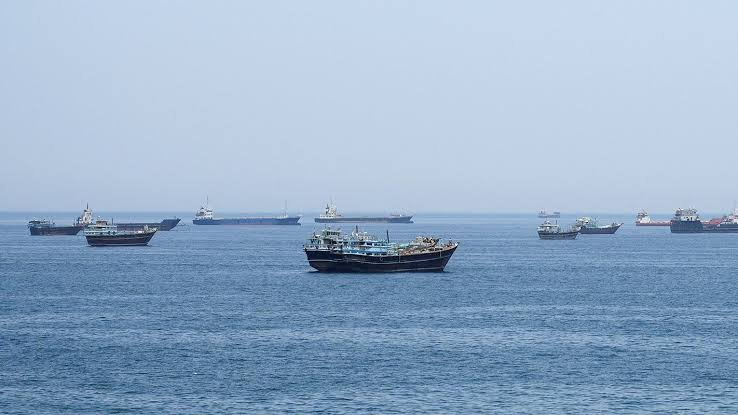
Earlier in the day, Trump announced that the United States would impose a 20% tariff on all cargo passing through the Strait of Hormuz. He also suggested that the U.S. should be recognized as the “guardian of the Strait of Hormuz” and indicated that Washington could take control of the strategic waterway.
The proposal represents a significant shift from the long-standing U.S. position that international waterways should remain open to all vessels without tolls or transit fees.
Fragile Ceasefire Near Collapse
The fighting comes despite a 60-day interim agreement that was intended to pave the way for negotiations to permanently end the war, which began in February following the U.S.-Israeli assassination of Iran’s Supreme Leader, Ayatollah Ali Khamenei.
Instead, repeated drone, missile, and naval attacks around the Strait of Hormuz have brought the temporary ceasefire close to collapse.
Congress Notified of Renewed Hostilities
The Trump administration confirmed that Congress was formally notified that military hostilities against Iran resumed on July 7, a move the White House says begins a new 60-day period during which the president can continue military operations without congressional authorization under the War Powers Act.
Democrats and several Republican critics argue that the administration is misinterpreting the law, maintaining that only Congress has the constitutional authority to declare war.
U.S. Announces Maritime Blockade
The U.S. Navy-led Joint Maritime Information Center announced that a blockade covering Iranian ports, oil terminals, and coastal waters would take effect Tuesday night.
The center warned that any vessel entering or leaving the blockaded area without authorization could be intercepted, diverted, seized, or subjected to the use of force. It added that neutral commercial vessels transiting the Strait of Hormuz to or from non-Iranian destinations would not be affected.
International Legal Concerns
The International Maritime Organization (IMO), the United Nations agency responsible for global shipping regulations, stated that there is no legal basis under international law for imposing mandatory transit fees on ships using international straits.
Iran Responds
Iran’s Islamic Revolutionary Guard Corps (IRGC) accused the United States of endangering global oil and gas supplies by interfering in the Strait of Hormuz. IRGC spokesperson Hossein Mohebi said Washington would be held responsible for threatening global energy security and warned that Iran would continue to exercise sovereignty over the strategic waterway.
The conflict has expanded across the Middle East, with Iran launching attacks on U.S. military bases in several countries, including Qatar and the United Arab Emirates. The fighting has triggered renewed concerns over global energy security, rising inflation, and increasing geopolitical instability ahead of the U.S. congressional elections later this year.