
NASA Rover Detects Potential Signs of Ancient Microbial Life on Mars
NASA’s Perseverance rover has uncovered new evidence that could point to ancient microbial life on Mars after detecting complex organic carbon molecules in rocks from the planet’s Jezero Crater, one of the most closely studied locations in the search for extraterrestrial life

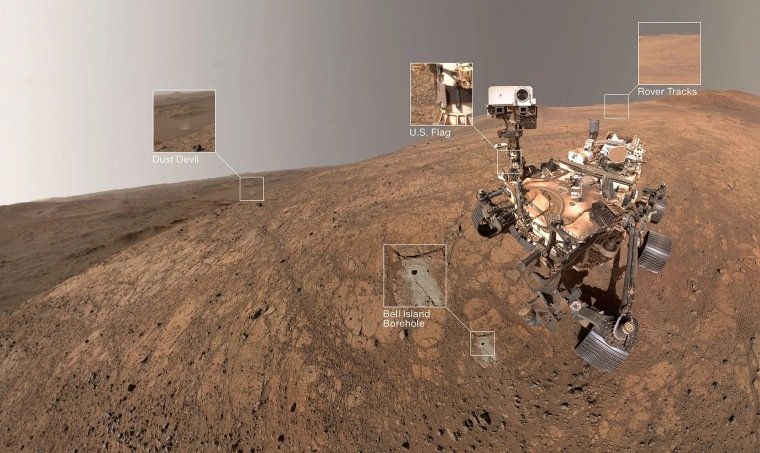
NASA Rover Detects Potential Signs of Ancient Microbial Life on Mars
NASA’s Perseverance rover has uncovered new evidence that could point to ancient microbial life on Mars after detecting complex organic carbon molecules in rocks from the planet’s Jezero Crater, one of the most closely studied locations in the search for extraterrestrial life.
The discovery was made using the rover’s SHERLOC instrument, which identified macromolecular carbon (MMC) embedded in mudstone rocks at the Bright Angel outcrop along Neretva Vallis, an ancient river channel that once carried water into Jezero Crater billions of years ago. Scientists consider organic carbon an essential building block for life, although its presence alone does not prove that living organisms once existed on the Red Planet.
Researchers caution that macromolecular carbon can form through both biological and non-biological processes. It may originate from fossilized microbial matter, but it can also be produced through chemical reactions involving rocks and water or delivered by meteorites striking the Martian surface.
The findings add to growing interest in the Bright Angel outcrop, where Perseverance previously discovered unusual spots and mineral formations resembling features created by fossilized microbes on Earth. While these structures remain inconclusive, the newly detected organic compounds strengthen the case for further investigation.
Scientists note that Perseverance’s instruments cannot determine whether the carbon molecules are biological in origin. Definitive answers would require detailed laboratory analysis on Earth. NASA had originally planned a Mars Sample Return mission to transport collected rock samples back for study, but the program was restructured, with a revised return mission now targeted for the 2030s.
The latest discovery also suggests that organic-rich environments may have been widespread across ancient Mars. Another NASA rover, Curiosity, has previously detected organic-bearing rocks in Gale Crater, located more than 2,000 miles from Jezero, indicating that habitable conditions may once have existed across large parts of the planet.
Experts say the findings represent another significant step in the decades-long search for evidence of past life on Mars. However, they emphasize that while the results are promising, they should not be interpreted as proof that life once existed there. Future sample-return missions and advanced laboratory testing will be needed to resolve one of science’s most profound questions: whether Mars ever hosted living organisms.