Humans Return to the Moon After 53 Years with NASA’s Artemis II Mission
After more than five decades, humans have once again begun their journey toward the Moon through NASA’s landmark Artemis II mission. The last time humans traveled to the Moon was in 1972 during the historic Apollo 17, marking a 53-year gap in crewed lunar exploration.

Humans Return to the Moon After 53 Years with NASA’s Artemis II Mission
After more than five decades, humans have once again begun their journey toward the Moon through NASA’s landmark Artemis II mission. The last time humans traveled to the Moon was in 1972 during the historic Apollo 17, marking a 53-year gap in crewed lunar exploration.
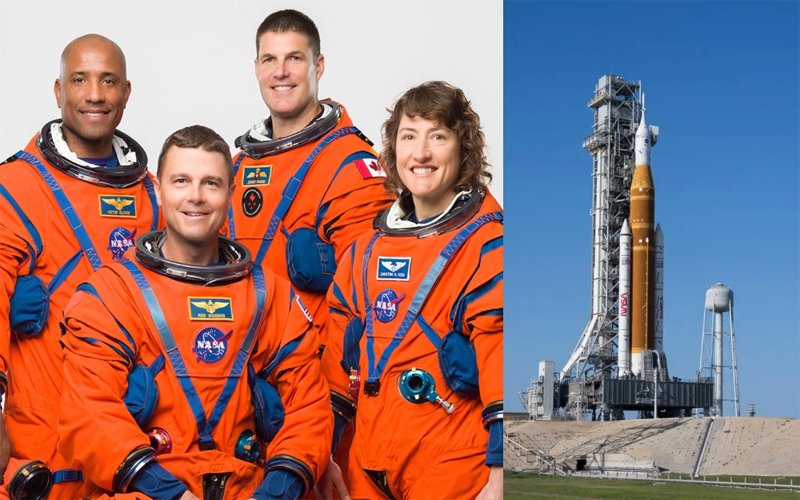
According to NASA, Artemis II is a crewed mission carrying four astronauts aboard the advanced Orion spacecraft. The spacecraft was launched using the powerful Space Launch System (SLS) rocket. The mission is designed to send astronauts around the Moon in a lunar flyby before safely returning them to Earth, serving as a critical step toward future lunar landings.
The primary objectives of Artemis II include testing human capabilities in deep space, validating new exploration technologies, and ensuring mission safety for upcoming Moon landings. NASA plans to land astronauts on the lunar surface later in the decade under the broader Artemis program.
Experts say the success of this mission could mark a new era in global space exploration. It is expected to pave the way for a sustained human presence on the Moon and future missions to Mars.
Notably, the Artemis program also aims to land the first woman and the first person of color on the Moon, highlighting a commitment to diversity and inclusion in space exploration. As such, Artemis II is not only a technological milestone but also a historic step forward for humanity’s presence beyond Earth.