Trump’s Steps and Strategic Vision to Build “America’s New Golden Age”
Border security, tariffs, tax cuts and military expansion dominate Trump’s push to fulfill campaign promises. U.S. President Donald Trump has declared that America has entered a “New Golden Age,” presenting his second-term agenda as a national revival centered on economic strength, industrial growth, military power and tighter border security

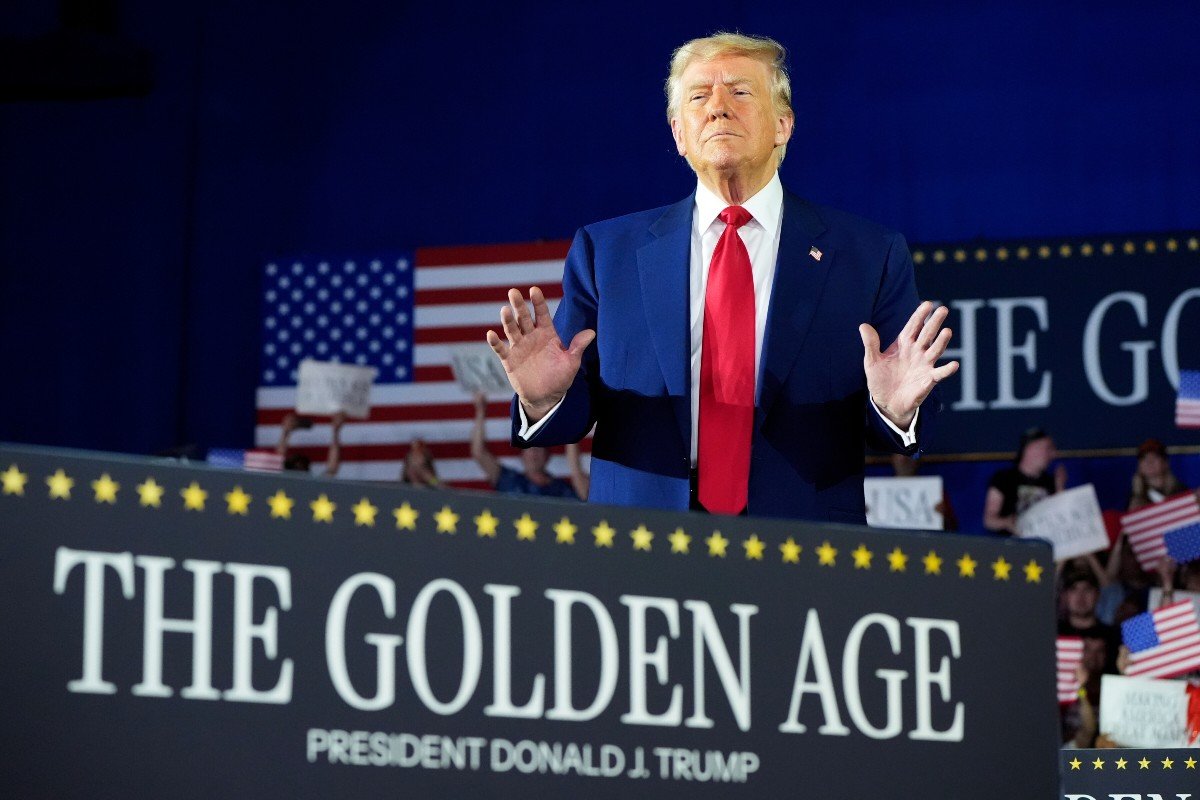
Trump’s Steps and Strategic Vision to Build “America’s New Golden Age”
Border security, tariffs, tax cuts and military expansion dominate Trump’s push to fulfill campaign promises. U.S. President Donald Trump has declared that America has entered a “New Golden Age,” presenting his second-term agenda as a national revival centered on economic strength, industrial growth, military power and tighter border security.
Since returning to the White House in 2025, Trump has moved aggressively through executive orders, policy directives and congressional initiatives to implement many of the promises he made during the 2024 presidential campaign. In multiple speeches and official statements, the administration has branded this period as “America’s Golden Age.”
What Does Trump Mean by “Golden Age”?
Trump’s “Golden Age” is not a single law or government program. Rather, it is a broad political and economic vision aimed at:
Reviving American manufacturing
Strengthening border security
Reducing foreign dependence
Expanding military and technological dominance
Increasing domestic energy production
Advancing the “America First” agenda
Political analysts say the slogan is designed to project nationalism, economic optimism and strong leadership ahead of the 2026 midterm elections.
Tougher Border and Immigration Policies
One of Trump’s central campaign promises was reducing illegal immigration and securing the U.S.-Mexico border. Soon after taking office, his administration declared a border emergency and expanded military and security operations along the southern border.
Major actions include:
Reinstating the “Remain in Mexico” policy
Ending the CBP One asylum application system
Expanding fast-track deportation procedures
Restarting border wall construction
Limiting federal support for sanctuary cities
According to FactCheck.org, illegal border crossing apprehensions dropped sharply during 2025, with some estimates showing declines of more than 90 percent.
Tariffs and the “America First” Economy
Trump also pledged to protect American industry through higher tariffs on imported goods. His administration imposed new tariffs on products from China, Mexico, Canada and several other countries.
The White House argues the measures are encouraging domestic manufacturing and reducing dependence on foreign supply chains. However, several tariffs faced legal challenges, and court rulings forced the administration to refund billions of dollars in overturned import duties.
Tax Cuts and Economic Relief
Trump promised to extend and expand the tax cuts introduced during his first administration. Republican lawmakers later passed the “One Big Beautiful Bill Act,” preserving major portions of earlier tax reductions.
Additional measures included:
Partial implementation of “No tax on tips”
Tax relief tied to Social Security income
Expanded corporate tax incentives
Supporters say these policies are helping businesses and middle-class workers, while critics argue inflation and tariff-driven costs continue to burden consumers.
Energy Expansion and Industrial Revival
Trump campaigned heavily against Biden-era climate policies and quickly moved to reverse several environmental regulations after returning to office. His administration:
Expanded oil and gas drilling approvals
Rolled back environmental restrictions
Increased fossil fuel production
Promoted an “energy dominance” strategy
The White House says the goal is to make the United States more energy independent and globally competitive.
Cutting Government Bureaucracy Through DOGE
The administration also launched the Department of Government Efficiency (DOGE), an initiative associated with billionaire entrepreneur Elon Musk and aimed at reducing federal bureaucracy and government spending.
Key measures include:
Federal hiring freezes
Limits on remote work
Workforce restructuring
Reductions in diversity and inclusion programs
Military Expansion and Technological Dominance
Trump’s “Golden Age” vision also emphasizes military modernization and advanced defense technology. The administration has promoted investments in artificial intelligence, missile defense systems and national security infrastructure.
One of the most discussed initiatives is the proposed “Golden Dome” missile defense project, described by supporters as a next-generation national defense shield.
Social and Cultural Policies
Trump has also pursued conservative social policies by:
Restricting transgender athlete participation policies
Revising federal gender guidelines
Scaling back diversity initiatives in federal institutions
Supporters argue these policies defend “traditional American values,” while civil rights groups and opponents criticize them as discriminatory.
Economic Reality vs. Political Messaging
While Trump insists America has entered a new era of prosperity, analysts say the economic picture remains mixed.
A Reuters survey found many Americans still concerned about inflation, housing costs and economic uncertainty despite White House claims of a booming economy.
At the same time, Trump supporters point to stronger border enforcement, industrial investment and aggressive trade policies as evidence that the administration is delivering on its promises.
According to PolitiFact’s “MAGA-Meter,” a portion of Trump’s campaign promises have already been fulfilled, while many others remain “in progress.”
Conclusion
Trump’s “New Golden Age” narrative has become the defining message of his second presidency. Through border crackdowns, tariff policies, tax reductions, energy expansion and military modernization, the administration is attempting to reshape America around the “America First” doctrine.
Supporters see the strategy as the beginning of a national revival. Critics argue it remains largely political branding, pointing to inflation concerns, legal challenges and growing political polarization. Whether America has truly entered a “Golden Age” may ultimately depend on how voters judge the long-term impact of Trump’s policies in the years ahead.
Writter: S. Goswami, Plotical analyst.