Republicans Rush to Redraw Congressional Districts Ahead of Midterms
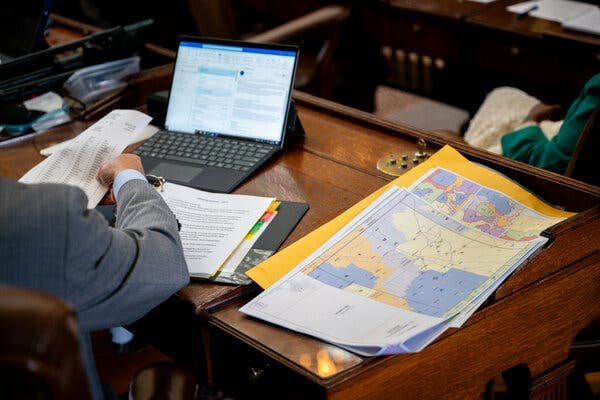
Republicans across several U.S. states are moving quickly to redraw congressional districts ahead of the 2026 midterm elections, aiming to strengthen their political advantage after a recent U.S. Supreme Court ruling weakened protections for minority voters under the federal Voting Rights Act

Republicans Rush to Redraw Congressional Districts Ahead of Midterms
Republicans across several U.S. states are moving quickly to redraw congressional districts ahead of the 2026 midterm elections, aiming to strengthen their political advantage after a recent U.S. Supreme Court ruling weakened protections for minority voters under the federal Voting Rights Act.
Within weeks, new congressional maps have already been approved in Tennessee and Alabama, while revised plans in Louisiana and South Carolina have advanced through at least one legislative chamber. However, legal and political battles continue over whether the maps can be used in November’s elections.
Congressional districts are typically redrawn once every decade following the census. But President Donald Trump has encouraged Republican-led states to redraw maps now in an effort to preserve the GOP’s narrow majority in the U.S. House of Representatives. Historically, the president’s party often loses seats during midterm elections, and Trump’s approval ratings remain underwater.
Republicans believe aggressive redistricting efforts across seven states could help them gain as many as 15 additional House seats. Democrats, meanwhile, are attempting countermeasures in a smaller number of states, hoping to gain around six seats.
South Carolina Faces Republican Divisions
In South Carolina, Republican Governor Henry McMaster called lawmakers into a special session to consider new congressional maps. The Republican-controlled House passed a proposal designed to improve GOP chances of capturing the state’s only Democratic-held congressional seat.
However, divisions have emerged within the Republican Party itself. Some GOP senators worry that targeting the district represented by Democratic Congressman Jim Clyburn could unintentionally weaken neighboring Republican districts by spreading Democratic voters more widely across the state.
Louisiana Debates Competing Maps
In Louisiana, the Supreme Court struck down the state’s congressional map, ruling that two majority-Black districts represented by Democrats amounted to an unconstitutional racial gerrymander.
State lawmakers are now working on revised maps that could improve Republican electoral prospects. However, disagreements remain between the state House and Senate over how local parishes should be divided.
Governor Jeff Landry postponed the state’s congressional primary elections to allow more time for redistricting negotiations.
Alabama Map Faces Court Challenge
A federal court in Alabama recently heard arguments over whether to block the use of a Republican-backed congressional map that could help the GOP gain another seat in Congress.
Republican lawmakers approved the map in 2023 with only one majority-Black district. A lower court later ordered a revised map that helped Democrats win two districts with large Black populations. But the Supreme Court recently directed lower courts to reconsider the case following its Louisiana ruling.
Civil rights groups, including the NAACP Legal Defense Fund and the ACLU, argue that Alabama’s map intentionally discriminates against Black voters and should not be allowed.
Tennessee Lawsuit Targets New Districts
In Tennessee, a lawsuit filed by the NAACP challenges the legality of newly approved congressional maps that divide a Memphis-based majority-Black district currently represented by a Democrat.
The lawsuit argues that the Republican-controlled legislature exceeded the authority granted during a special legislative session called by Governor Bill Lee. Plaintiffs claim that if lawmakers acted beyond that authority, the new maps should be invalidated.
Political analysts say the redistricting battles could significantly shape the balance of power in Congress ahead of the 2026 elections and intensify national debates over voting rights and partisan gerrymandering.