SpaceX IPO Exposes Billions in AI Losses as Musk Bets on Space-Based Future
SpaceX has officially unveiled its long-awaited IPO filing, offering investors their clearest look yet at the company’s finances, future ambitions, and the enormous cost of Elon Musk’s artificial intelligence strategy

SpaceX IPO Exposes Billions in AI Losses as Musk Bets on Space-Based Future
SpaceX has officially unveiled its long-awaited IPO filing, offering investors their clearest look yet at the company’s finances, future ambitions, and the enormous cost of Elon Musk’s artificial intelligence strategy.
The filing, released Wednesday, highlights how heavily SpaceX is betting on becoming not only a dominant space company but also a major AI-driven technology powerhouse. Much of the company’s future growth projections depend on markets and technologies that do not yet fully exist — including Mars transportation systems, orbital AI infrastructure, and solar-powered data centers in space.
Despite strong enthusiasm surrounding the offering, the filing shows the company is currently burning billions of dollars to pursue those ambitions.
AI Division Drives Heavy Losses
According to the filing, SpaceX generated $4.69 billion in revenue during the first quarter of 2026 but posted an overall operating loss of $1.94 billion.
Its satellite internet division, Starlink, remained the company’s strongest business unit. The Starlink segment earned an operating profit of $1.19 billion during the quarter, driven by continued global demand for satellite connectivity services.
However, those gains were outweighed by mounting losses tied to SpaceX’s artificial intelligence operations. The company’s AI division recorded losses of $2.47 billion on just $818 million in revenue during the same period.
The financial pressure intensified after SpaceX acquired Musk’s AI company xAI earlier this year. The filing states that xAI-related investments accounted for 76% of the company’s $10.1 billion in first-quarter capital expenditures.
Musk Tightens Control
The IPO filing also confirms that Elon Musk will maintain overwhelming control over the company after the public listing. Musk is expected to retain 85.1% of the combined voting power, leaving outside shareholders with limited influence over corporate decisions.
Analysts say the structure mirrors Musk’s leadership approach at companies such as Tesla, where investors have historically placed strong trust in his long-term vision despite financial volatility.
Supporters argue Musk’s track record speaks for itself. Under his leadership, Tesla became the world’s most valuable automaker, while SpaceX revolutionized the global launch industry through reusable rockets and the rapid expansion of the Starlink satellite network.
Aiming for a Historic Valuation
The SpaceX IPO could become one of the most significant stock market debuts in U.S. history. Reports suggest the company could achieve a valuation of up to $1.75 trillion, potentially making it the first publicly traded U.S. company to debut above the $1 trillion mark.
Such a valuation would further strengthen Musk’s position as the world’s richest individual and could place him on track to become the first trillionaire in modern history.
Betting on the Future of Space-Based AI
The filing reveals that SpaceX sees enormous long-term opportunity in technologies still under development. Among its most ambitious ideas are AI-powered orbital computing networks and space-based data centers operating on solar energy.
SpaceX estimates these future industries could eventually represent a market worth as much as $28.5 trillion.
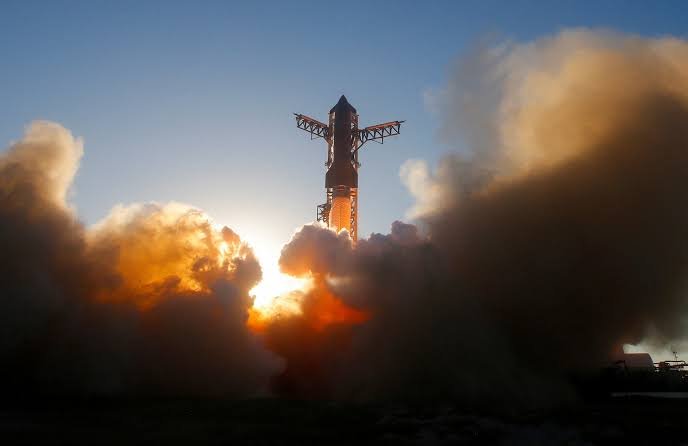
Founded in 2002, SpaceX has grown into the world’s largest private space company through aggressive rocket innovation and thousands of Starlink satellite launches. Its reusable rocket systems have transformed the economics of spaceflight and intensified competition with rivals such as Blue Origin.
Investors now face a high-risk, high-reward proposition: a company losing billions today while attempting to build entirely new industries for tomorrow.